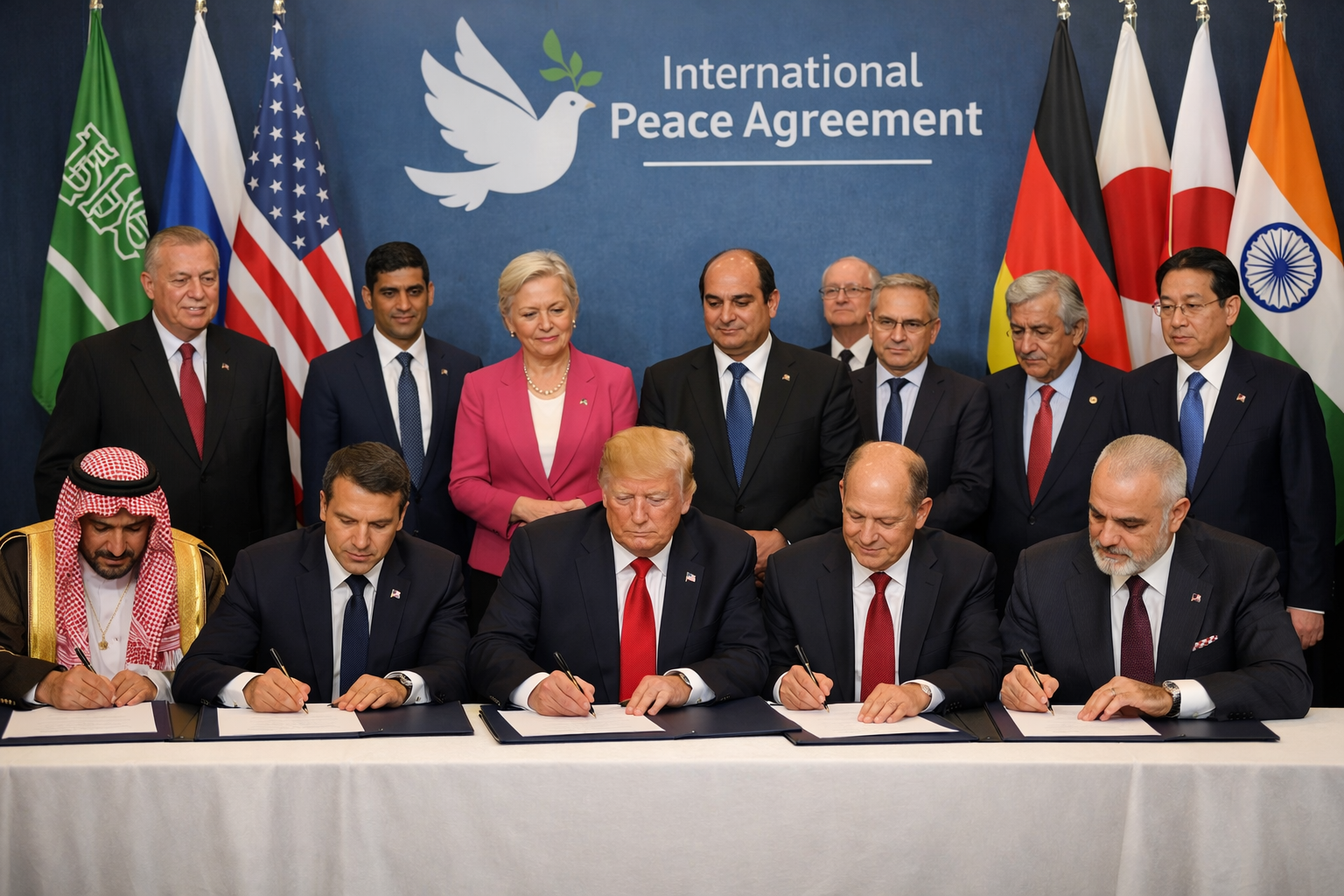
At the 2026 World Economic Forum in Davos, Switzerland, dozens of world leaders gathered on January 22 as U.S. President Donald Trump formally launched the “Board of Peace” — a new international peace initiative designed to address conflicts and promote diplomacy. Trump signed the charter of the Board of Peace alongside representatives from around 17 other countries, including leaders from the Middle East, Europe, and Asia, signaling a high-profile push to coordinate peace efforts beyond regional disputes such as the Gaza ceasefire.
The Board — touted by Trump as a mechanism to resolve global conflicts and oversee reconstruction and stabilization efforts — initially focuses on implementing ceasefires and post-war rebuilding frameworks, particularly in Gaza, while its backers hope it will expand into broader diplomatic work. Several nations, such as Bahrain, Morocco, Albania and Bulgaria, have officially signed on as members, though some traditional U.S. allies remained cautious or declined participation, citing concerns about how the initiative might interact with or potentially undermine existing international institutions like the United Nations.
While the launch highlighted diplomatic momentum, global responses have been mixed, with enthusiasm from some capitals tempered by skepticism in others over governance, representation, and strategic priorities. The signing event underscored ongoing efforts by multiple nations to pursue peace-building measures amid continued geopolitical tensions, News as reported.