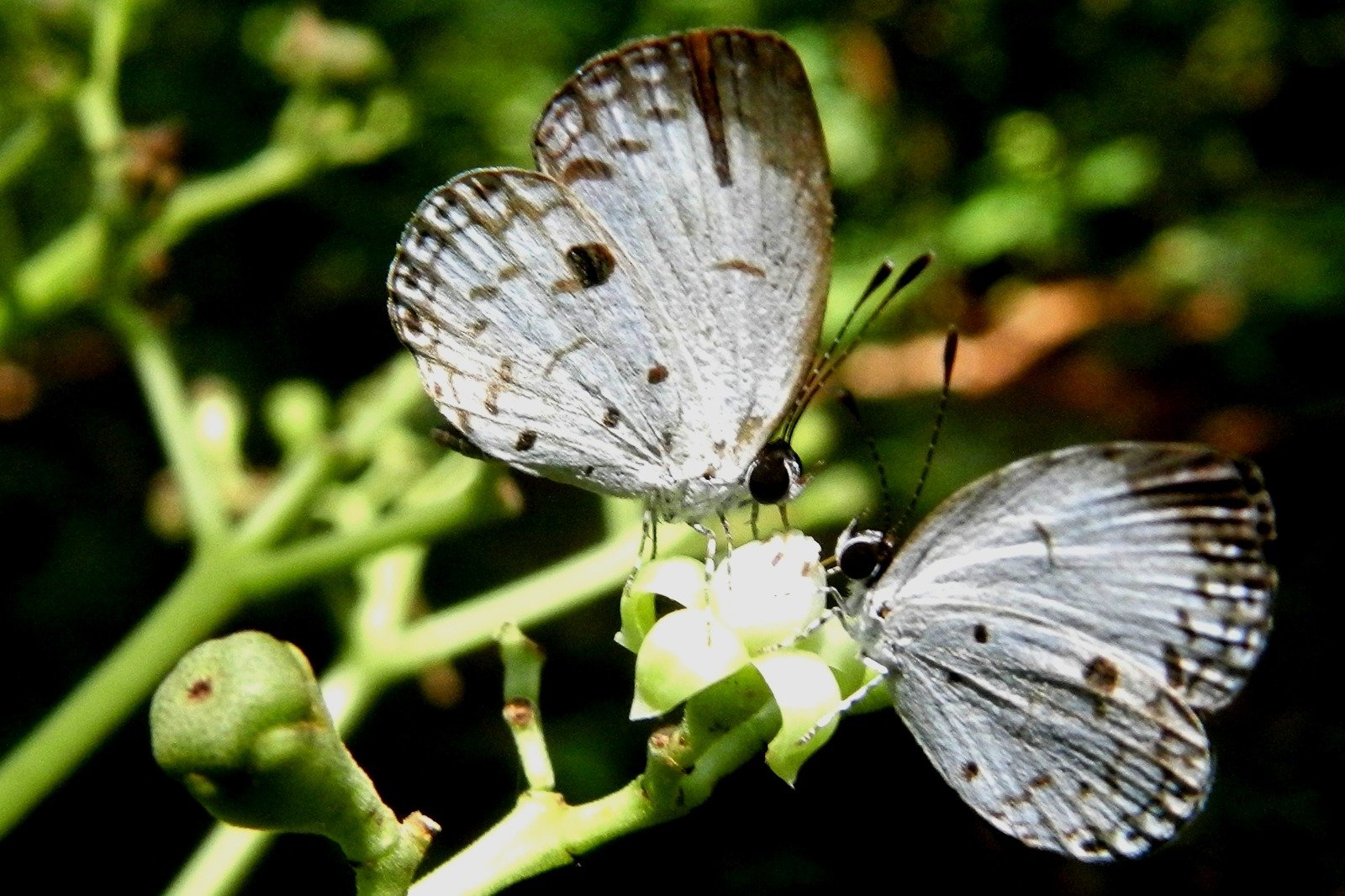
The Quaker (Neopithecops zalmora) is one of the smallest and most delicate butterflies found across parts of South and Southeast Asia. Belonging to the Lycaenidae family, commonly known as the blues, this tiny butterfly is recognised for its understated appearance and distinctive behaviour.
The species was first described in 1870 by Arthur Gardiner Butler, an English entomologist and ornithologist. Its common name, “Quaker,” is associated with its plain, modest appearance, resembling the simple dress traditionally linked with the Quaker religious community. The butterfly is also known for constantly moving its hindwings.
Its scientific name carries an unusual story. “Neopithecops” is derived from Greek and refers to a “new monkey face,” inspired by the appearance of the pupa, which reportedly resembles a monkey’s face. “Zalmora” refers to a historical geographical name associated with the Balkan region.
The subspecies found in southern India and Sri Lanka is the Sri Lankan Common Quaker (Neopithecops zalmora dharma). With a wingspan of only about 20–22 mm, it ranks among India’s tiniest butterflies.
British entomologist Frederic Moore recorded the subspecies in 1881. A photograph of this remarkable miniature butterfly was taken in Alathur, Palakkad district, Kerala, in 2012, highlighting the rich biodiversity found even in Kerala’s seemingly ordinary landscapes.
Vincent Vanur