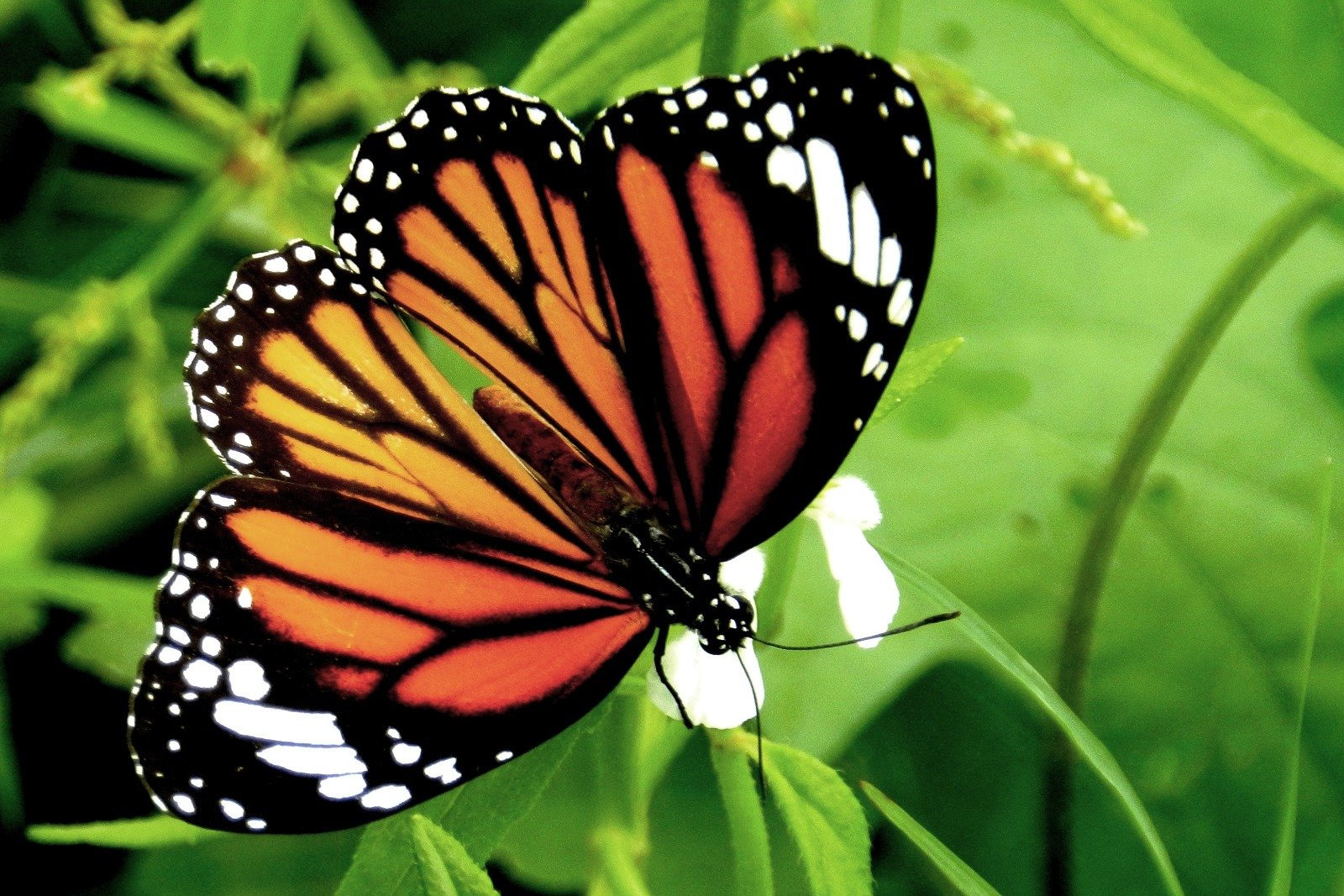
The Striped Tiger butterfly (Danaus genutia), also known as the Common Tiger, is a striking butterfly widely distributed across India and several other parts of Asia. The subspecies found in India is Danaus genutia genutia. Both the species and subspecies were recorded in 1779 by Dutch merchant and entomologist Pieter Cramer.
In India, it is called the Striped Tiger to distinguish it from the closely related Plain Tiger (Danaus chrysippus). The butterfly is protected under Schedule I of the Wildlife Protection Act, 1972, reflecting its importance in India’s wildlife heritage. It is also the State Butterfly of the Union Territory of Chandigarh.
The Striped Tiger has developed an effective chemical defence. During its larval stage, the caterpillar feeds on poisonous plants and accumulates toxic compounds, making both the caterpillar and adult butterfly distasteful to predators. Its bright colours and prominent markings act as warning signals, advertising its unpalatability. When threatened, it may also employ a remarkable defence by pretending to be dead.
Its reproductive behaviour is equally fascinating. During mating, the male transfers a spermatophore, or “nuptial gift,” containing sperm and nutrients to the female. The nutrient-rich package helps support egg development while temporarily reducing the likelihood of immediate re-mating.
Vincent Vanur