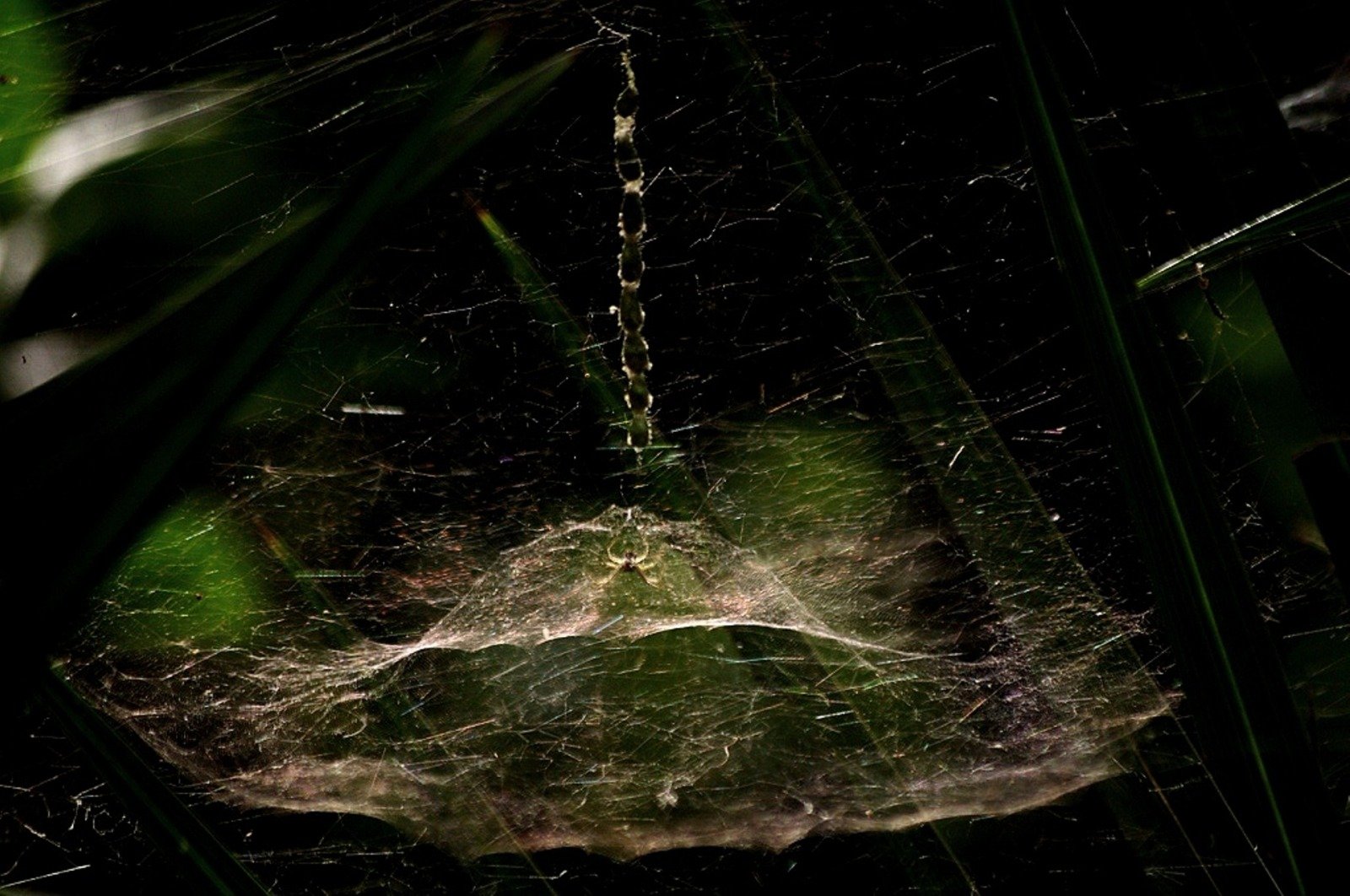
The tropical tent-web spider (Cyrtophora citricola), a member of the orb-weaver family Araneidae, is known for its remarkable three-dimensional, tent-shaped webs. The species was first recorded in 1775 by Swedish explorer and naturalist Peter Forsskål.
Unlike many orb-weaving spiders, the tropical tent-web spider constructs its web from non-sticky silk. Because the web is not adhesive, it does not need to be rebuilt every day. The spider is generally more active at night and remains relatively inactive during the daytime, except when guarding its egg sacs.
Its web features a thick silk barrier above the orb and a thinner barrier below it. The upper structure helps deflect flying insects toward the orb web, where they become trapped. The spider then wraps the prey, cuts it from the web and carries it to the hub for feeding.
The species also displays unusual reproductive behaviour. Males are considerably smaller than females, and females may consume males after successful mating. This sexual cannibalism influences male mating behaviour, with males tending to seek suitable females.
Females produce egg sacs containing around 100–200 eggs. Several sacs may be arranged in chains of up to ten on the web, while the mother remains underneath them to protect the developing offspring. The spider is harmless to humans and poses no medical threat.
Vincent Vanur