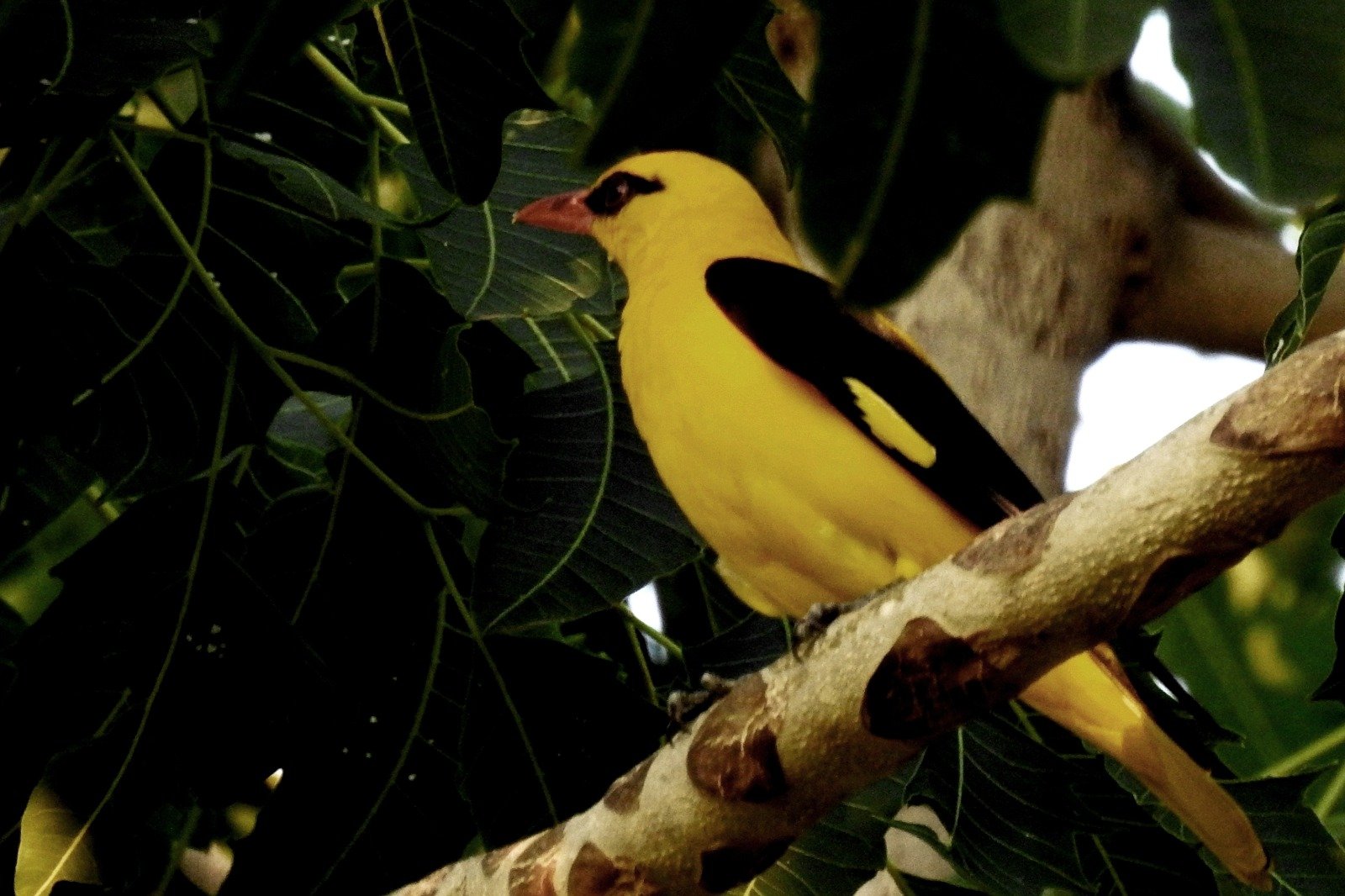
The Indian golden oriole (Oriolus kundoo) is a striking semi-migratory bird found across parts of the Indian subcontinent. While some populations remain in India throughout the year, others undertake seasonal movements. A remarkable record highlighting its migratory ability came from Gujarat, where a ringed Indian golden oriole was later discovered in Tajikistan, nine years after it had been tagged.
The species was first recorded in 1832 by Colonel William Henry Sykes, a naturalist and officer in the British Indian Army. The genus name Oriolus is derived from the Latin word “aureolus,” meaning “golden,” while kundoo comes from a North Indian colloquial name for the bird.
For many years, the Indian golden oriole was considered a subspecies of the Eurasian golden oriole. However, ornithologists Pamela Rasmussen and John Anderton treated them as separate species in 2005, citing differences in morphology, plumage, vocalisations and other characteristics. A molecular phylogenetic study published in 2010 further supported the species split.
Indian golden orioles feed on fruits, nectar and insects, helping disperse seeds of berry-producing plants. Both parents participate in nest-building and raising their young. They may also nest near black drongos, benefiting from the latter’s aggressive defence against predators. Known for their love of water, these orioles sometimes repeatedly dive into small pools while bathing.
Vincent Vanur