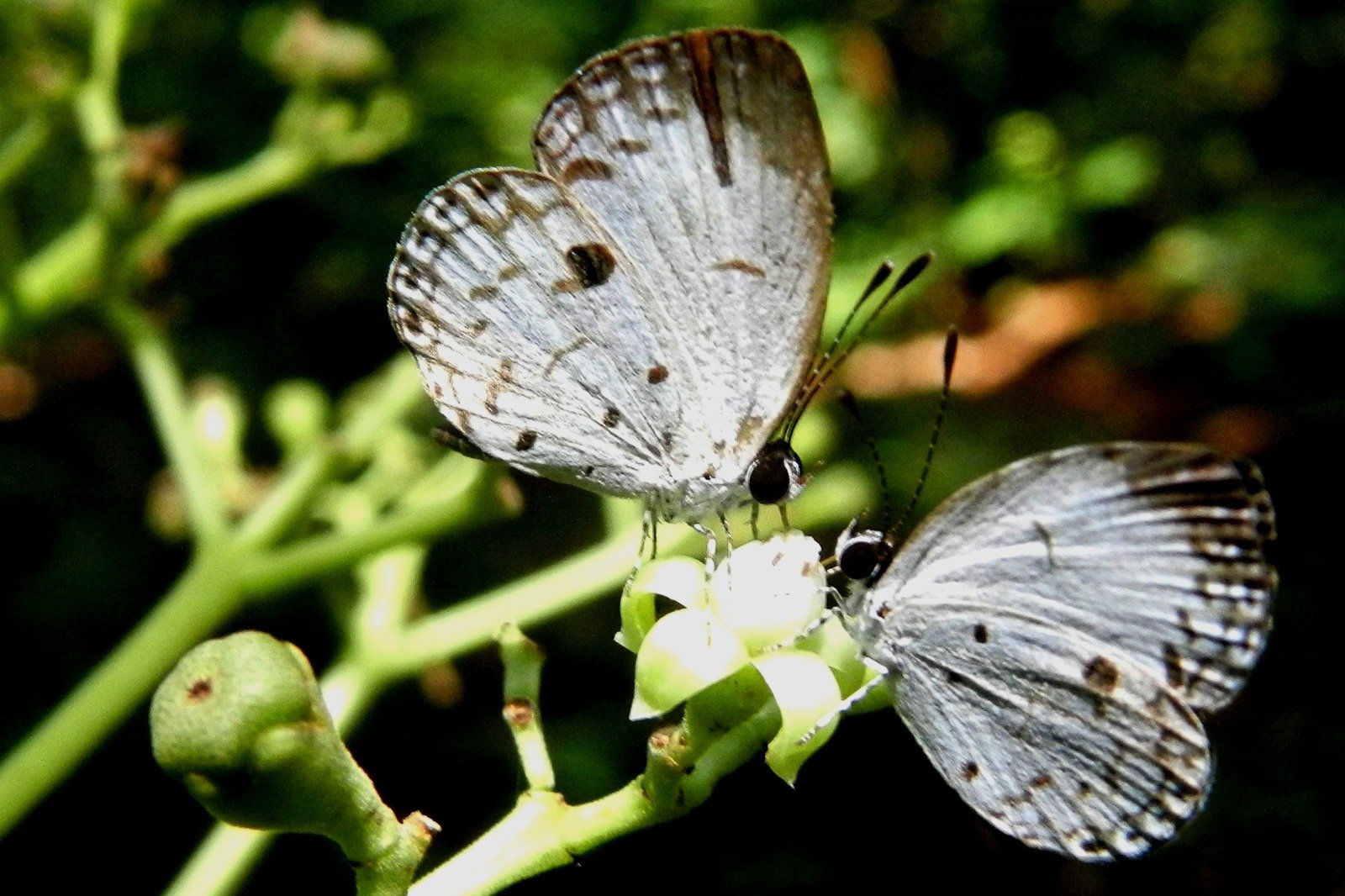
The Quaker (Neopithecops zalmora) is a tiny yet fascinating butterfly belonging to the Lycaenidae family, commonly known as the gossamer-winged or “blues.” It is distributed across parts of South and Southeast Asia and is noted for its small size and understated appearance.
The species was first recorded in 1870 by Arthur Gardiner Butler, an English entomologist and ornithologist. Its common name, “Quaker,” is believed to refer to its plain, modest appearance, reminiscent of the traditional simplicity associated with the Quaker community. The butterfly is also known for its habit of constantly moving its hind wings.
The scientific name Neopithecops comes from Greek and means “new monkey face,” referring to the pupa’s resemblance to a monkey’s face. Zalmora is associated with the Balkan Peninsula.
The subspecies found in southern India is the Sri Lankan Common Quaker (Neopithecops zalmora dharma), one of India’s smallest butterflies, with a wingspan of just 20–22 mm. It was described by British entomologist Frederic Moore in 1881.
A remarkable record of this miniature butterfly was photographed in Alathur, Palakkad District, Kerala, in 2012, highlighting the region’s rich and often overlooked butterfly diversity.
Vincent Vanur