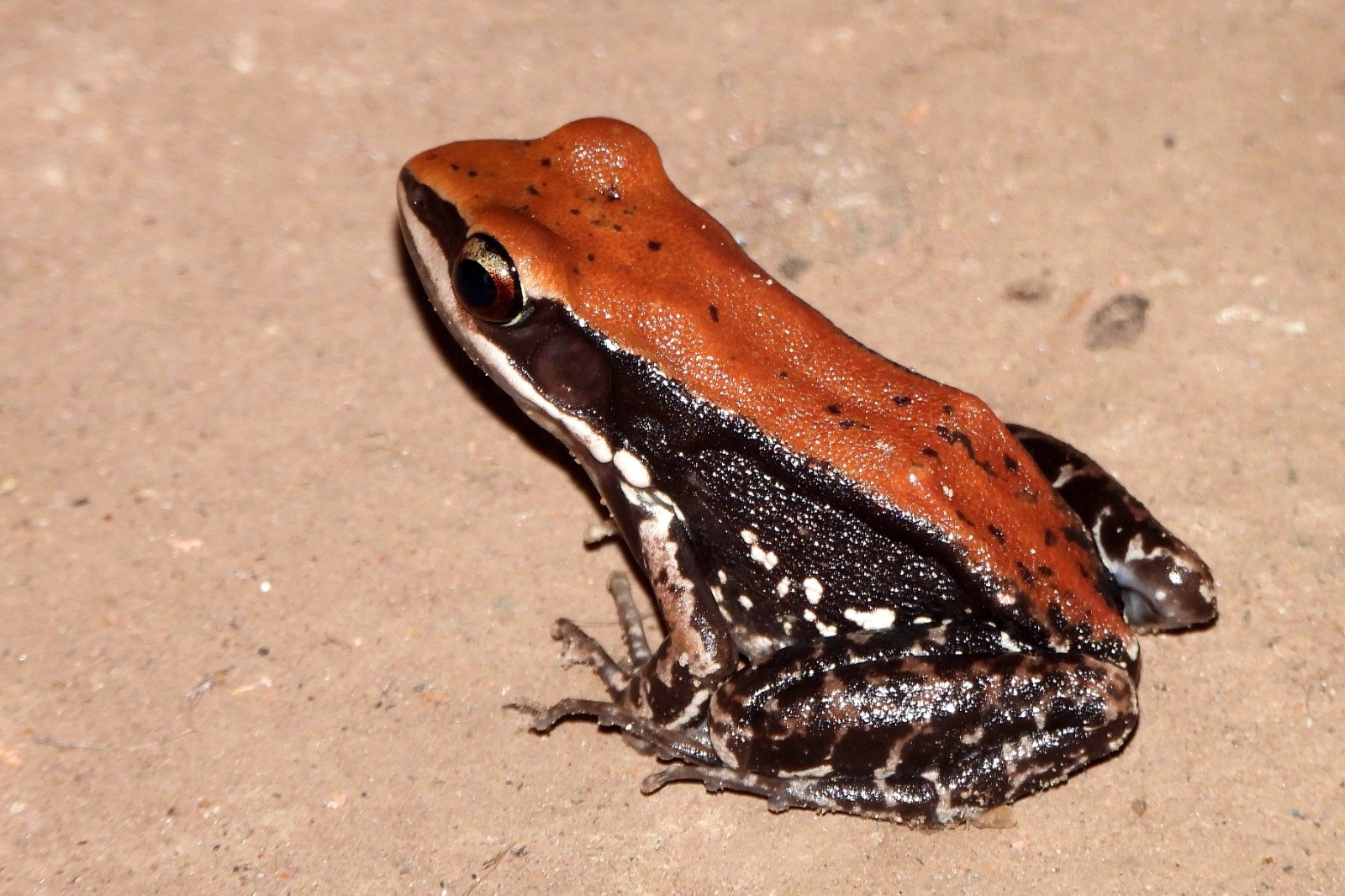
Hidden among the biodiversity-rich landscapes of the Western Ghats is the remarkable Malabar fungoid frog (Hydrophylax malabaricus), a species found exclusively in this region. First recorded in 1838 by Swiss naturalist Johann Jakob von Tschudi, the frog gets its unusual name from the pungent, fungus-like odour it releases when threatened. Produced by specialised glands in its skin, this distinctive chemical defence may help discourage predators.
The Malabar fungoid frog attracted international scientific attention in 2017, when researchers from India and the United States discovered a promising antiviral compound in its skin mucus. A team led by scientists from Emory University and the Rajiv Gandhi Centre for Biotechnology found that one of its skin peptides could destroy multiple strains of human influenza viruses and protect mice from influenza infection.
The researchers screened 32 frog defence peptides against an influenza strain and identified four with antiviral activity. Three were found to be toxic to human red blood cells, but the fourth, named urumin, appeared harmless to human cells while showing lethal activity against a wide range of influenza viruses.
The name urumin was inspired by the urumi, Kerala’s distinctive flexible-bladed sword, reflecting the peptide’s remarkable ability to attack influenza viruses.
The discovery highlights how the unique chemistry of Western Ghats wildlife may offer valuable clues for future medical research.
Vincent Vanur