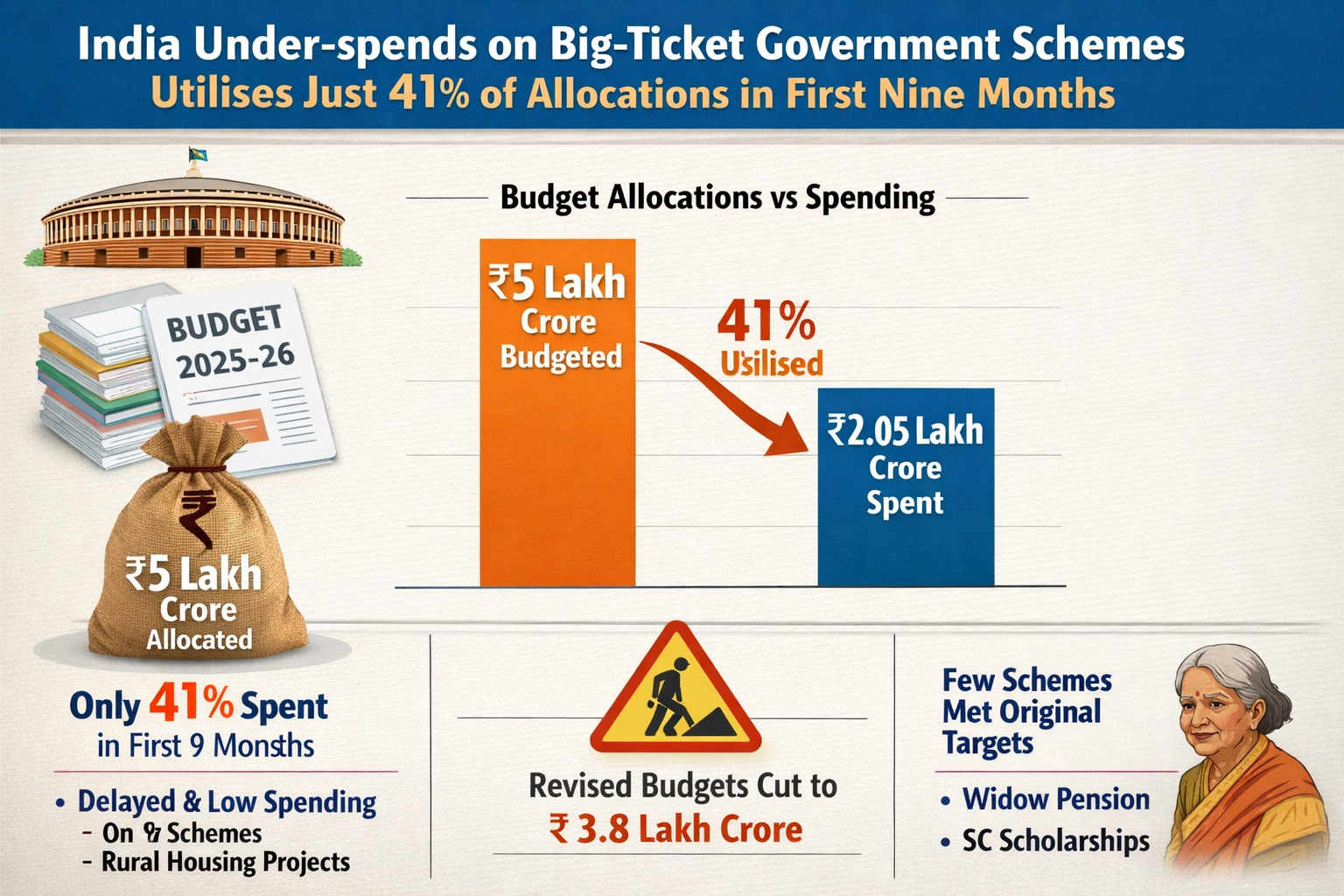
India’s spending on several major government schemes has reached only about 41% of the allocated budget so far this financial cycle, raising concerns about execution delays and implementation bottlenecks. Big-ticket programs across infrastructure, rural development, urban upgrades, and social welfare are reportedly lagging behind planned expenditure targets despite substantial budgetary provisions.
Policy analysts note that under-spending does not always indicate lack of funding, but often reflects procedural hurdles such as delayed approvals, land acquisition issues, tendering slowdowns, and coordination gaps between central and state agencies. In large infrastructure and development schemes, fund utilization typically depends on milestone-based releases, which can push actual spending into later quarters.
Officials and experts say administrative capacity constraints, compliance requirements, and documentation processes also contribute to slower fund flow at the ground level. In some cases, states and implementing agencies have been cautious in drawing funds due to pending clearances or revised project guidelines.
Economists warn that persistent under-utilization of allocated funds can affect growth momentum, especially when government capital expenditure is expected to drive investment and job creation. Lower spending rates may also delay intended benefits to citizens, including improved connectivity, housing, and public services.
At the same time, finance authorities indicate that expenditure often accelerates in the second half of the fiscal year as projects move from approval to execution stages. Ministries are expected to review progress and streamline release mechanisms to improve utilization rates. Strengthening monitoring systems and faster decision-making are seen as key to ensuring that allocated funds translate into timely outcomes news as reported.