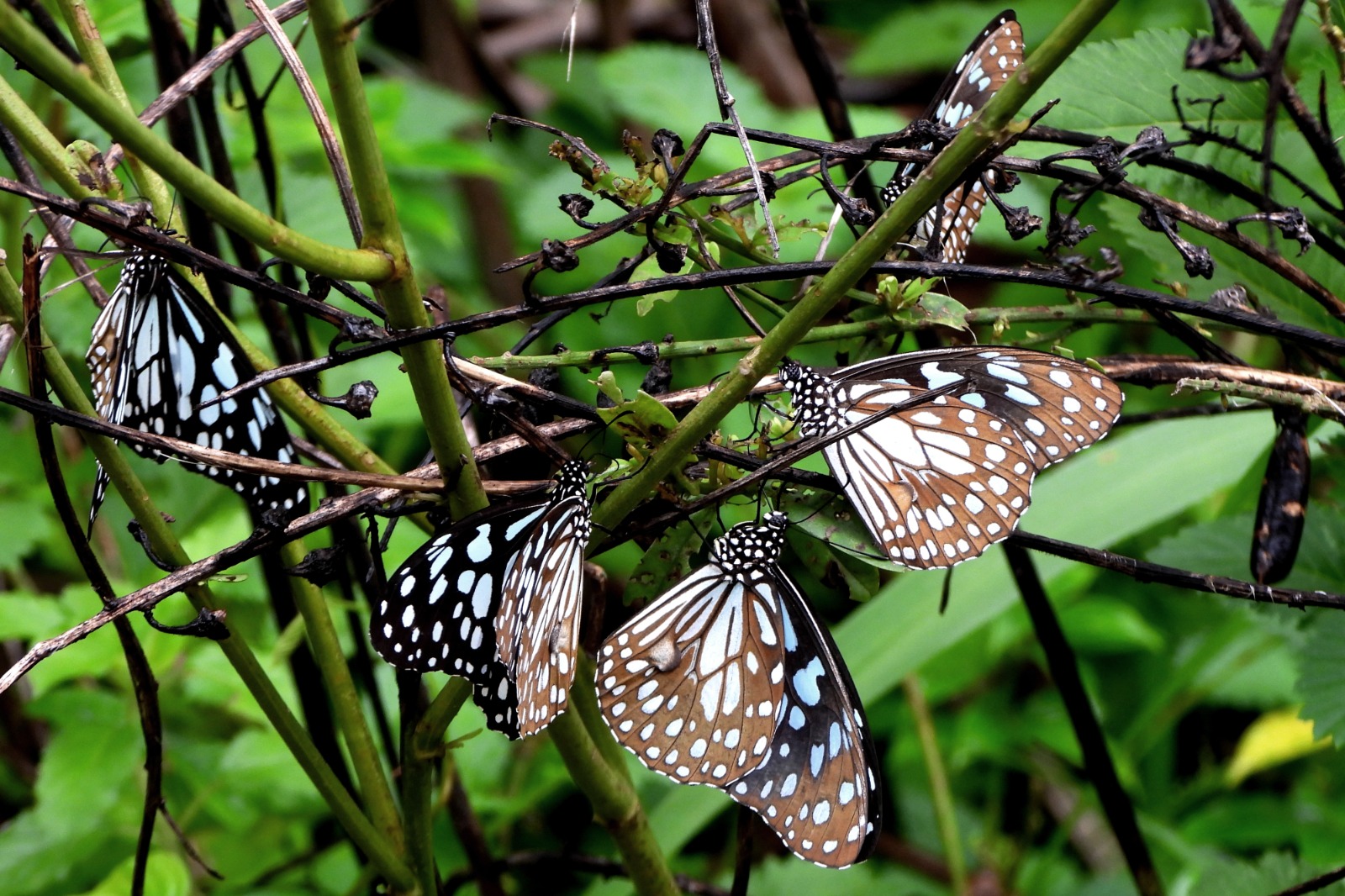
A remarkable wildlife photograph taken a year ago highlights the unusual ecological relationship between the poisonous plant Crotalaria retusa and several species of butterflies that depend on it for survival and reproduction. Commonly called rattleweed, devil-bean, or wedge-leaf rattlepod, the plant is toxic to livestock because it contains pyrrolizidine alkaloids, harmful chemical compounds found in its leaves.
Despite its toxicity, the plant becomes a vital resource for butterflies during migration periods. Male butterflies use these alkaloids to produce essential sex pheromones needed to attract mates. The photograph captures groups of butterflies feeding and crowding over the damaged remains of the plant after most of its leaves and flowers had already been consumed or sap-sucked.
Among the species commonly seen gathering on the plant are the Blue Tiger, Striped Tiger, Plain Tiger, and Common Crow. During peak migration, hundreds may cluster together, jostling for feeding space or hanging delicately from bruised leaves.
The scene offers a vivid reminder that even poisonous plants can play a crucial role in maintaining biodiversity and supporting intricate insect life cycles.
– Vincent Vanur