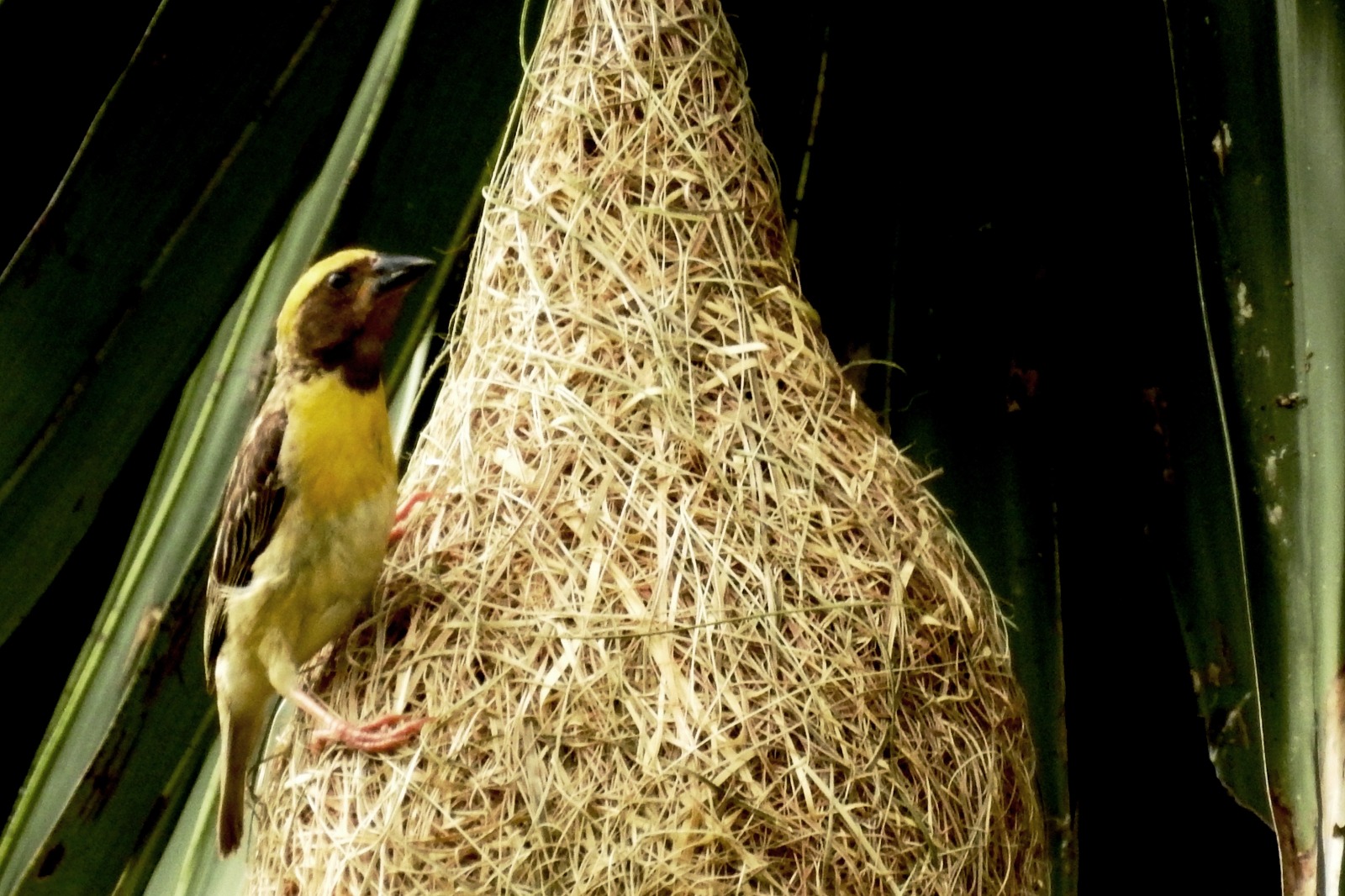
The Baya Weaver is a small, remarkable bird renowned for constructing some of the most intricate nests in the avian world. First described in 1766 by Carl Linnaeus, this species is widely distributed across the Indian subcontinent and Southeast Asia.
This photograph, taken in 2016, shows a male of the subspecies Ploceus philippinus philippinus perched on its nest attached to a palmyra palm leaf. The nest is an architectural masterpiece. The male begins construction by weaving a downward-facing cup-shaped structure, a process that takes about eight days. The female then carefully inspects the nest’s strength and craftsmanship. If satisfied, she accepts the male as a mate. The male subsequently completes the nest by adding a long tubular entrance that helps protect eggs and chicks from predators, while the female contributes to the interior finishing.
The intelligence of the baya weaver has long fascinated observers. The English zoologist Edward Blyth recorded that street performers in India trained these birds to fire toy cannons, string beads, and collect coins. Similarly, Robert Christopher Tytler described demonstrations in which the birds twirled burning sticks above their heads. The 16th-century Mughal chronicle Ain-i-Akbari praised the baya’s intelligence, obedience, and extraordinary nest-building skills, noting that its nests rival the finest works of human craftsmen.
– Vincent Vanur