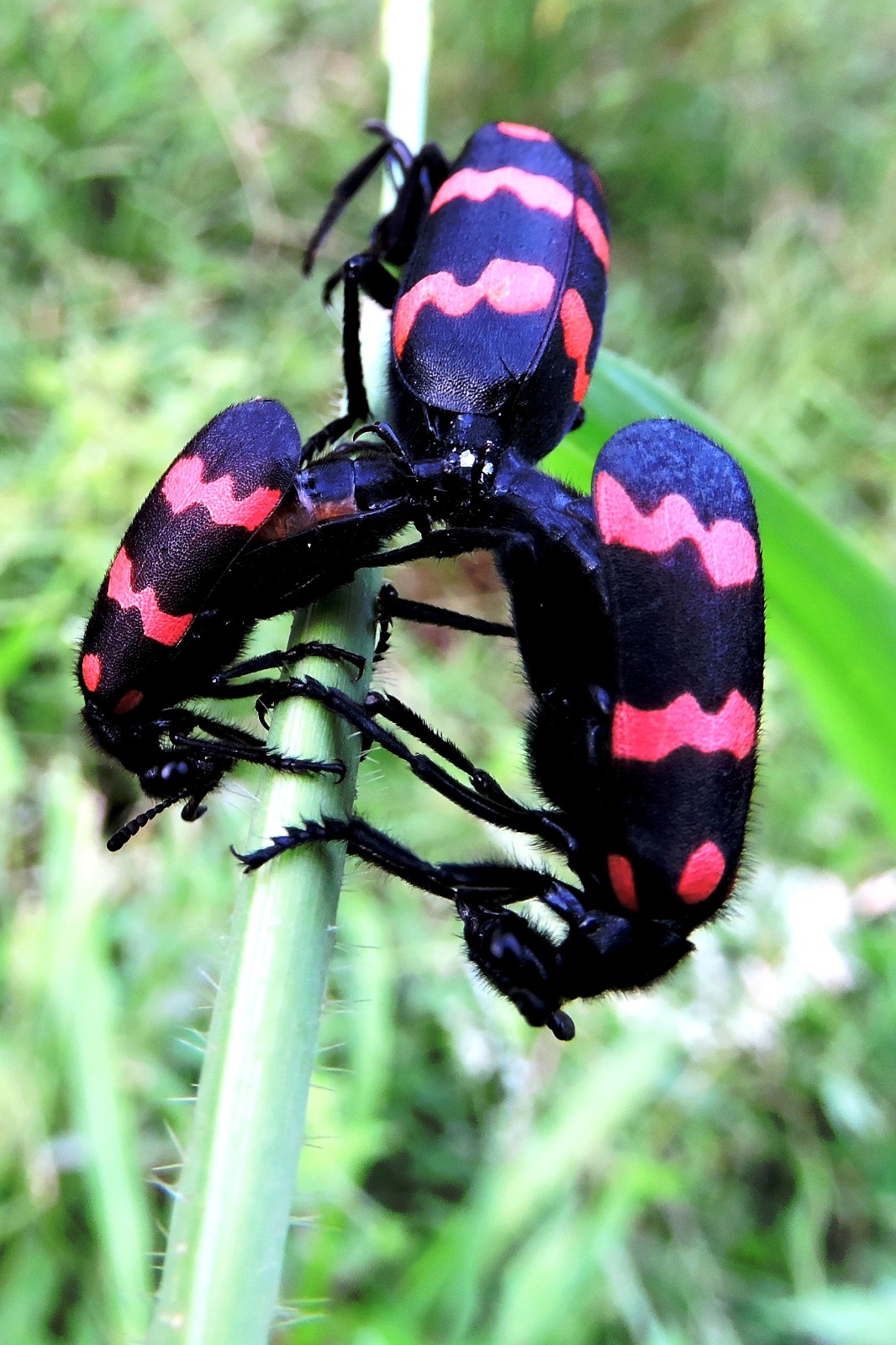
A striking photograph taken 12 years ago has brought renewed attention to the fascinating world of blister beetles, members of the beetle family Meloidae known for producing the powerful defensive chemical cantharidin. The image features the Orange Blister Beetle, scientifically known as Mylabris pustulata, a species distributed across India, Sri Lanka, China, Java, and Pakistan.
Blister beetles are famous for their bright warning colours, which signal toxicity to predators. Around 2,500 species are known worldwide, and fossils suggest the group has existed for nearly 99 million years. Their unusual life cycle includes a remarkable strategy in which larvae attract bees using chemical mimicry, hitch rides to bee nests, and feed on bee eggs and stored food.
The photographed beetles also displayed an unusual mating behaviour, where a third beetle joined an already mating pair — a rare observation noted by the photographer. While blister beetle larvae can help agriculture by reducing populations of other insects, adult beetles may damage flowering crops, particularly legumes, when present in large numbers.
Historically, cantharidin extracted from blister beetles has been used in traditional medicine, wart treatments, poisons, and aphrodisiacs.
– Vincent Vanur