

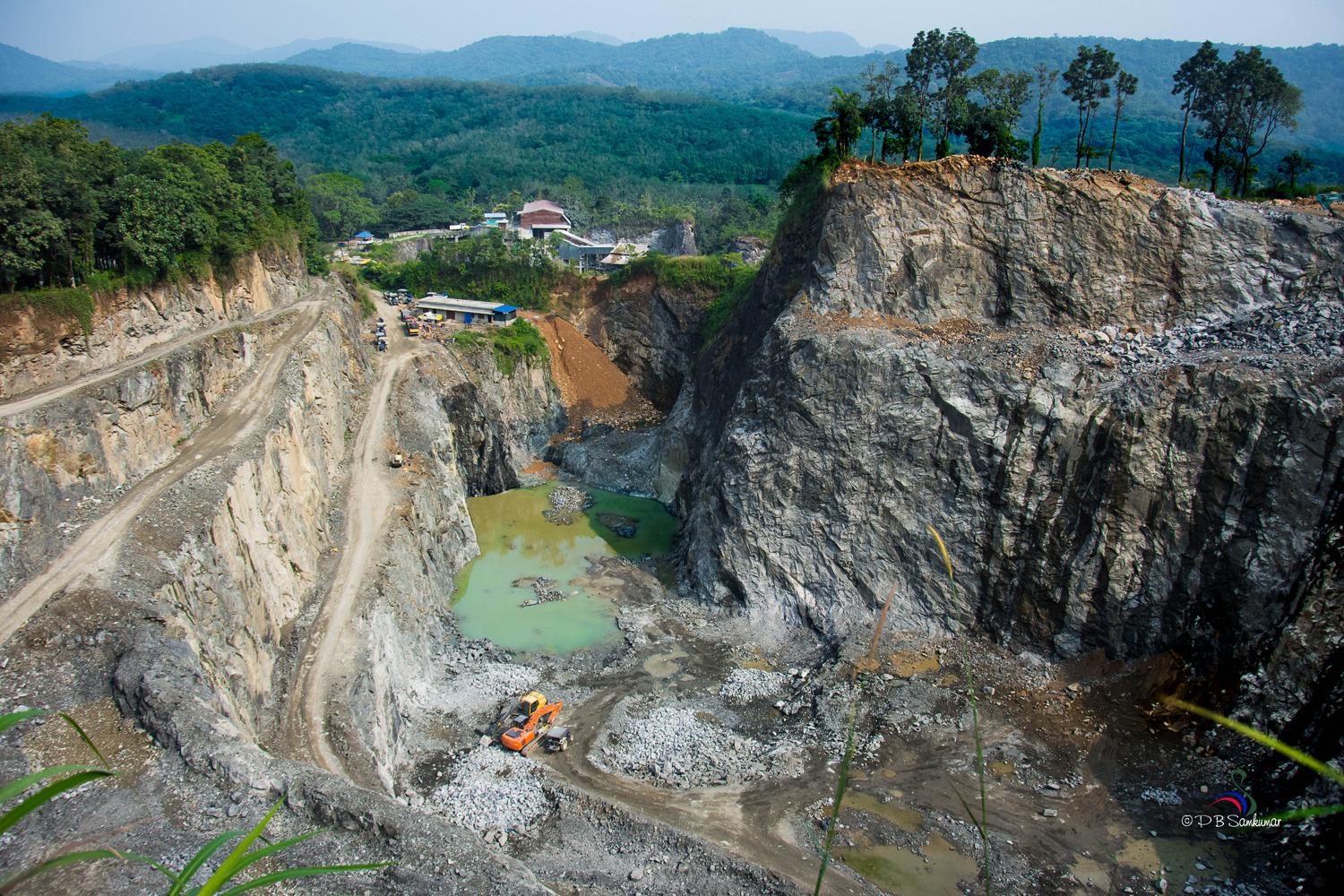
A recent international study has raised serious concerns about the growing impact of mining and quarrying activities on the fragile ecosystems of the Western Ghats, one of the world’s most important biodiversity hotspots. Scientists warn that increasing demand for minerals used in electric vehicles, batteries, and renewable energy infrastructure could accelerate habitat destruction in ecologically sensitive rocky plateaus and hill outcrops across the region.
Researchers explained that these rocky landscapes, often mistaken for barren wastelands, support rare and endemic species of plants, amphibians, reptiles, and insects specially adapted to harsh environmental conditions. The study highlights that lateritic plateaus and basalt rock systems in the Western Ghats function as “habitat islands,” sheltering species found nowhere else on Earth. However, quarrying and mining permanently damage the geological structure of these ecosystems, making natural recovery nearly impossible.
Scientists also warned that climate change is worsening the crisis through rising temperatures, droughts, and irregular rainfall patterns. Conservation experts are urging governments to strengthen environmental protection policies, regulate mining expansion, and include rocky outcrop ecosystems in biodiversity conservation planning before irreversible ecological losses occur.


- upgraderz.aws@gmail.com
- upgraderz.aws@gmail.com
- upgraderz.aws@gmail.com
- upgraderz.aws@gmail.com