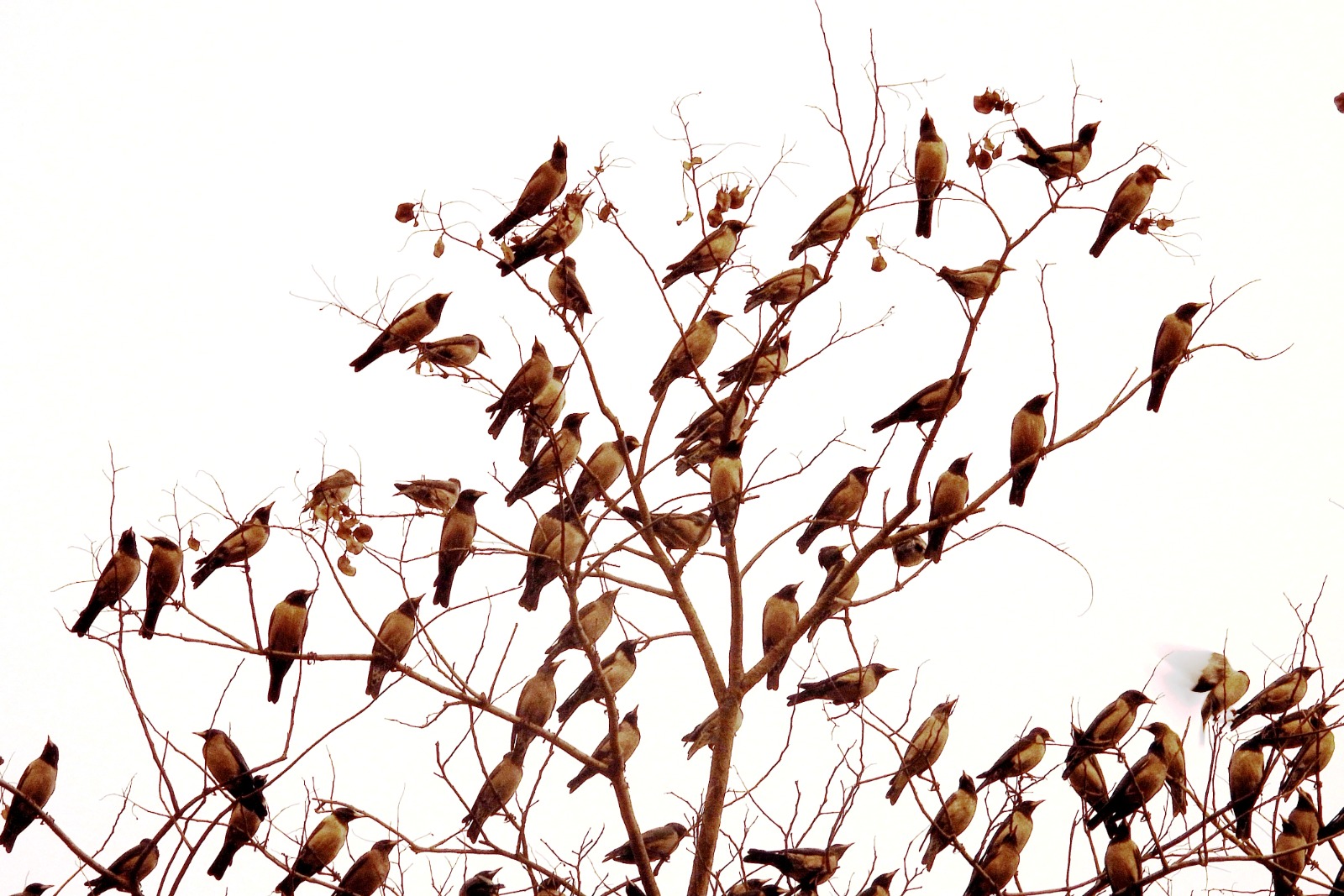
Rosy Starling(Pastor roseus), also known as the rose-coloured starling, is gaining recognition for its ecological role in natural pest control. A member of the starling family, the species was first formally described in 1758 by Carl Linnaeus and later placed in its own genus, Pastor, by Dutch zoologist Coenraad Jacob Temminck in 1815.
The rosy starling breeds across Central Asia and Southeast Europe and migrates to tropical Asia during winter. It is also a regular winter visitor in India, where it is often seen in large, noisy flocks. These highly gregarious birds provide an important benefit to farmers by feeding on locusts, grasshoppers, and other crop pests.
A notable example of their value comes from Xinjiang, China, where farmers previously relied heavily on costly and polluting insecticides to combat locust infestations. In the 1980s, experts introduced artificial nesting programs to attract rosy starlings, encouraging the birds to control locust populations naturally.
The initiative proved highly successful, and by the 2000s many Xinjiang farms had significantly reduced their use of insecticides. The rosy starling now stands as an example of how bird conservation and sustainable agriculture can work together to reduce chemical dependency while supporting biodiversity.