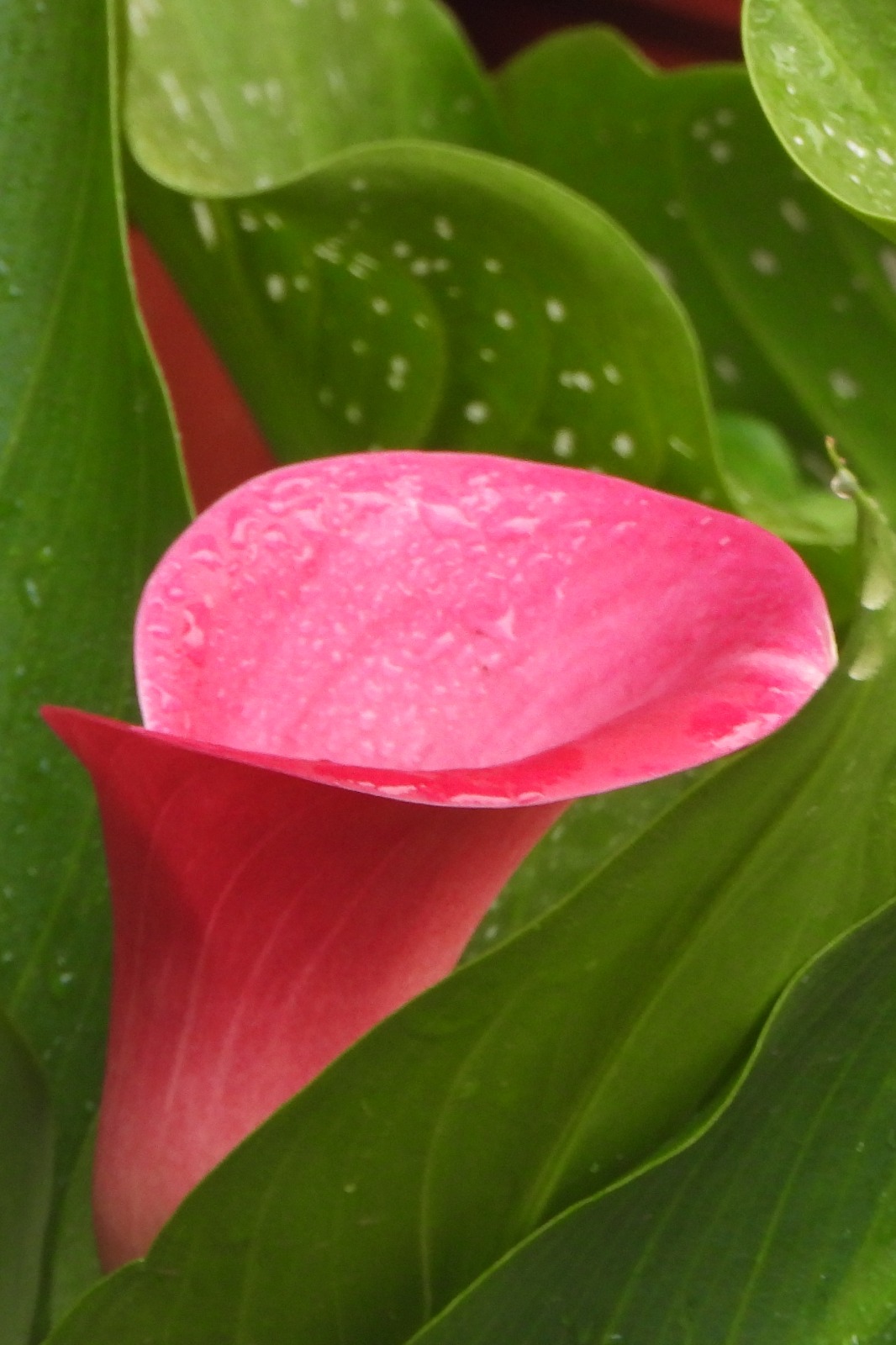
The calla lily belongs to the genus Zantedeschia in the Araceae family, a group of elegant flowering plants admired worldwide. The genus was named Zantedeschia by the German botanist Kurt Sprengel in honor of the Italian botanist Giovanni Zantedeschi, recognizing his contributions to botanical science.
The word “Calla” comes from the Greek word meaning beauty. According to Greek mythology, Zeus had a son with a mortal woman and secretly brought the child to his wife, Hera, so he could drink her divine milk. When Hera awoke and pushed the infant away, drops of her milk fell upon the earth. Wherever these sacred drops landed, beautiful calla lilies blossomed, giving the flower its enduring association with divine beauty.
The Neon Amar (Zantedeschia rehmanii) shown here is a striking calla lily cultivar commonly known as the pink arum lily, pink calla, or red calla lily. The species was first described by the German botanist Heinrich Gustav Adolf Engler, while its scientific name honors the Polish botanist Anton Rehmann for his valuable work in plant exploration and taxonomy.
Beyond its ornamental appeal, the calla lily carries deep symbolic meaning across cultures. It represents rebirth, resurrection, purity, and hope, making it a popular flower for Easter celebrations and weddings. At the same time, it has long been associated with death and remembrance. Calla lilies were often carved on tombstones, and a broken calla lily symbolized a life cut short. In Irish republican tradition, the white calla lily—often called the Easter Lily—serves as a powerful emblem honoring those who fought and died during the 1916 Easter Rising.
With its graceful form and rich history, the calla lily remains one of the world’s most meaningful flowers, symbolizing both the beauty of life and the dignity of remembrance.
Vincent Vanur