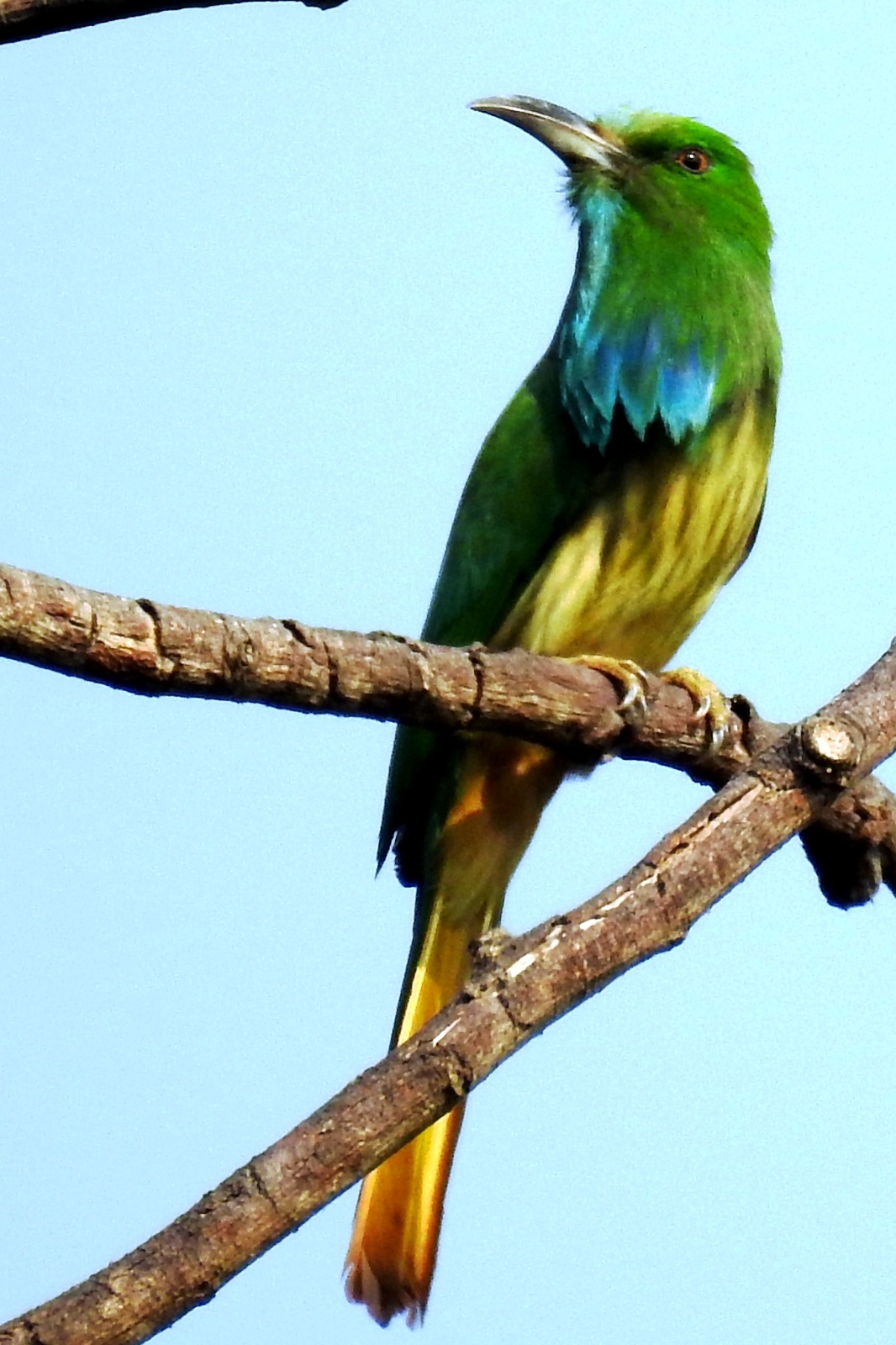
The Blue-bearded Bee-eater (Nyctyornis athertoni) is one of the largest and most striking bee-eaters found across the Indian subcontinent and parts of Southeast Asia. It is instantly recognizable by the long, shaggy blue feathers on its throat, which give the species its distinctive name. The bird was named after Lieutenant John Atherton, who collected the original specimen before his death in 1827. He described it as an extremely rare bird of dense forests that called with a loud “curr, curr” sound. The species was formally described in 1828 by Prideaux John Selby and Sir William Jardine.
During the breeding season, Blue-bearded Bee-eaters perform elaborate courtship displays that include ritual feeding, graceful bowing, and dramatic tail-fanning. Mated pairs often exchange cackling and rattling calls that end in soft purring notes. They excavate long nesting tunnels in steep mud banks, providing a safe place for raising their young.
This species is a skilled aerial predator, feeding primarily on bees and other flying insects. It has developed a remarkable hunting strategy by deliberately disturbing colonies of the Giant Honey Bee (Apis dorsata). As defensive guard bees swarm to chase the intruder, the bird catches them effortlessly in flight. Although it usually hunts by launching swift aerial sallies from a perch, it may also pick insects from tree bark. Blue-bearded Bee-eaters are sometimes seen foraging with mixed-species bird flocks and visiting the flowers of Erythrina and Salmalia, likely to capture insects attracted to the blossoms. Their specialized feeding behavior highlights the remarkable adaptations of forest birds and the ecological balance they help maintain.