Hoverflies, also known as flower flies or syrphid flies, belong to the insect family Syrphidae. The family was established in 1802 by the French zoologist Pierre André Latreille (1762–1833), a pioneering entomologist specializing in arthropods. Before the French Revolution, Latreille trained as a Roman Catholic priest. During the Revolution, he was imprisoned and reportedly regained his freedom after identifying a rare beetle, Necrobia ruficollis, that he discovered in his prison cell.
The family Syrphidae includes more than 6,000 described species in about 200 genera and is distributed worldwide. These harmless flies are among nature’s most effective mimics, with many species resembling stinging bees and wasps. This protective mimicry helps deter predators despite the flies being incapable of stinging.
Hoverflies are frequent visitors to flowers of wild plants and agricultural crops, making them one of the world’s most important groups of pollinating insects, second only to wild bees. Their ecological value extends beyond pollination. The larvae (maggots) of many species feed on aphids, thrips, and other plant-sucking insects, making them valuable natural predators and promising biological control agents in sustainable agriculture.
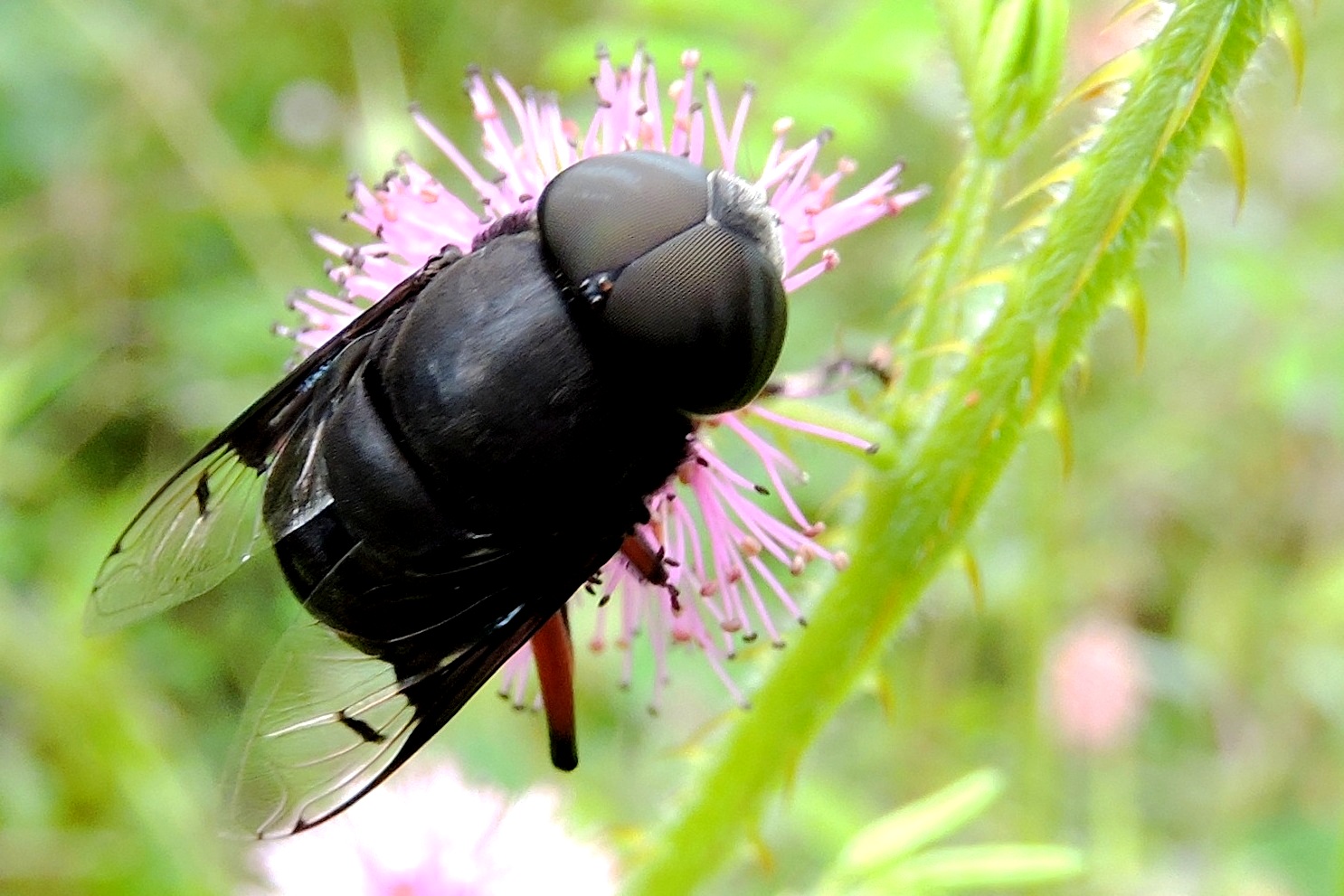
Pictured here is Copestylum violaceum, commonly known as the Purple Bromeliad Fly, a species within the family Syrphidae. It was first described in 1829 by the American naturalist Thomas Say (1787–1834), who is widely regarded as the father of descriptive entomology in the United States. Like many hoverflies, this striking species contributes to both pollination and the ecological balance of its habitat.
Vincent Vanur