Here is a polished and scientifically accurate version of your text with improved grammar and flow while preserving the factual content:
In the classification of extant Odonata proposed by Carter and colleagues in 2026, Gomphidae is one of the two families placed within the superfamily Gomphoidea, alongside Petaluridae. The family currently comprises approximately 100 genera and 1,000 described species, making it one of the largest dragonfly families. Gomphidae was established by the French entomologist Jules Pierre Rambur (1801–1870).
Gomphids are medium-sized to large dragonflies distinguished by their widely separated compound eyes, robust bodies, and, in many species, the swollen tip of the abdomen that gives them the common name clubtails. Most species inhabit freshwater ecosystems such as rivers, streams, ponds, and lakes. Their aquatic larvae burrow into the substrate, leaving only the eyes and upper body exposed to ambush passing prey. Because these larvae require clean, well-oxygenated freshwater and are highly sensitive to habitat disturbance, pollution and the degradation of aquatic ecosystems have contributed to declines in several species.
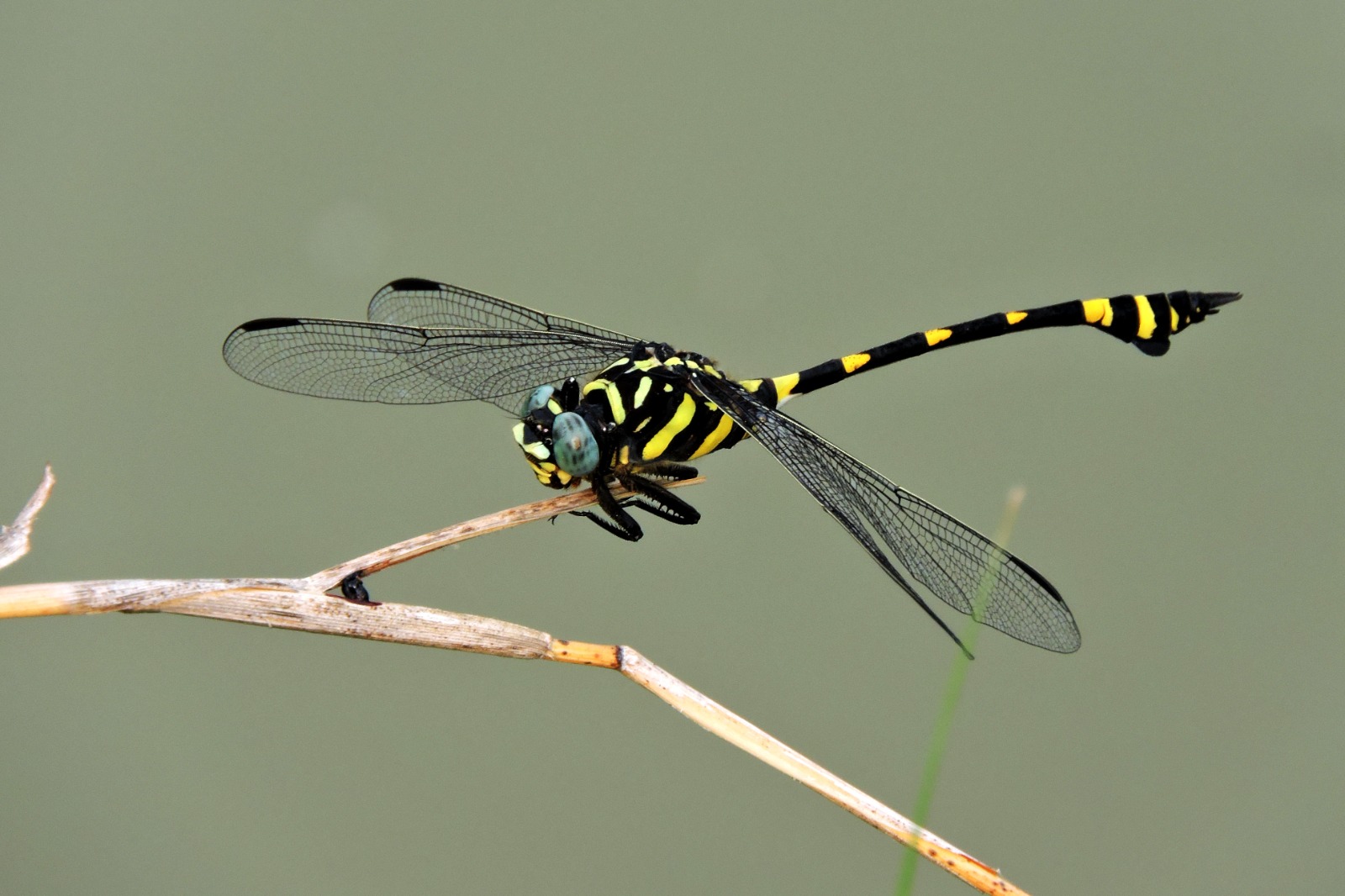
The Indian Common Clubtail (Ictinogomphus rapax) was first described by Jules Pierre Rambur in 1842. It is a large and striking dragonfly with bluish-grey eyes and a distinctive yellow-and-black coloration. The thorax is black with bold yellow or greenish-yellow stripes, while the abdomen is black marked with bright yellow patches. This species is commonly seen perched on bare twigs or branches overlooking water bodies, from where it watches for prey. It is widely found around ponds, tanks, rivers, and reservoirs, breeding successfully in both clean running water and still freshwater habitats. Its presence is often considered an indicator of healthy freshwater ecosystems.
Vincent Vanur