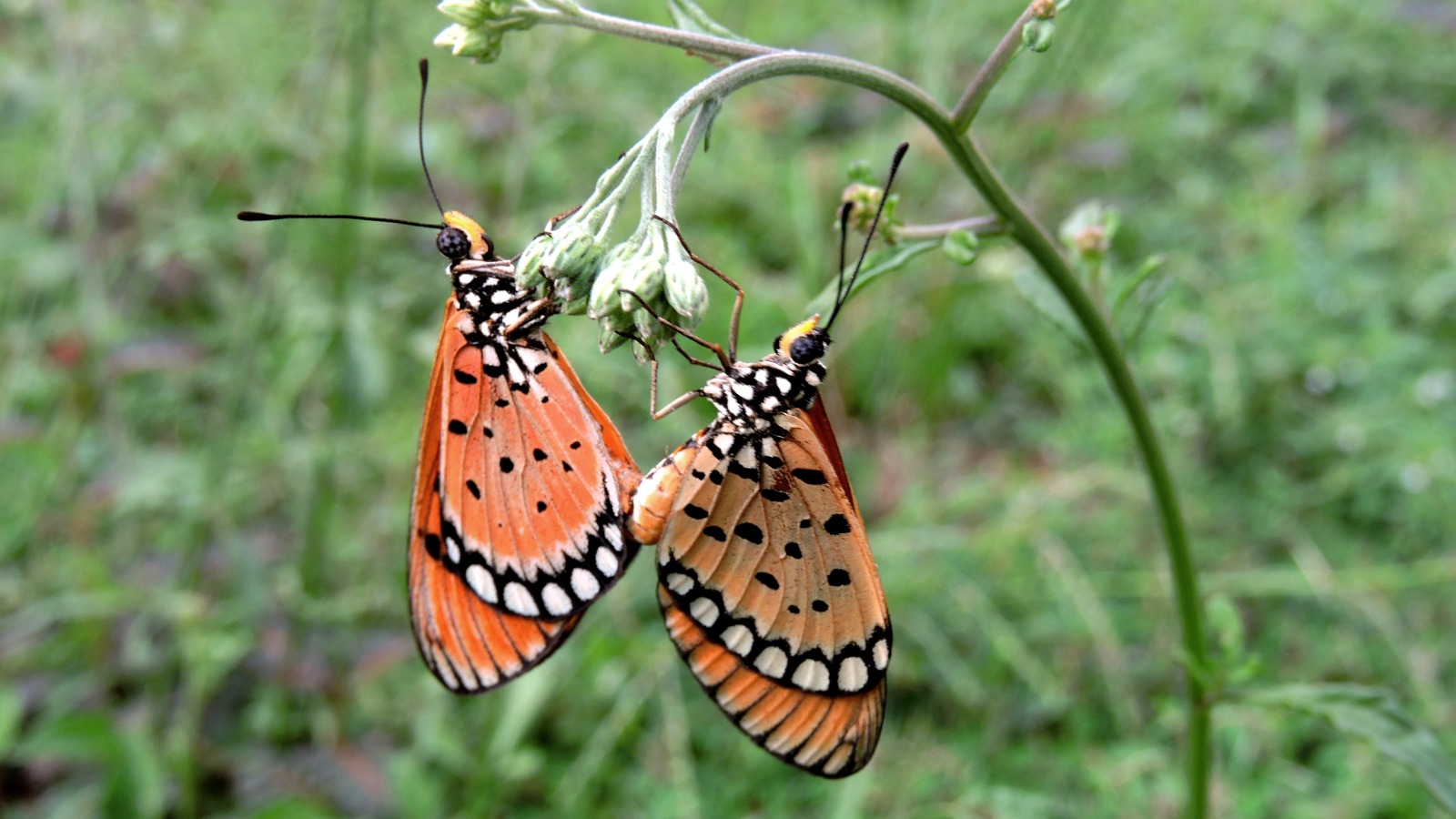
The Tawny Coster (Acraea terpsicore), a small yet striking butterfly of the brush-footed butterfly family (Nymphalidae), continues to fascinate researchers and nature enthusiasts with its extraordinary defense mechanisms and unique reproductive adaptations. First described in 1758 by Swedish naturalist Carl Linnaeus, this butterfly is widely found across the Indian subcontinent and Southeast Asia.
Its survival strategy begins in the caterpillar stage, when it feeds on Passiflora (passionflower) plants and stores toxic compounds within its body. These toxins remain effective through the pupa and adult stages, making the butterfly distasteful to predators. The bright orange-and-black coloration of both the pupa and adult serves as a warning signal, discouraging birds and reptiles from attacking.
If threatened, the Tawny Coster has additional defenses. It can release a yellowish, foul-smelling fluid from glands in its leg joints, while its tough outer body helps it withstand minor attacks. It may even feign death before flying away once the danger has passed.
The species also displays an unusual reproductive feature. After mating, the male produces a hardened waxy structure called a sphragis, or mating plug, which seals the female’s reproductive opening. This adaptation helps prevent additional mating, increasing the male’s chances of reproductive success. These remarkable traits make the Tawny Coster an excellent example of evolution shaping survival and reproduction in butterflies.
News as reported