


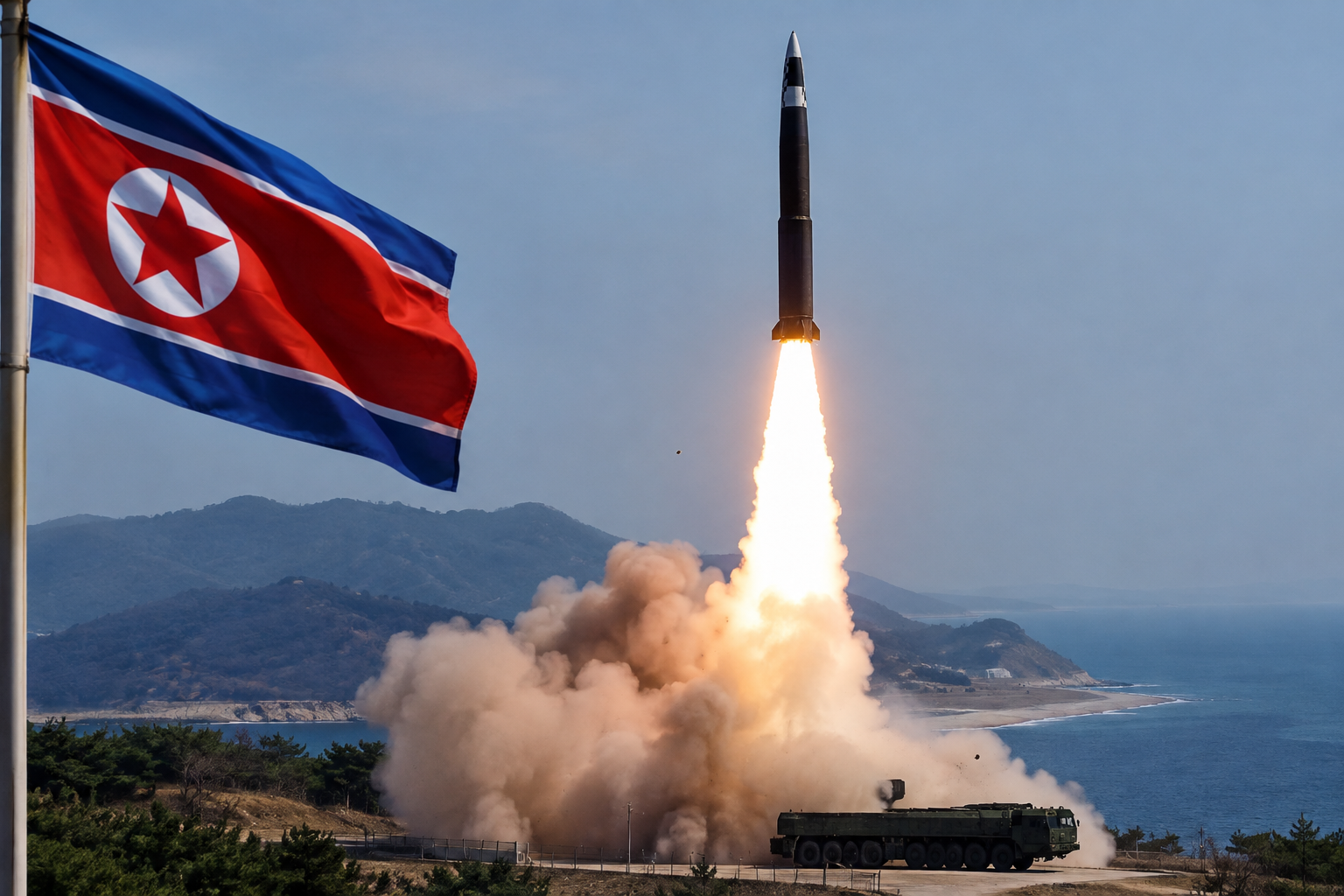
North Korea fired several short-range ballistic missiles toward the sea from the Wonsan area on its eastern coast on September 12, South Korea’s military said. The launches came just one day after the United States, South Korea and Japan completed a five-day trilateral military exercise.
South Korea’s Joint Chiefs of Staff said the missiles traveled approximately 250 kilometres (155 miles) toward waters off North Korea’s east coast. Seoul increased its surveillance and continued sharing information about the launches with the United States and Japan.
The missile launches were the first reported ballistic-missile test by North Korea in about three weeks. Pyongyang has repeatedly criticized joint military exercises involving the United States, South Korea and Japan, describing them as provocative and threatening to its security.
The latest launches followed the conclusion of the Freedom Edge exercise, which involved training across air, maritime and cyber domains. South Korea and the United States have said the drills are defensive and designed to strengthen their ability to respond to North Korean nuclear and missile threats.
North Korea had previously warned that it would respond to what it considers hostile military activities. The country has also continued expanding its nuclear and missile capabilities under leader Kim Jong Un. Recent developments include the commissioning of a second advanced destroyer that North Korea says will contribute to its nuclear deterrence.
The United States said the latest launches did not pose an immediate threat to U.S. territory or its allies, but reaffirmed its commitment to the defense of South Korea and Japan. South Korea’s government urged Pyongyang to stop ballistic-missile launches, which violate U.N. Security Council resolutions.
The latest missile test adds to tensions on the Korean Peninsula at a time when diplomatic efforts between Washington and Pyongyang remain stalled. Analysts say North Korea may be using its growing military capabilities to strengthen its position ahead of any potential future negotiations with the United States.
The situation is being closely monitored by South Korea, the United States and Japan, with regional governments concerned that continued weapons testing could further increase military tensions in Northeast Asia.
News as Reported.