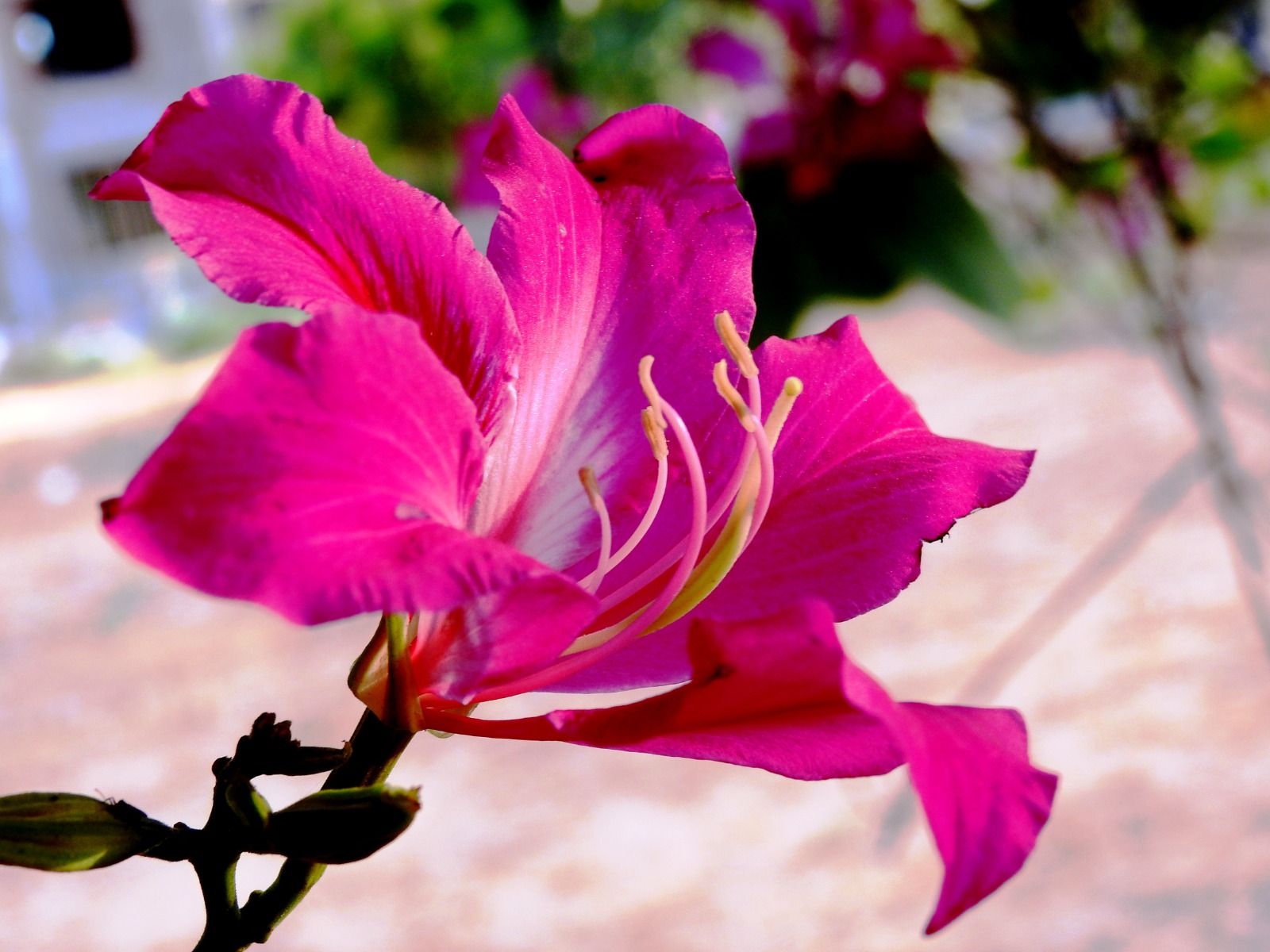
Bauhinia × blakeana, commonly known as the Hong Kong orchid tree, continues to attract scientific and cultural attention following genetic findings released by the Bauhinia Genome Project in 2025. The hybrid leguminous tree, celebrated for its large heart-shaped leaves and striking purplish-red flowers, is a familiar symbol across Hong Kong.
The tree was first discovered around 1880 by a French Catholic missionary near Pok Fu Lam in Hong Kong. Its first detailed scientific description was made in 1908 by botanist Stephen Troyte Dunn, who formally placed the plant in the genus Bauhinia. Researchers have long recognized the tree as a sterile hybrid that does not generally produce seeds or fruit and is propagated through grafting.
The 2025 genome study provided definitive confirmation of the tree’s parentage. Using a complete telomere-to-telomere reference assembly, scientists identified Bauhinia purpurea as the maternal parent and Bauhinia variegata as the other parental strain.
Beyond its botanical significance, Bauhinia × blakeana holds deep symbolic value. Since 1997, its flower has appeared on Hong Kong’s flag, coat of arms, and coins. The tree is also honored with a statue in Golden Bauhinia Square, reflecting its enduring role as a symbol of wisdom, good luck, and civic identity.
Vincent Vanur