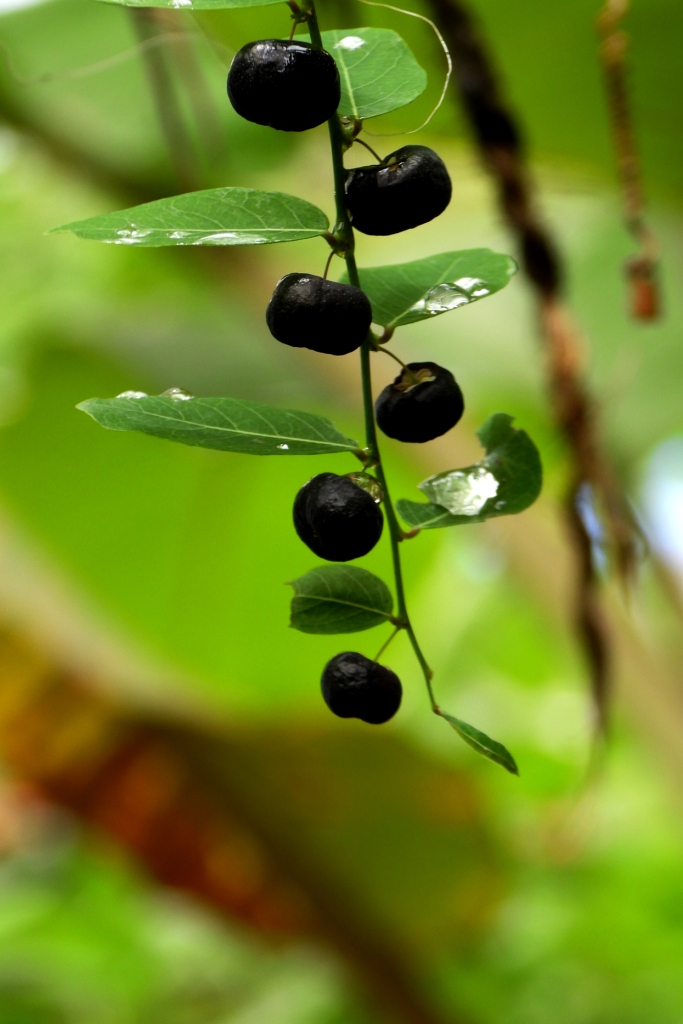
Belonging to the Phyllanthaceae family, Phyllanthus reticulatus, commonly known as the Black Honey Shrub, is a slender, much-branched shrub that often develops a climbing habit. The species was first described by the French botanist and explorer Jean Louis Marie Poiret (1755–1834). It is widely distributed across tropical regions of Asia and Africa, growing naturally in hedges, forest edges, and scrublands.
One of the plant’s most distinctive features is its small, berry-like fruits, which turn deep black when ripe. The fruits temporarily stain the mouth a violet or purple color after consumption, making them easily recognizable.
The flowers of Phyllanthus reticulatus are pollinated by several insect species, particularly moths. Interestingly, some moths exhibit a unique relationship with the plant by laying their eggs inside the flower ovaries. After hatching, the larvae feed on a portion of the developing seeds, while sufficient seeds remain for the plant’s reproduction—a fascinating example of the complex interactions between plants and insects.
For centuries, Phyllanthus reticulatus has held an important place in traditional medicine. Different parts of the plant are used to treat various ailments. The bark is valued for its astringent and diuretic properties, the leaves are traditionally used to manage diarrhoea, the roots are employed in treating asthma, and the fruits are applied to reduce inflammation.
Modern scientific research has confirmed several pharmacological properties of the plant. Studies have demonstrated antidiabetic, antiviral, antibacterial, anti-inflammatory, hepatoprotective, anticancer, and antiplasmodial activities. These medicinal effects are attributed to its rich phytochemical composition, including tannins, flavonoids, terpenoids, phenolic compounds, and steroids.
Current research is further exploring the plant’s therapeutic potential. Recent investigations into leaf extracts have shown promising anticancer activity against colon cancer cells, highlighting Phyllanthus reticulatus as a valuable medicinal resource for future drug development. Continued scientific studies may pave the way for new plant-based treatments for several chronic diseases.
Vincent Vanur