


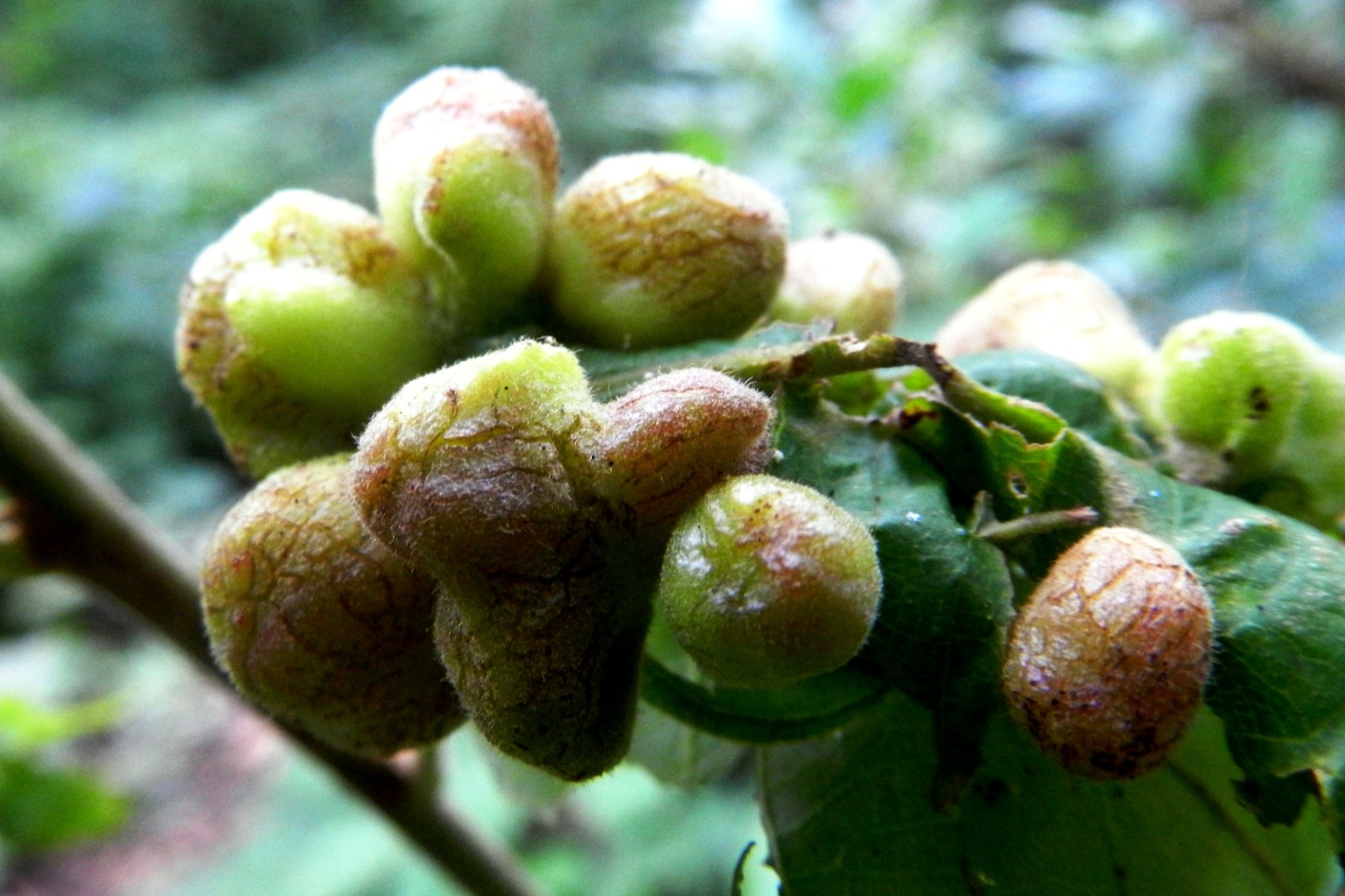
Plant galls, also known as cecidia, are unusual swelling-like growths that develop on the external tissues of plants. The word gall comes from the Latin galla (“oak apple”), while cecidia is derived from the Greek kēkidion, meaning “something that gushes out.” These growths resemble benign tumors or warts in animals but are generally harmless to the plant and are considered mainly a cosmetic issue.
Galls form when various organisms—including viruses, bacteria, fungi, insects, mites, and even parasitic plants—interact with plant tissues. Among the most fascinating are insect- and mite-induced galls. These organisms manipulate the plant’s natural hormones, causing it to produce highly organized structures that serve as both a protective shelter and a nutrient-rich food source for their developing young. Certain parasitic plants also produce gall-like structures. For example, the hemi-parasitic mistletoe forms woody swellings on its host plants, while the parasitic vine Cassytha filiformis feeds on galls created by the cynipid wasp Belonocnema treatae.
Despite their unusual appearance, most plant galls do not significantly harm healthy plants, and pesticide treatment or other management is rarely necessary.
Beyond their ecological importance, galls have played a valuable role throughout human history. Rich in tannic acid and natural resins, they have long been used in the production of permanent inks, leather tanning, textile dyeing, and medicinal preparations. Historical records show that the Jewish Talmud mentions the use of galls in leather tanning and as a base for ink. Medieval Arabic texts also describe their use as a mordant for black dyes and as a traditional remedy for treating fever and intestinal disorders.
Today, plant galls continue to fascinate botanists and entomologists as remarkable examples of the complex relationships between plants and the organisms that depend on them.
- Vincent Vanur