


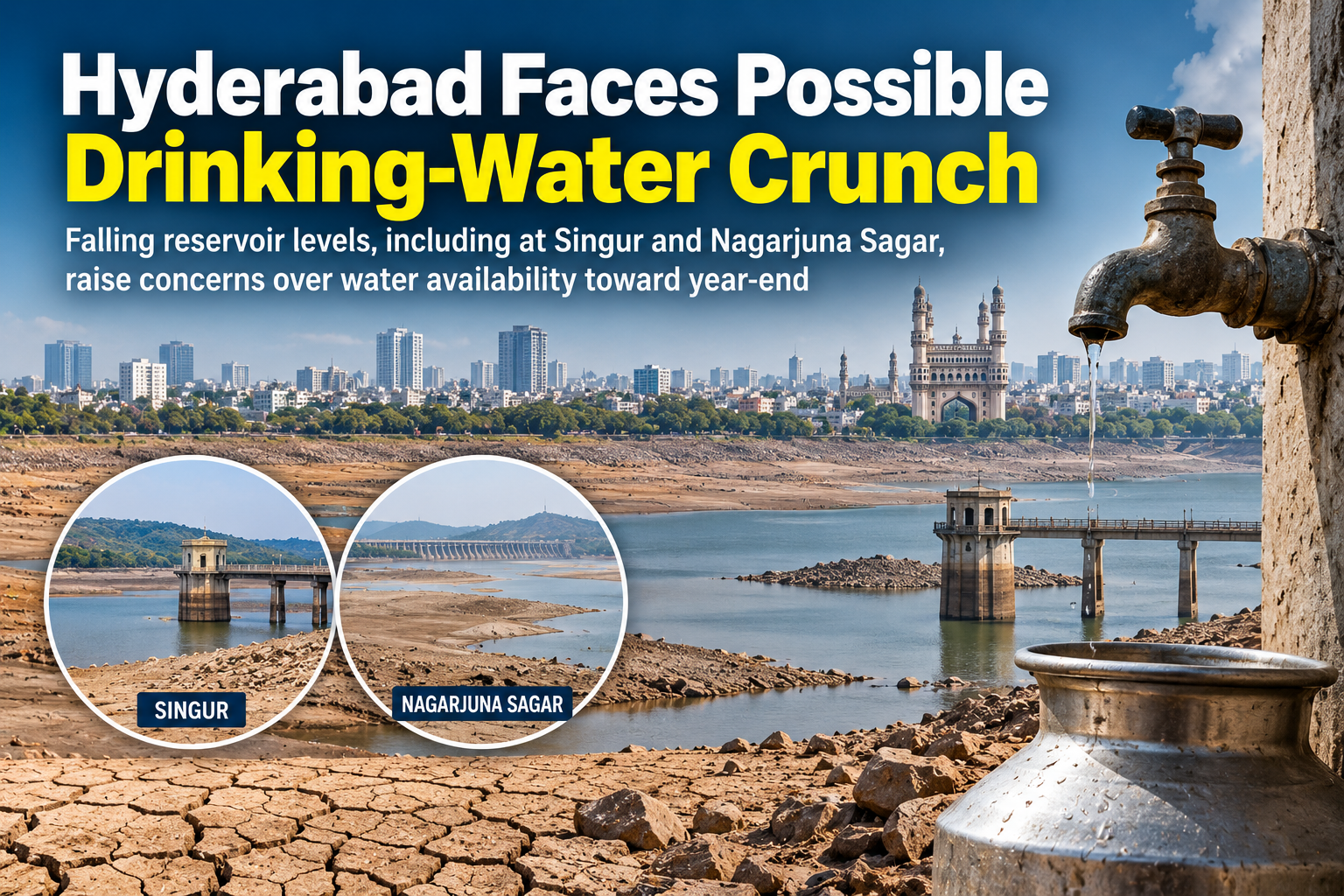
Hyderabad, October 6, 2026: Hyderabad could face a serious drinking-water shortage as early as December or January, with water levels in several key reservoirs falling sharply following deficient rainfall across Telangana.
The situation is particularly concerning at Singur reservoir, an important source of drinking water for Hyderabad’s western areas and IT corridor. Singur currently holds about 3.9 TMC of water against its full capacity of 29.9 TMC, leaving it at roughly 13% of capacity. Officials fear the available water could be exhausted within around 60 days if conditions do not improve.
Other sources are also under pressure. Osmansagar, which supplies parts of the Old City and surrounding areas, has seen storage fall from approximately 3.5 TMC to 2.2 TMC. Hyderabad also receives water from the Krishna through Nagarjuna Sagar and from the Godavari through the Sripada Yellampally project. Officials have reported worrying water levels across both river basins.
The shortage is being linked largely to weak rainfall. Telangana has recorded a 17% rainfall deficit, while poor inflows have affected reservoirs across the state. The government has said drinking-water requirements will receive priority amid the shortage.
The Hyderabad Metropolitan Water Supply and Sewerage Board (HMWS&SB) has already begun preparing contingency measures. Officials have been directed to identify areas dependent on the Singur-Manjeera system and develop locality-specific plans covering alternative water sources, supply routes and emergency quantities.
Authorities are also identifying low-pressure and high-demand areas and reviewing pipelines, interconnections and borewells that could support alternative supplies if reservoir levels continue to decline. The Water Board is additionally working to expand the use of treated wastewater for non-domestic purposes such as construction, landscaping and parks.
While authorities are preparing alternatives, the declining reservoir levels have raised the possibility that Hyderabad’s usual summer water stress could arrive several months earlier than expected.
Residents may therefore be encouraged to conserve water as officials closely monitor reservoir levels and prepare emergency supply arrangements for the months ahead.