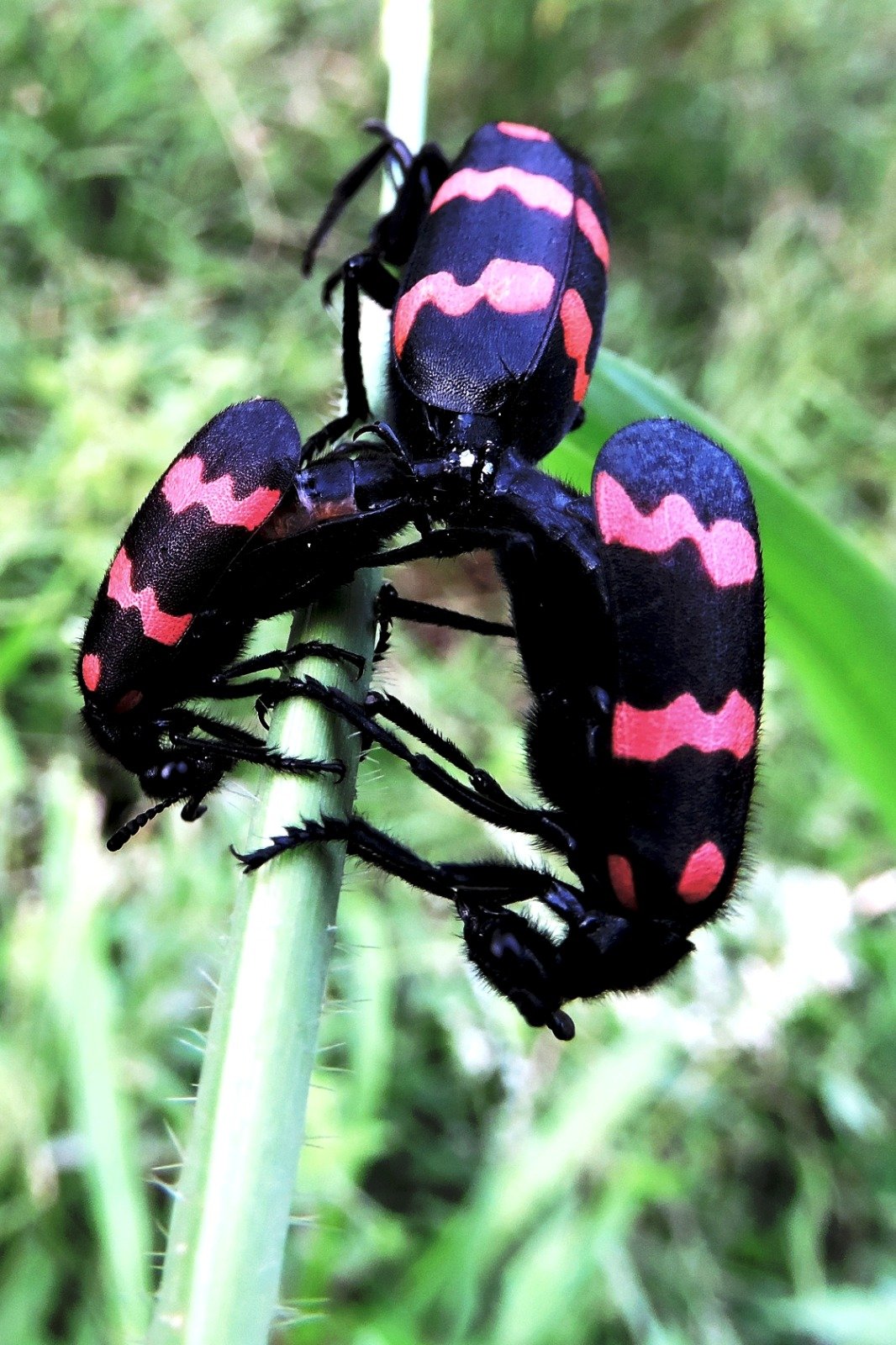
The orange blister beetle (Mylabris pustulata), a striking member of the beetle family Meloidae, is known for its vivid coloration and potent chemical defense. Blister beetles get their name from cantharidin, a blistering compound produced by many species in the family as a defense against predators.
Around 2,500 species of blister beetles are known worldwide. Many display bright, warning colors that signal their toxicity to potential predators. Their diet varies considerably, with different species feeding on plant roots, stems, leaves, flowers and fruits. Feeding can occur during either the larval or adult stage, depending on the species.
Blister beetles also have an unusual relationship with bees. Their larvae of some species can use sex pheromones to attract male bees, hitch a ride back to bee nests and eventually feed on bee eggs and stored food.
The insects have both ecological and economic significance. Cantharidin has a long history of medicinal use, particularly in wart-removal treatments, although it is toxic and requires careful handling. Large populations of some blister beetle species can also damage agricultural crops, especially legumes, by feeding on flowers.
The orange blister beetle, Mylabris pustulata, occurs in India, Sri Lanka, China and other parts of Asia. The species was first described in 1795 by French naturalist Guillaume-Antoine Olivier. Its distinctive appearance and unusual mating behavior continue to make it an intriguing subject for insect enthusiasts and photographers.