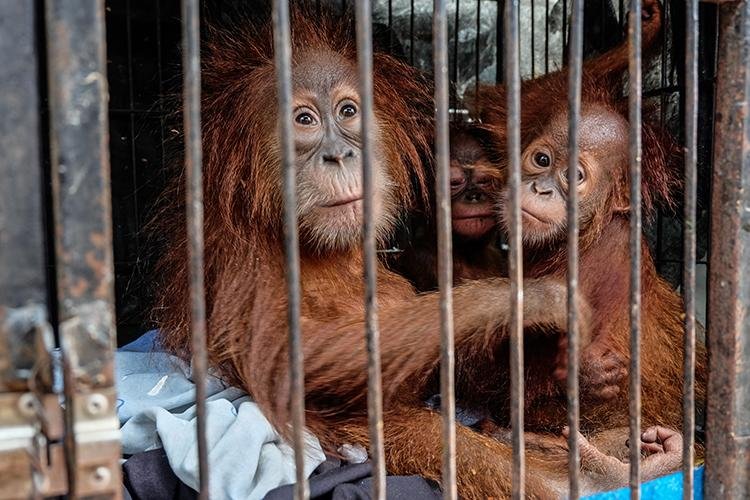
Indian authorities are investigating how five baby orangutans arrived in India, amid concerns that they may be connected to an organised international wildlife-trafficking network. Preliminary information suggests the animals may have originated from Sumatra in Indonesia. Indonesian authorities are also preparing to investigate the possibility of repatriating the animals.
The case has attracted attention because orangutans are native to Southeast Asia and are not naturally found in India. The discovery has raised questions about how the animals were transported across international borders and whether other people or organisations may be involved.
Wildlife trafficking is a major conservation concern because young animals are often removed from their natural habitats and transported illegally for private ownership, entertainment or commercial purposes. Such journeys can expose animals to severe stress, injury and poor living conditions.
Indian and Indonesian authorities are expected to work together to establish the animals’ exact origin and determine the appropriate legal and conservation measures. If Indonesian origin is confirmed, repatriation could become an important part of the case.
The investigation could also provide information about international trafficking routes and help authorities strengthen cooperation against the illegal movement of protected wildlife.