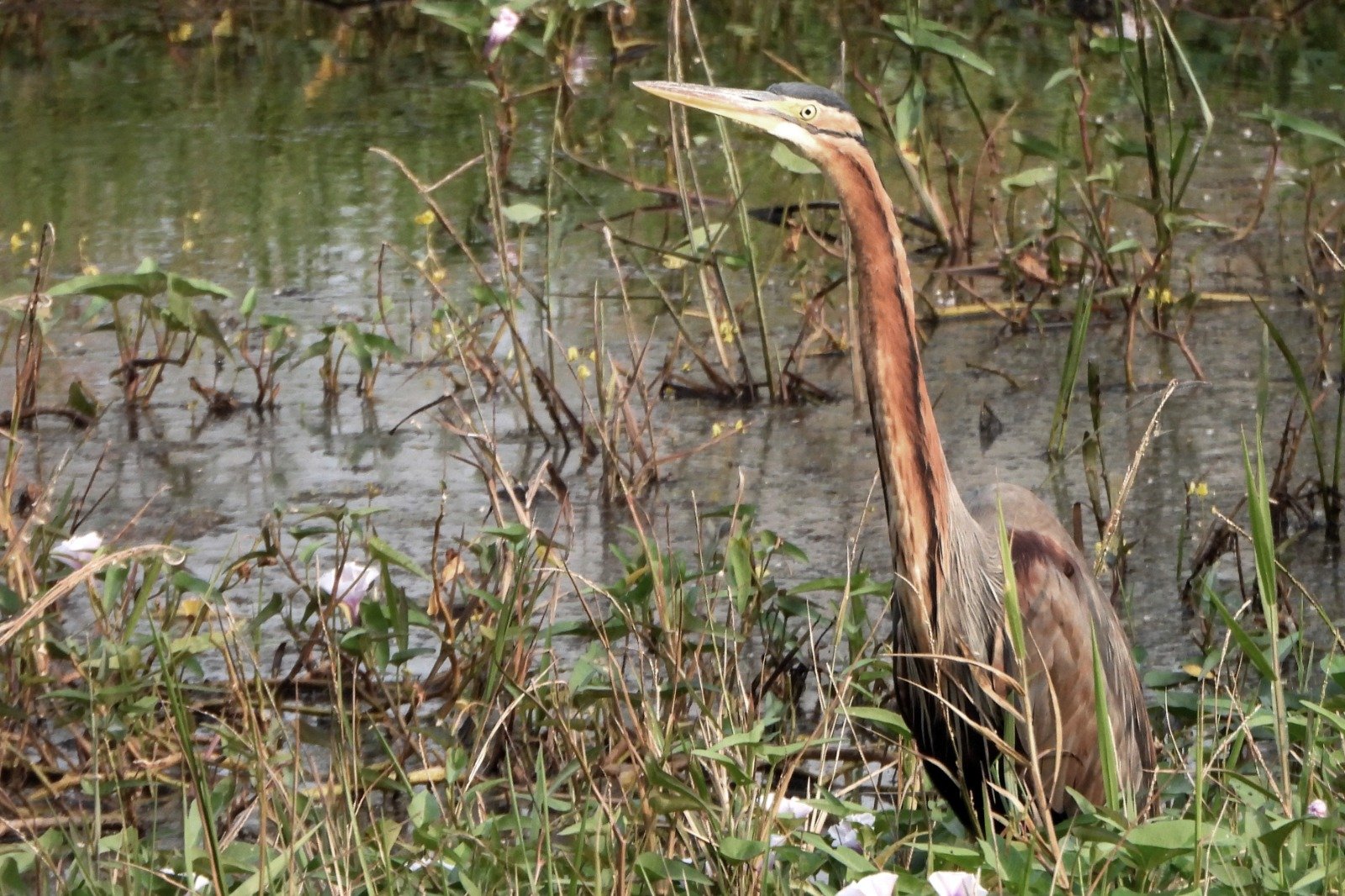
The Purple Heron (Ardea purpurea) is a widespread wetland bird known for its elegant appearance and preference for densely vegetated habitats, particularly reed beds along water bodies. First formally recorded in 1766 by Swedish biologist and physician Carl Linnaeus, its scientific name comes from the Latin ardea, meaning “heron”, and purpureus, meaning “purple-coloured”.
The subspecies found in the region is Ardea purpurea manilensis, first recorded in 1834 by German physician, botanist and naturalist Franz Julius Ferdinand Meyen. The name manilensis refers to Manila.
Purple Herons are skilled hunters, feeding on fish, frogs, rodents and insects. They usually stalk their prey slowly through vegetation or remain motionless, waiting to ambush passing prey. During breeding, both parents share incubation duties, with the eggs taking approximately 24–28 days to hatch. They also work together to care for their young, which become independent and fledge at around two months of age before dispersing widely.
Despite its broad distribution, the species faces growing conservation concerns. The global population was estimated at between 180,000 and 380,000 individuals in 2019, with numbers believed to be declining. Wetland drainage, disturbance and the destruction of reed beds are among its major threats.
The Purple Heron is also covered by the Agreement on the Conservation of African-Eurasian Migratory Waterbirds (AEWA).
The photograph featured here was taken by me in January this year, capturing this remarkable wetland bird in its natural habitat.
Vincent Vanur