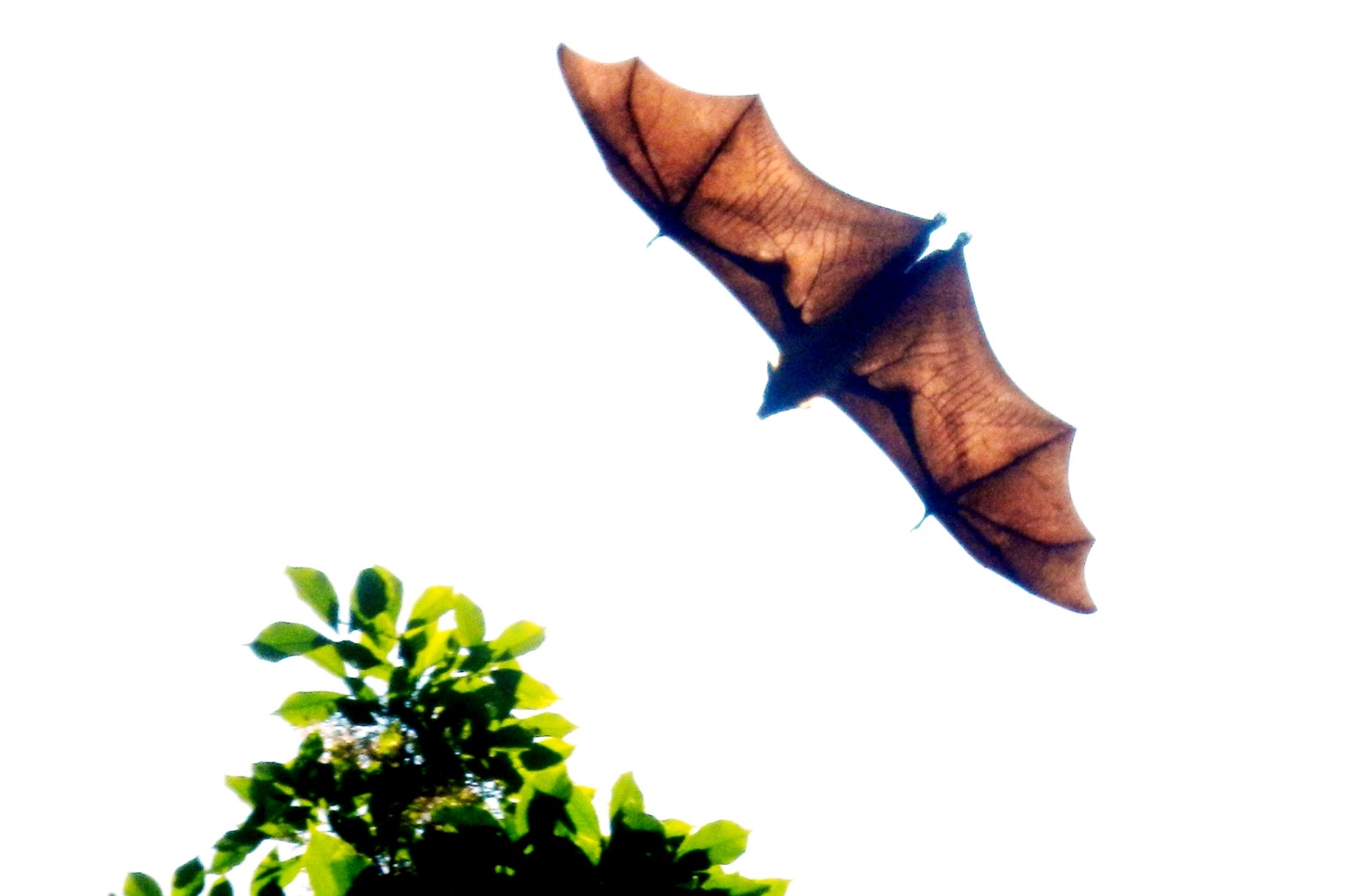
The Indian flying fox (Pteropus medius), also known as the greater Indian fruit bat, is one of the largest bat species in the world and is native to the Indian subcontinent. It is a nocturnal mammal that feeds mainly on ripe fruits and nectar. Although often considered a pest because it damages fruit crops, its role in pollination and seed dispersal makes it an important contributor to healthy ecosystems. It can also act as a disease vector, carrying viruses that may be transmitted to humans. The species was first described in 1825 by the Dutch zoologist and museum director Coenraad Jacob Temminck (1778–1858).
Initially believed to be strictly fruit-eating, the Indian flying fox has also been observed consuming insects, leaves, flowers, seed pods, bark, cones, and twigs. Its diet varies seasonally, with mango fruits providing an important source of moisture during autumn and spring.
The species exhibits a polygynandrous mating system, in which both males and females have multiple mating partners. The gestation period lasts about 140–150 days. Remarkably, all activities, including mating and giving birth, are performed while hanging upside down. Females usually give birth to one or two pups. The mother carries her young for the first few weeks after birth, and weaning occurs at around five months of age. Males do not participate in parental care. Young bats begin flying at approximately eleven weeks and reach reproductive maturity between 18 and 24 months of age.
Despite its occasional conflicts with fruit growers, the Indian flying fox plays a vital ecological role through pollination and seed dispersal, helping to maintain the biodiversity of forests and other natural habitats.