India is home to five major species of honey bees. Among them, Apis cerana indica (Indian hive bee), Apis mellifera (European honey bee), and Melipona iridipennis (stingless bee) can be reared in bee boxes for honey production. In contrast, Apis dorsata (rock bee) and Apis florea (little bee) are wild species that cannot be easily domesticated.
The rock bee, Apis dorsata, was first described in 1793 by Johan Christian Fabricius. It is one of the largest honey bee species in the world and is renowned for its impressive nesting habits and highly organized colony life.
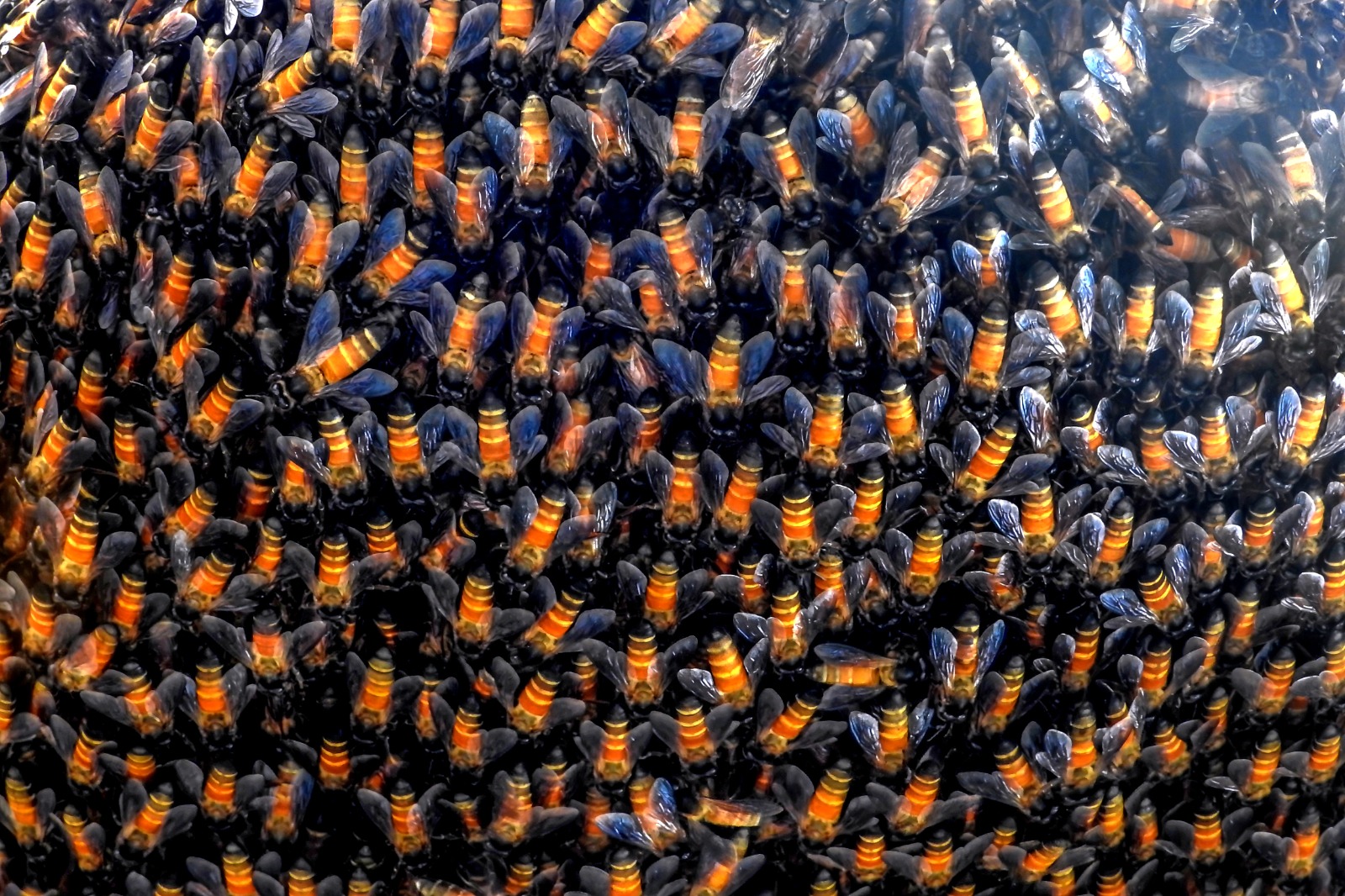
Rock bees build enormous nests in exposed locations high above the ground, such as tall trees, cliff faces, towers, and buildings. A single colony may contain up to 100,000 bees. Each nest consists of a single large vertical comb made of wax produced by worker bees, with thousands of precisely constructed hexagonal cells used for storing honey, pollen, and developing brood.
One of the most fascinating aspects of the rock bee is its powerful defense system. When threatened by predatory wasps, the bees perform a behavior known as “shimmering.” Thousands of worker bees simultaneously raise and shake their abdomens, creating a wave-like ripple across the nest surface that resembles the coordinated movement of spectators in a stadium. This visual display effectively deters approaching predators.
They also employ “heat balling,” where groups of bees surround an invading wasp and raise their thoracic temperature to about 45°C, a level that can kill the predator. If necessary, rock bees will aggressively sting intruders, including humans, and large-scale attacks can sometimes be fatal.
-Vincent Vanur