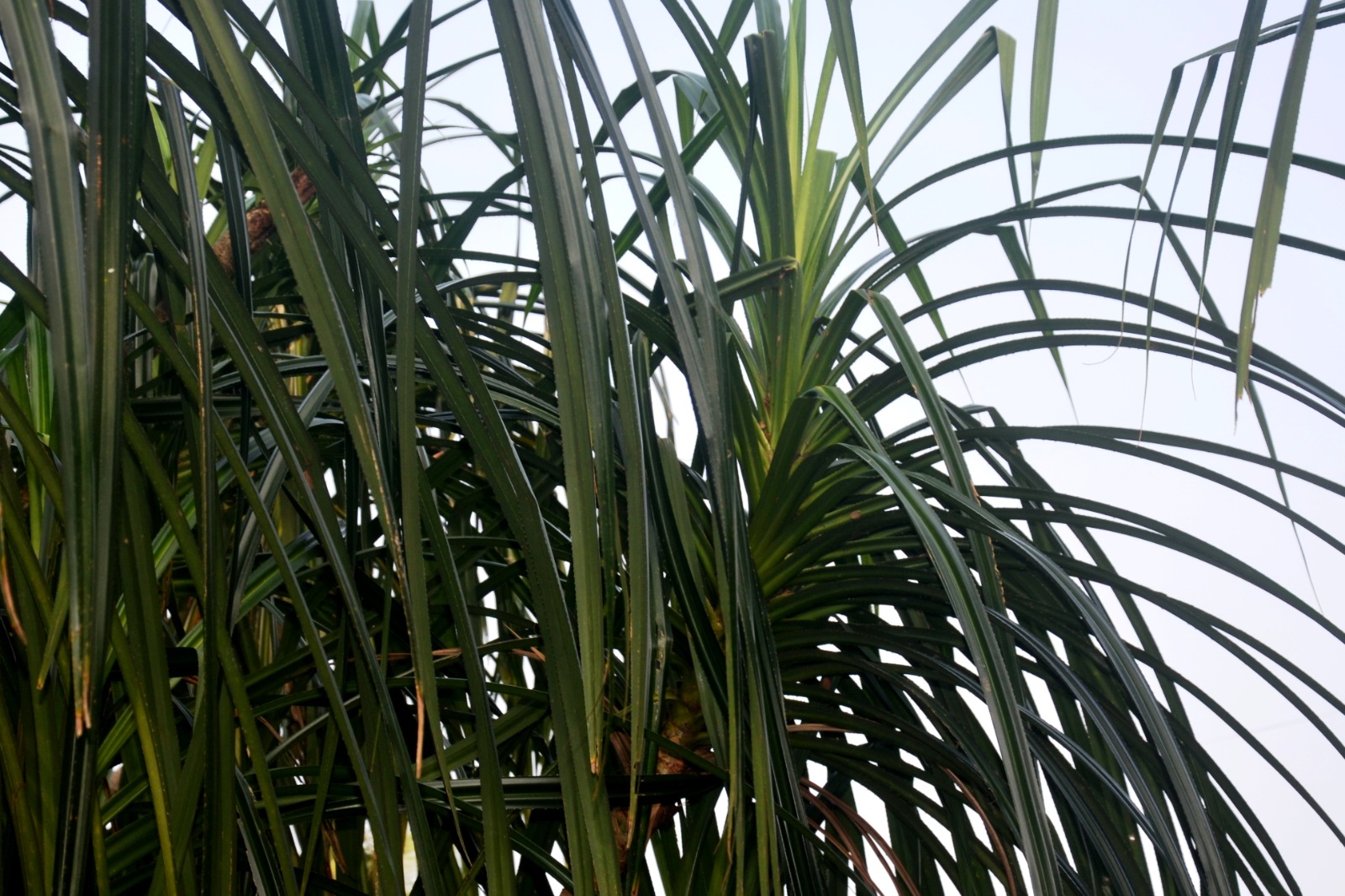
Pandanus odorifer, belonging to the Pandanaceae family, is a fragrant tropical plant commonly known as Kewda, screw pine, screw tree, or umbrella tree. The species was first scientifically recorded by German botanist Carl Ernst Otto Kuntze (1843–1907). Widely distributed along coastal regions of India, especially in Kerala and Odisha, the plant plays an important ecological role by helping retain moisture in coastal landscapes and supporting fish breeding habitats near water bodies.
The plant is highly valued for its intensely fragrant flowers, which are commonly sold in local markets for religious offerings and worn as traditional hair adornments. Kewda oil and extracts are widely used in aromatherapy and traditional medicine. Its flowers and roots have long been used in indigenous remedies for colds, fever, headaches, and digestive disorders.
Kewda also has culinary significance. Its aromatic essence is used as a flavoring ingredient in Indian sweets such as rasgulla and petha, and in savory dishes including biryani and festive rice preparations.
Traditionally, coastal and island communities used pandanus leaves extensively for weaving mats, baskets, bags, and household items. However, the widespread availability of cheaper plastic alternatives, along with the destruction of wetlands and depletion of pandanus groves, has caused a sharp decline in these practices. Today, the leaves are mainly used for handicraft products aimed at tourists.
A socio-economic study conducted in 2012 among 400 people from 100 households in Mathilakam and Kaipamangalam panchayaths of Thrissur district, Kerala, revealed a major decline in traditional mat weaving. The proportion of people engaged in weaving pandanus mats dropped from 52% at the beginning of the millennium to only 18% within a decade, reflecting the rapid erosion of this traditional livelihood and cultural practice.
– Vincent Vanur