

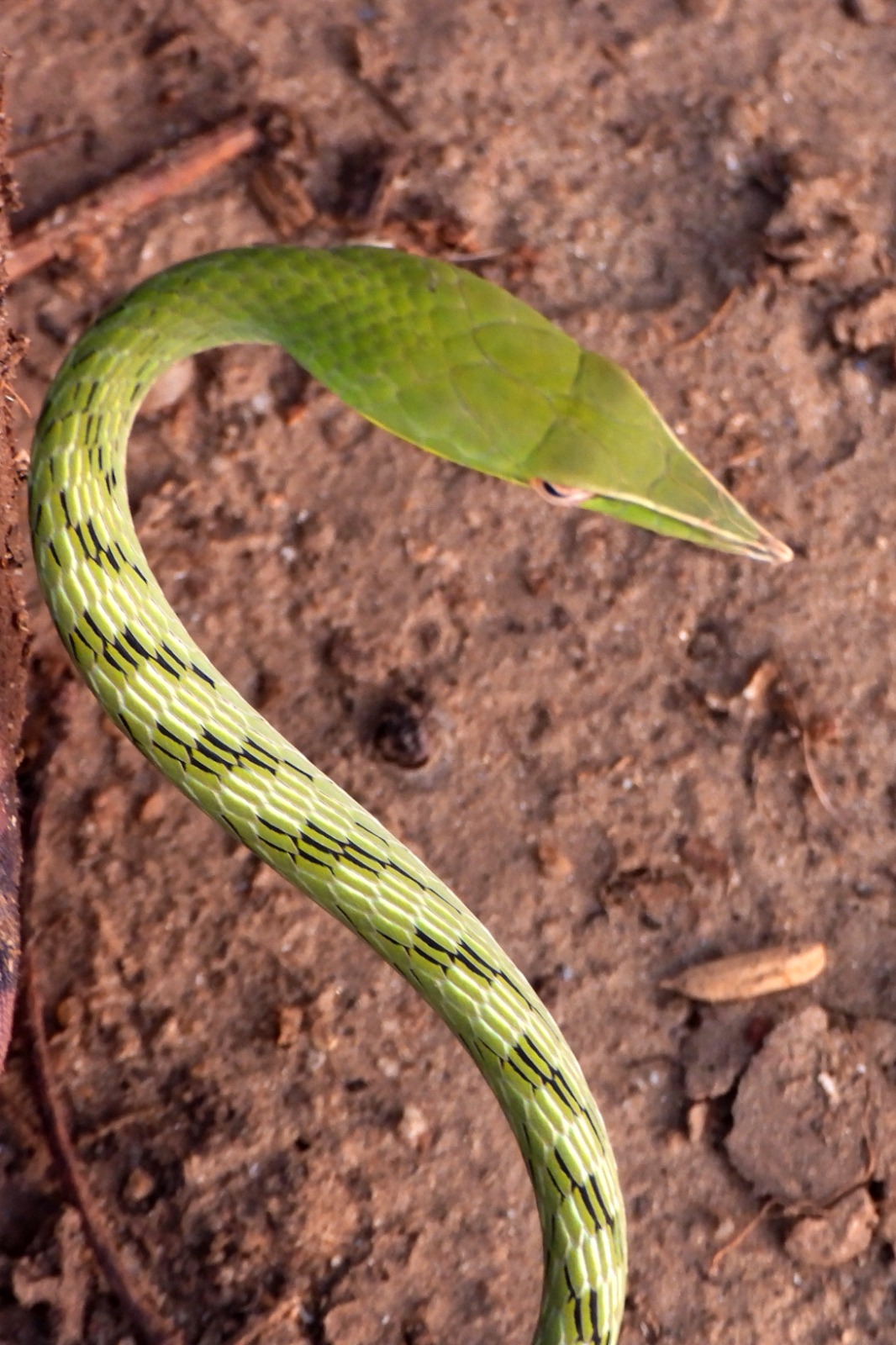
The Ahaetulla malabarica, commonly known as the Malabar vine snake or Long-nosed Whipsnake, belongs to the Colubridae family and is a slender arboreal snake endemic to the southern and central regions of the Western Ghats of India. Known for its elongated body, pointed snout, and excellent camouflage among foliage, the species is primarily found in tropical forests and wooded habitats.
For many years, the Malabar vine snake was considered con-specific with Ahaetulla nasuta, a related species now recognized as endemic to Sri Lanka. Following extensive taxonomic and genetic studies by zoologists Mallik, Srikanthan, Pal, Princia D’Souza, Shanker, and Ganesh, the distinction between the two species gained global scientific acceptance in 2020.
The Malabar vine snake is mildly venomous, but its bite is considered medically insignificant to humans. A bite may produce temporary localized pain, swelling, or numbness, which generally subsides within a few days without medical treatment. Despite long-standing folklore, there is no scientific evidence supporting the belief that this snake deliberately strikes at human eyes.
This species is ovoviviparous, meaning the eggs develop and hatch within the mother’s body, and fully formed young are born alive. A single female may give birth to as many as 23 offspring at one time. Interestingly, these snakes are believed to possess the ability for delayed fertilization. Historical records mention a female kept in isolation at the London Zoo from 1885 that unexpectedly gave birth in 1888, suggesting the remarkable reproductive adaptability of the species.


- upgraderz.aws@gmail.com
- upgraderz.aws@gmail.com
- upgraderz.aws@gmail.com
- upgraderz.aws@gmail.com