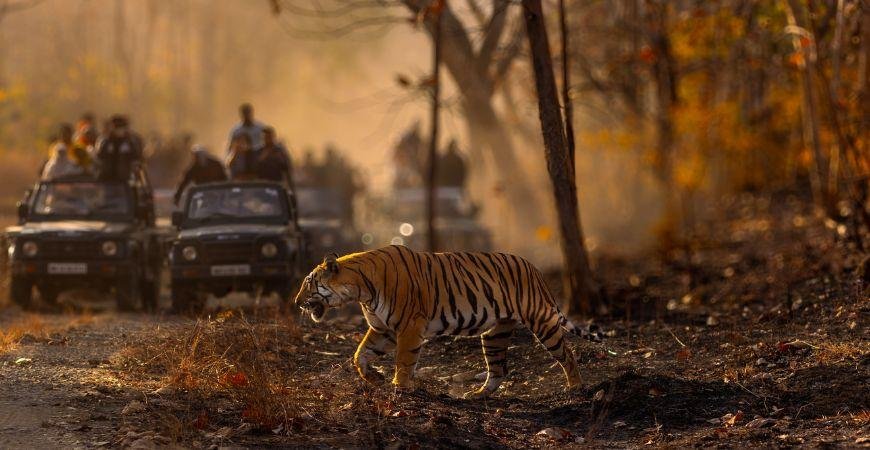
A young tiger from Maharashtra’s Tipeshwar Wildlife Sanctuary has travelled more than 400 kilometres across the state, offering fresh evidence that wildlife corridors are helping large carnivores move between fragmented forest habitats.
The tiger’s remarkable journey took it through five districts, covering a vast landscape beyond its original sanctuary. Wildlife officials and conservationists are closely monitoring its movement, which provides valuable information about how tigers use forests, agricultural landscapes and other habitats while dispersing in search of territory.
Experts say such long-distance movement is an important indicator of ecological connectivity. The availability of prey, water sources and patches of suitable vegetation can encourage tigers to travel long distances. Connected habitats also allow young animals to establish new territories and potentially expand tiger populations.
However, journeys of this scale also expose wildlife to risks, including roads, railway lines, human settlements and encounters with local communities. Conservationists therefore stress the importance of protecting identified wildlife corridors and reducing human-wildlife conflict.
The tiger’s movement highlights the need for landscape-level conservation rather than focusing only on protected sanctuaries. Maintaining connections between forests can give wildlife safer routes to disperse and strengthen the long-term survival of tiger populations.
The journey is being seen as an encouraging sign for Maharashtra’s broader conservation efforts and the importance of protecting natural corridors.
News as reported