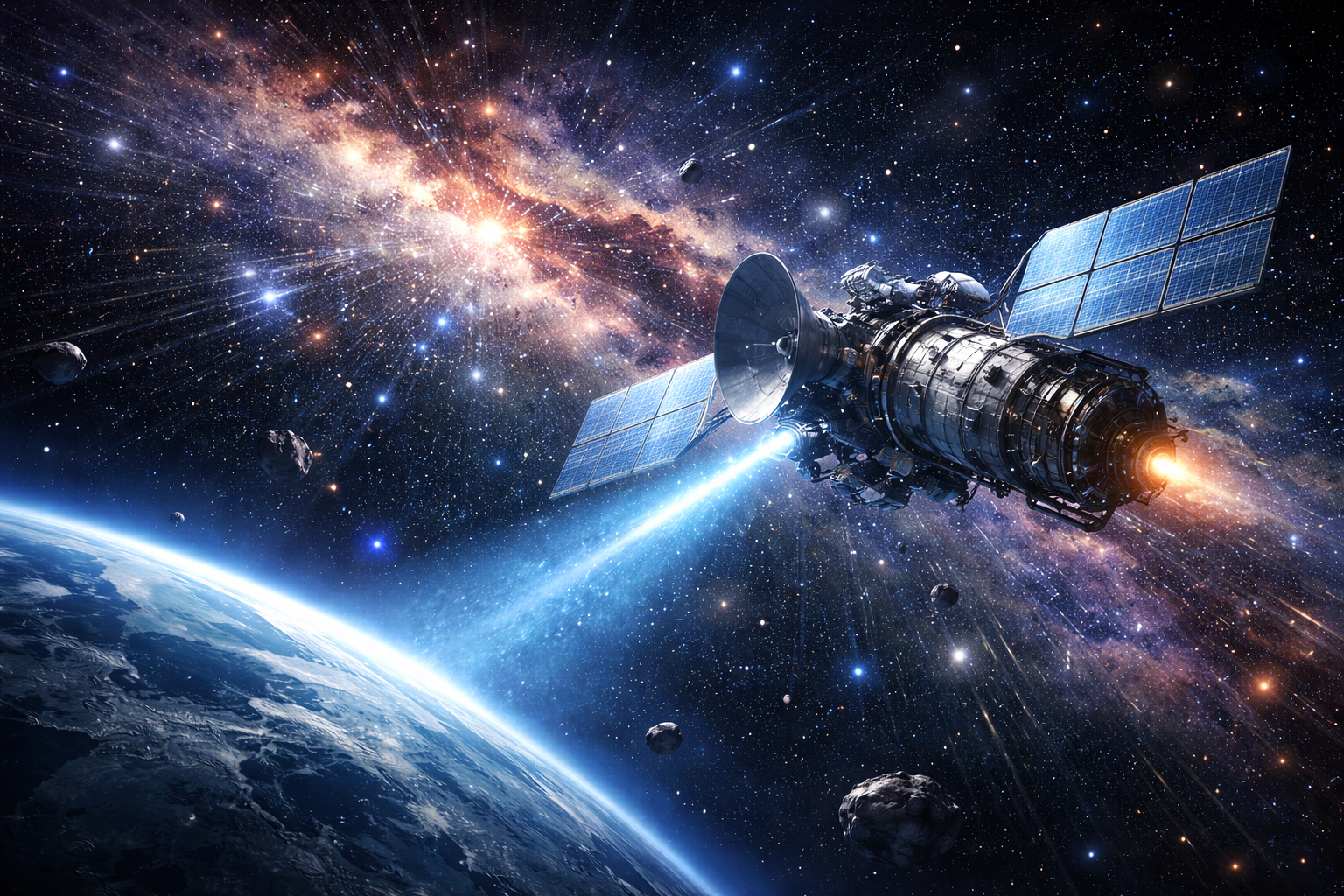
Leading global space agencies have announced plans for a joint mission aimed at studying the effects of deep-space radiation on both human biology and spacecraft systems—an essential step toward future long-duration missions to the Moon and Mars.
The collaboration is expected to involve major organizations including NASA, European Space Agency, and Japan Aerospace Exploration Agency, marking a significant milestone in international space cooperation.
The mission will focus on analyzing high-energy cosmic radiation beyond Earth’s protective magnetosphere. Scientists aim to better understand how prolonged exposure affects astronauts’ health, including potential risks such as DNA damage and increased cancer likelihood. The findings are expected to play a crucial role in designing safer spacecraft and protective technologies.
Advanced instruments will be deployed aboard a specialized research spacecraft, capable of measuring radiation levels in deep space with unprecedented precision. In addition, biological experiments using simulated human tissues and microorganisms will help researchers evaluate long-term exposure effects.
Officials emphasized that understanding radiation hazards is one of the biggest challenges in planning crewed missions to destinations like Mars. Unlike low Earth orbit missions, deep-space travel exposes astronauts to significantly higher levels of cosmic radiation, making protective strategies essential.
The joint mission is also expected to test new shielding materials and innovative spacecraft designs that could reduce radiation exposure. Data collected will contribute to future international missions and help shape guidelines for astronaut safety.
Experts say the initiative represents a critical step toward sustainable human exploration beyond Earth, reinforcing global efforts to push the boundaries of space science. News as Reported.