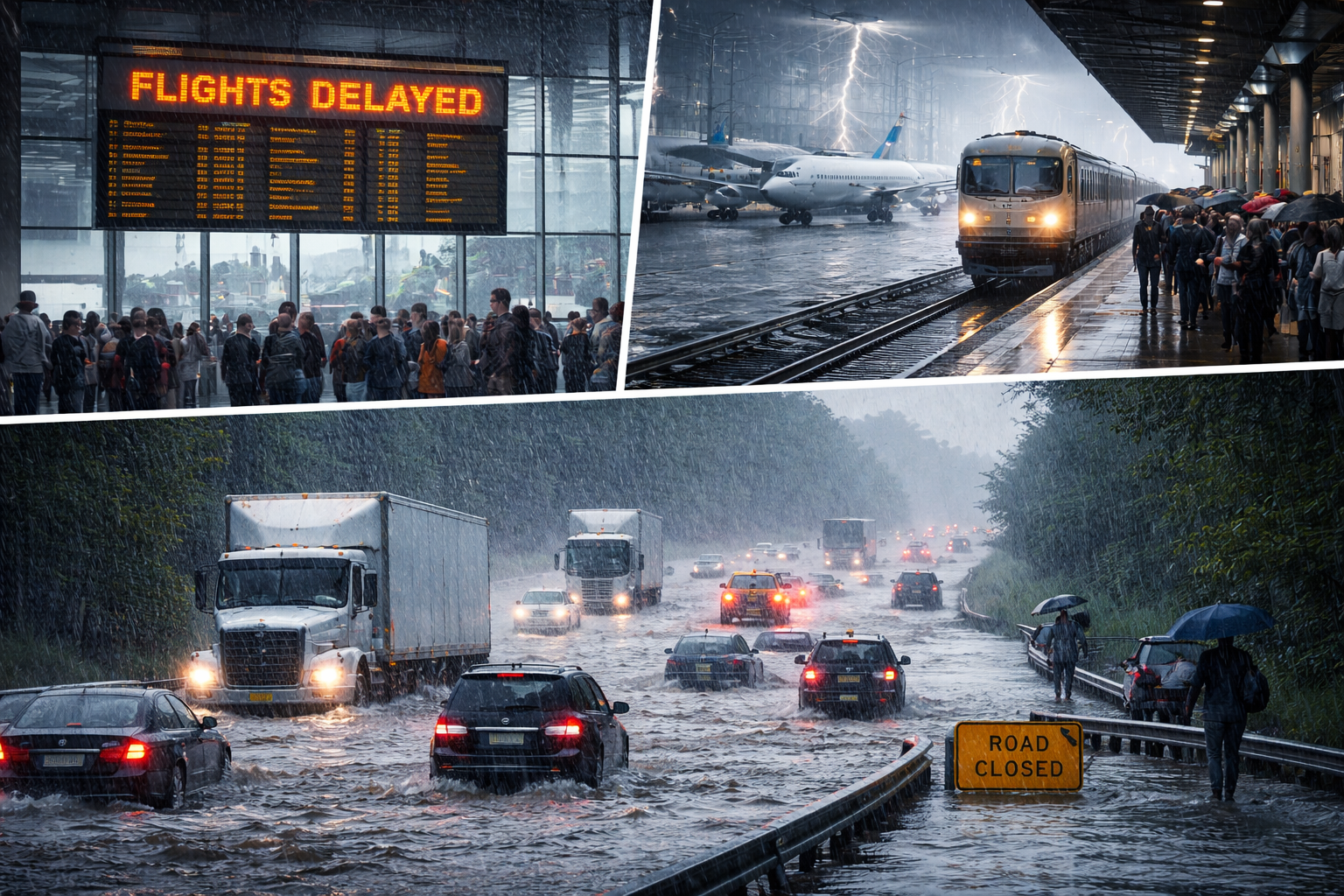
Severe weather conditions across several parts of the world have significantly disrupted transportation networks, leading to widespread delays and operational challenges for both passengers and logistics providers.
Heavy rainfall, strong winds, and unseasonal storms have impacted major roadways, railway lines, and flight operations in multiple regions. Authorities reported temporary closures of highways due to flooding and landslides, while several train services were either delayed or suspended as a precautionary measure.
Air travel has also been affected, with airlines forced to delay or reroute flights due to poor visibility and turbulent conditions. At several international airports, passengers experienced long waiting times as departures were rescheduled and arrivals adjusted to ensure safety.
In coastal areas, rough seas and high waves disrupted port operations, slowing down cargo movement and affecting global supply chains. Shipping companies have been advised to take alternative routes or delay departures until conditions stabilize.
Emergency services have been deployed in affected regions to manage traffic, assist stranded passengers, and monitor weather developments. Governments have issued advisories urging citizens to avoid unnecessary travel and stay updated with official weather alerts.
Experts note that such extreme weather events are becoming more frequent, placing increased pressure on infrastructure systems worldwide. The disruptions highlight the urgent need for climate-resilient transport planning and improved early warning systems.
While conditions are expected to improve in some regions over the coming days, authorities warn that intermittent disruptions may continue depending on weather patterns. News as Reported.