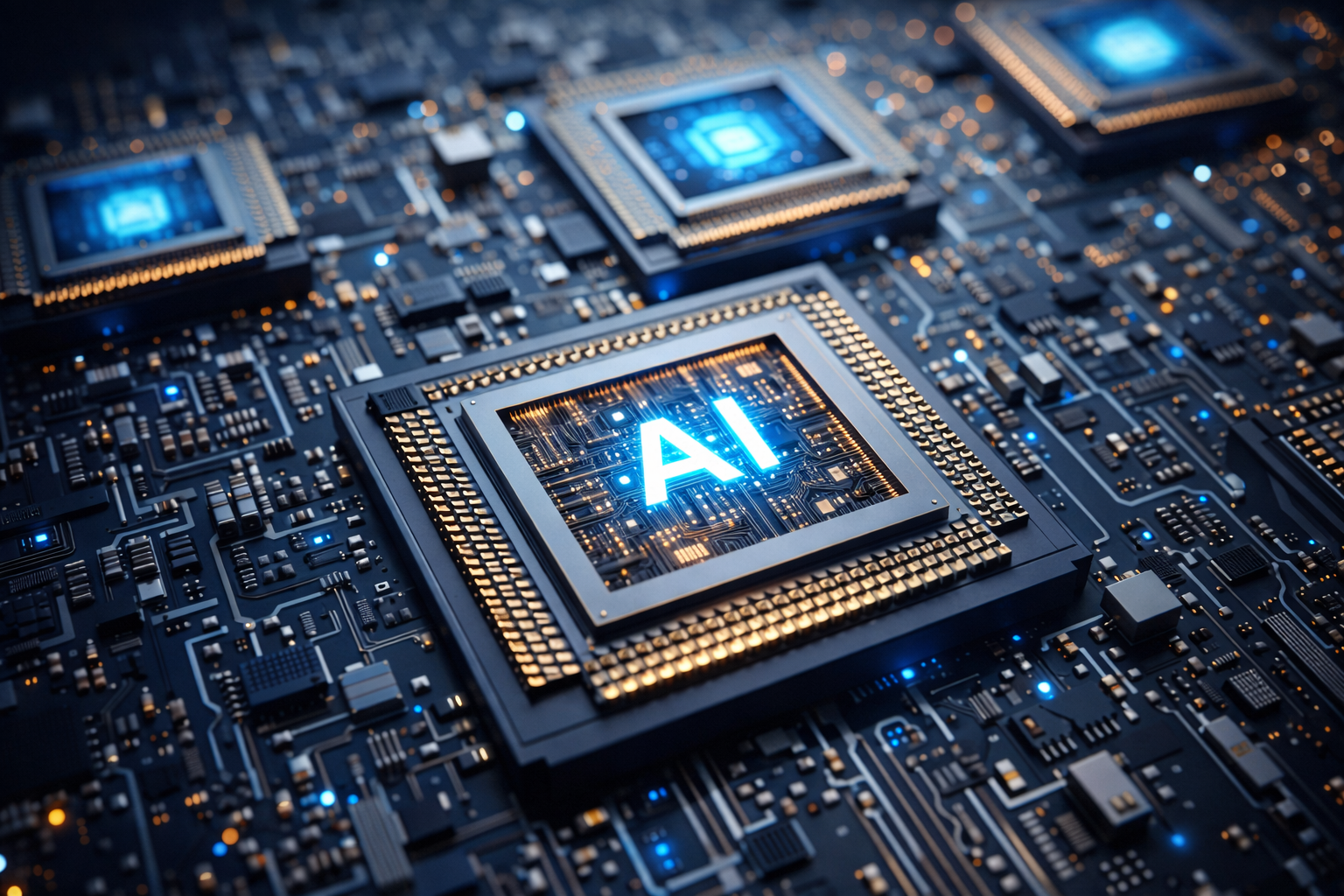
The global semiconductor industry is witnessing a major shift as leading chipmakers roll out next-generation processors specifically designed to power advanced artificial intelligence (AI) systems.
Companies like Intel, TSMC, and Broadcom are accelerating innovation to meet the explosive demand for AI computing across cloud platforms, data centers, and consumer devices. Recent announcements highlight a strong industry-wide focus on integrating AI capabilities directly into processors, making them faster and more efficient for machine learning tasks.
One of the most notable developments comes from Intel, which has introduced new processors featuring built-in Neural Processing Units (NPUs). These chips bring AI-powered performance to everyday devices, offering significant improvements in speed and efficiency compared to older systems.
Meanwhile, manufacturers such as TSMC are ramping up production of advanced chips as demand from tech giants continues to surge. Industry forecasts suggest that global spending on AI infrastructure—including processors and data centers—could exceed hundreds of billions of dollars, underscoring the scale of the transformation.
In parallel, companies like Broadcom are partnering with major technology firms to develop custom AI chips tailored for specific applications. These processors are designed to handle large-scale AI workloads more efficiently, reducing reliance on traditional hardware and enabling faster deployment of AI-driven services.
Additionally, collaborations between chipmakers and cloud providers are shaping the future of computing. Strategic agreements—such as those involving next-generation server processors—aim to optimize infrastructure for AI workloads, ensuring better performance across global data centers.
Experts say the shift toward AI-focused chip design marks a turning point for the semiconductor industry. Instead of general-purpose computing, the focus is now on specialized processors capable of handling complex AI models, real-time data processing, and large-scale automation.
As competition intensifies, chipmakers are expected to continue pushing technological boundaries, with faster, more energy-efficient processors set to redefine industries ranging from healthcare to autonomous systems. News as Reported.