


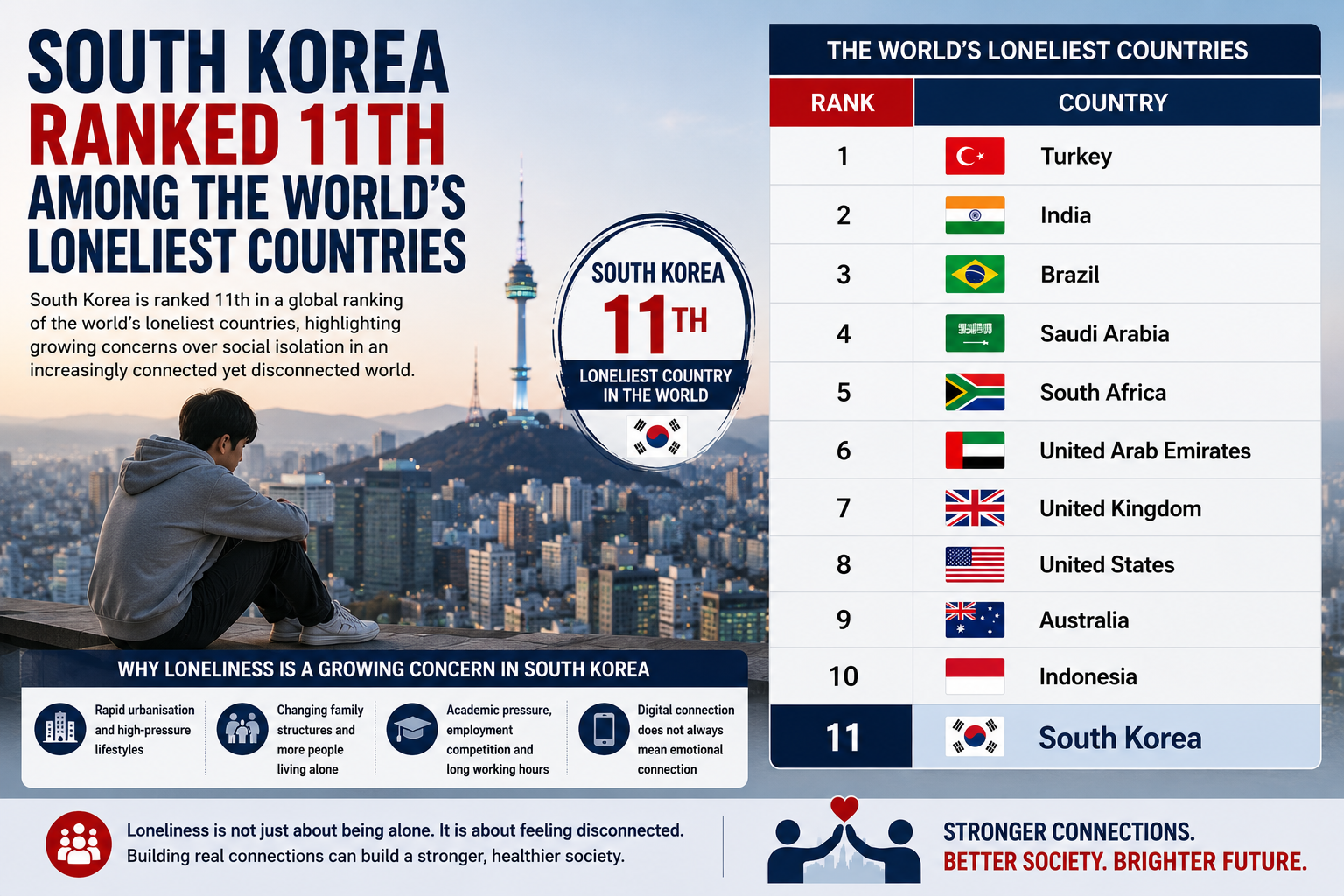
Seoul, September 2026: South Korea has been ranked 11th among the world’s loneliest countries in a global ranking examining loneliness and social disconnection across 36 countries. The ranking places South Korea just outside the top 10, highlighting growing international attention on social isolation and changing patterns of human connection.
The ranking considers several factors associated with loneliness, including people’s reported feelings of loneliness and isolation, emotional well-being, household patterns and other social indicators.
South Korea’s position is particularly notable because the country has a highly connected urban society and widespread digital communication. However, being digitally connected does not necessarily mean people feel socially or emotionally connected.
Rapid urbanisation, demanding work environments, changing family structures and an increasing number of people living alone have contributed to discussions about social isolation in South Korean society. Seoul and other major cities have particularly high-density lifestyles, where people can live and work alongside millions of others while still experiencing loneliness.
The country’s ageing population is another important factor. Older adults who live alone can be especially vulnerable to social isolation when family members live far away or when opportunities for regular social interaction become limited.
Young people are also part of the conversation. Academic pressure, employment competition, long working hours and the growing use of online platforms have changed how younger South Koreans form and maintain relationships.
At the same time, South Korea has developed a number of initiatives aimed at strengthening social connections. Community programmes, welfare services, neighbourhood activities and efforts to support people living alone are increasingly being discussed as ways to address social isolation.
Experts also point out that loneliness and living alone are not the same thing. A person may live alone while maintaining strong friendships and family relationships, whereas someone surrounded by people can still experience deep loneliness.
The country’s 11th-place position should therefore be viewed in the context of the particular methodology used for the global ranking. Different surveys can produce different results depending on the countries included, questions asked and indicators measured.
South Korea’s ranking nevertheless adds to a wider global conversation about the importance of meaningful relationships in an increasingly urban and digitally connected world.