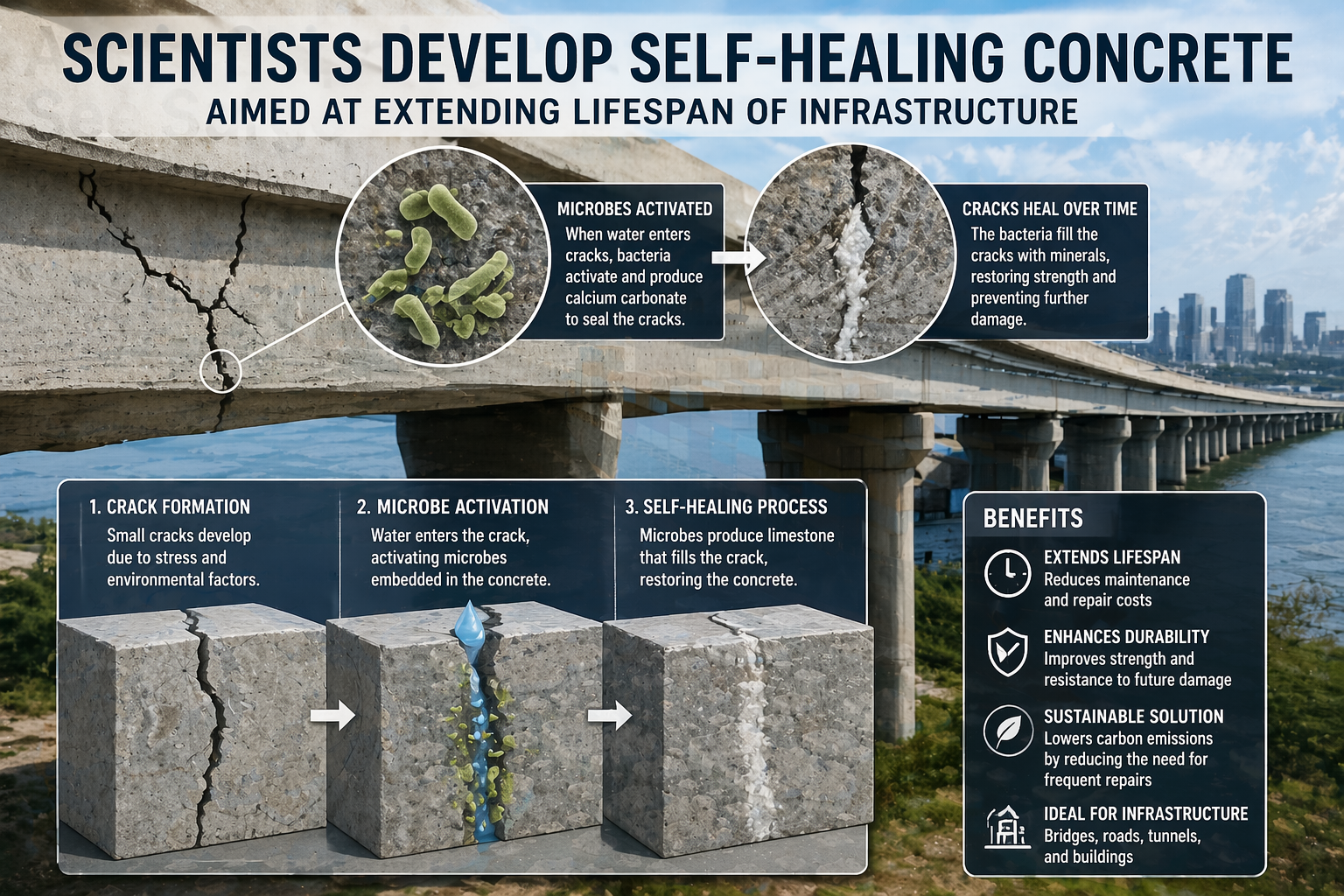
Scientists are making major strides in developing self-healing concrete, a breakthrough material designed to repair its own cracks and significantly extend the lifespan of infrastructure such as bridges, roads, and buildings. The innovation is gaining global attention as governments and industries seek more sustainable and cost-effective construction solutions.
Recent research focuses on embedding specialized bacteria into concrete mixtures. When cracks form and water seeps in, these microbes activate and produce calcium carbonate, effectively sealing the gaps and preventing further structural damage. Early studies show that certain bacterial strains can create stronger and more uniform repairs, enhancing durability over time.
Experts highlight that this technology could address one of the biggest challenges in construction—maintenance. Conventional concrete structures often deteriorate within decades, requiring costly repairs, while self-healing variants could last much longer with minimal intervention. The approach also reduces environmental impact by lowering the need for frequent reconstruction, which is a major source of carbon emissions.
The concept is partly inspired by ancient construction techniques. Studies of Roman structures have revealed natural self-repair mechanisms that allowed buildings to endure for thousands of years, providing valuable insights for modern engineering.
Although still emerging, self-healing concrete is moving closer to commercial use. Industry projections suggest rapid growth driven by demand for durable, low-maintenance infrastructure and smart city development. News as Reported.