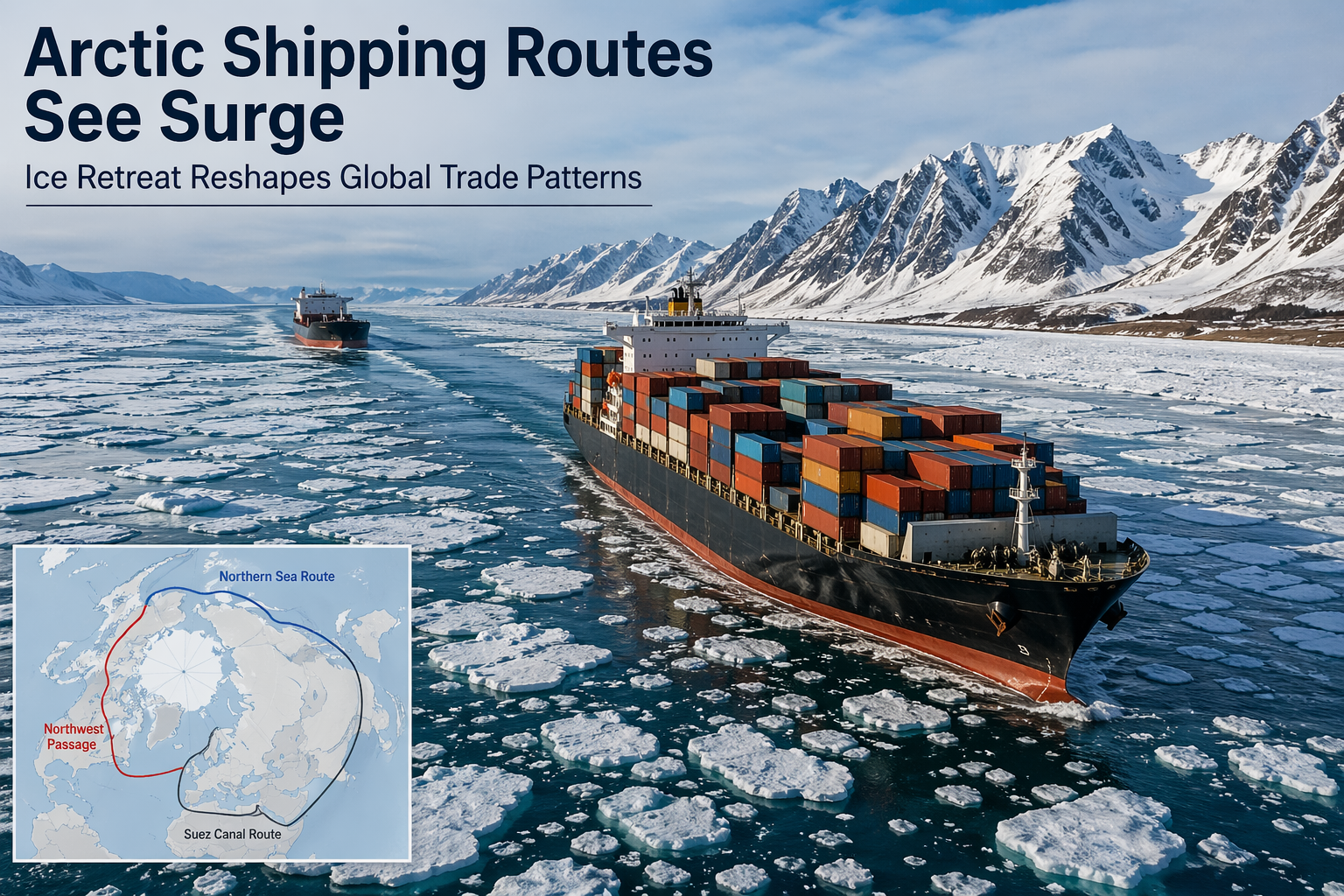
Arctic shipping routes are witnessing a significant rise in activity as rapidly retreating sea ice opens new maritime corridors, transforming global trade dynamics and strategic priorities. Scientists and industry analysts note that the Arctic is warming faster than most regions on Earth, reducing ice cover and extending navigable periods for vessels across previously inaccessible waters.
Key routes such as the Northern Sea Route along Russia’s coastline and the Northwest Passage through Canada are becoming increasingly viable alternatives to traditional pathways like the Suez Canal. These Arctic corridors can cut transit times between Asia and Europe by several days, lowering fuel consumption and operational costs for shipping companies.
Recent data indicates that shipping traffic in Arctic waters has grown steadily over the past decade, with longer seasonal windows allowing more vessels to pass through each year. Analysts suggest that continued ice decline could eventually make some routes accessible for several months annually, further boosting their commercial appeal.
However, the surge in Arctic shipping also raises serious environmental and geopolitical concerns. Fragile ecosystems face increased risks from oil spills, emissions, and marine disturbances, while limited infrastructure and harsh weather conditions continue to pose operational challenges.
At the same time, major global powers—including Russia, China, the United States, and European nations—are intensifying their presence in the region, viewing Arctic routes as both economic opportunities and strategic assets.
As climate change continues to reshape the Arctic landscape, experts warn that the region could evolve into a critical global trade artery—one that offers efficiency gains but also demands careful regulation to balance economic benefits with environmental protection. News as Reported.