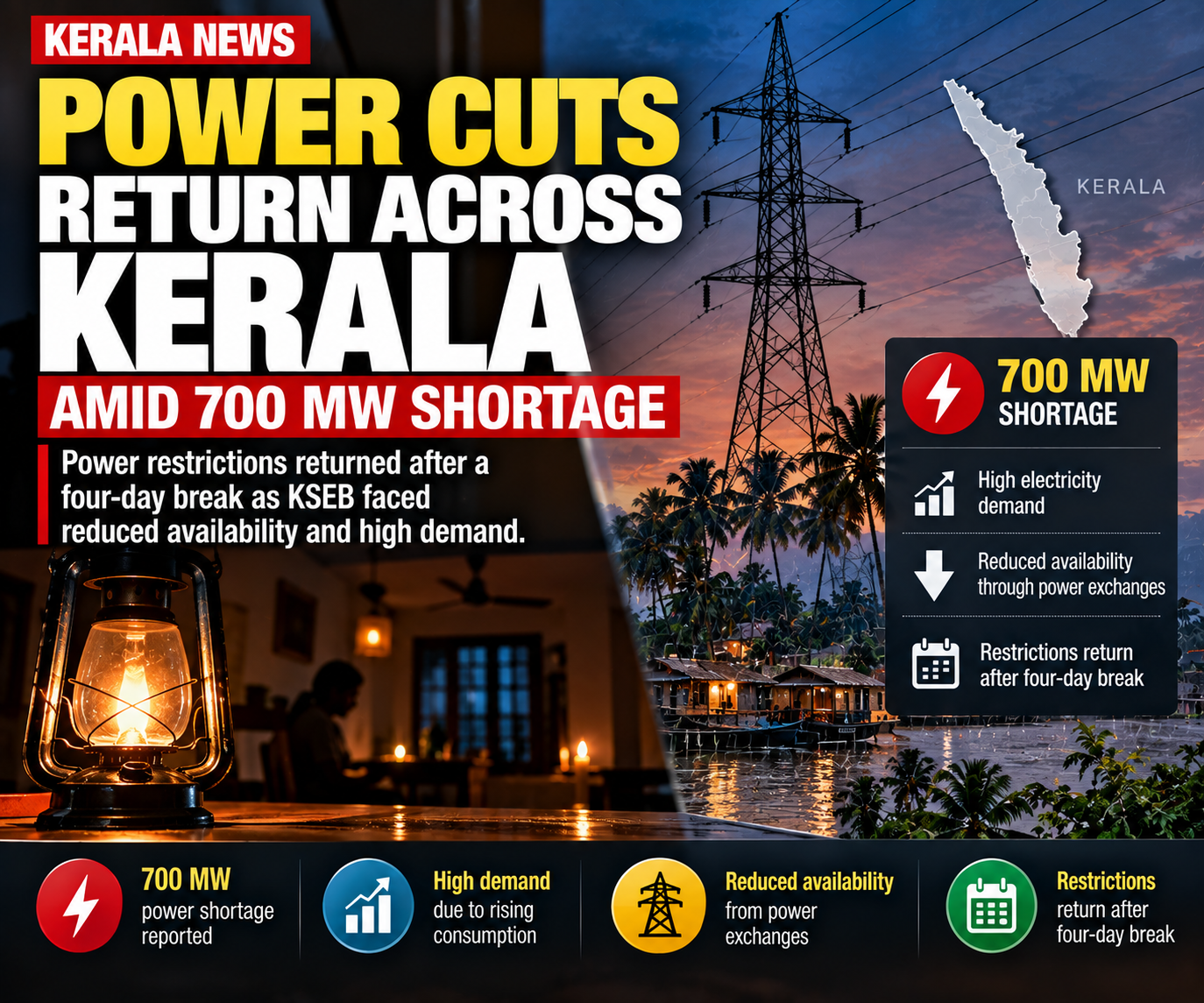
Thiruvananthapuram, September 30, 2026: Power restrictions have returned across Kerala after a four-day respite, with the state facing a shortage of around 700 MW amid high electricity demand and reduced availability through power exchanges.
The Kerala State Electricity Board (KSEB) said the shortage emerged after additional electricity that had helped the state manage demand was no longer available. Kerala had been receiving around 200 MW from Madhya Pradesh through a power-swap arrangement, while another 50 MW was being supplied from Haryana.
Power availability through the national exchange has also declined as demand remains high in several parts of the country. A fall in grid frequency during peak hours has added to the pressure on Kerala’s electricity system.
The latest restrictions come after KSEB managed to avoid outages for four consecutive days through additional power sourcing. Earlier reports indicated that the state had been relying heavily on electricity imports to meet its daily requirements. On September 27, Kerala consumed 84.65 million units, while nearly 89% of that day’s requirement was met through imports.
Rising temperatures and lower-than-usual rainfall have also contributed to increased electricity consumption. KSEB said September demand has risen by about 1,200 MW compared with previous years, while the reduced availability of power from the national market has made it more difficult to meet peak-hour requirements.
The state’s dependence on hydropower has added another challenge. Reservoir storage was reported at about 62% of total capacity on September 27, lower than the corresponding level recorded last year. KSEB continues to operate hydel stations while supplementing supply through purchases from outside the state.
The board has also indicated that the financial burden of purchasing electricity from outside Kerala could have implications for tariffs. KSEB CMD M.G. Rajamanikyam said the board had purchased electricity worth around ₹1,500 crore over the previous three months, with the details to be submitted to the regulatory commission. Any tariff revision would ultimately be decided by the regulator.
KSEB has said it is working to secure additional supplies and expects the present power situation to improve. However, officials continue to monitor national power availability, domestic demand and the availability of electricity through the exchange before deciding on further restrictions.
For consumers, the immediate situation means that peak-hour electricity restrictions may continue when adequate additional power cannot be secured, particularly during periods of high evening demand.