

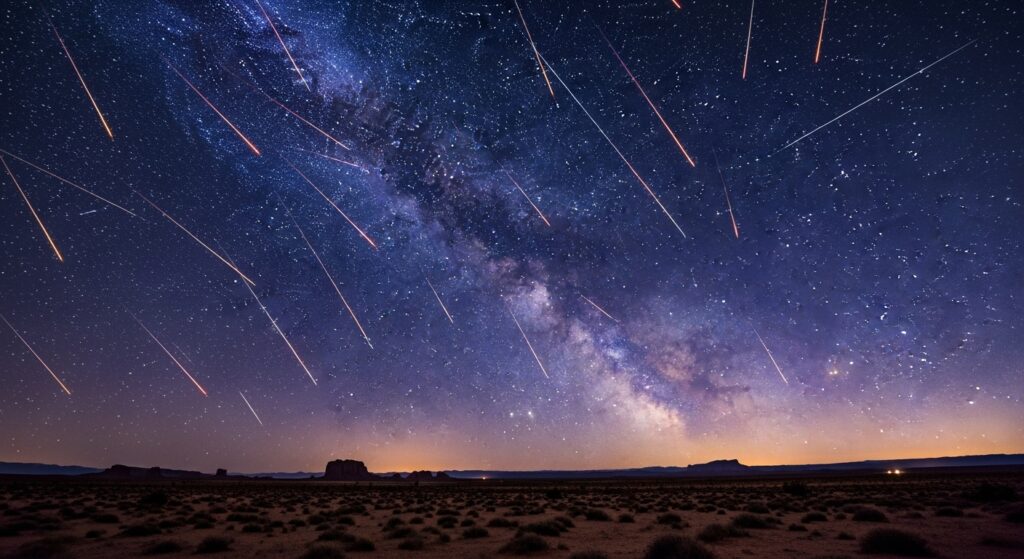
Skywatchers around the world are in for a celestial treat as the annual Lyrid meteor shower begins, bringing bright streaks of light across the night sky. The meteor shower, active every April, is expected to peak in the coming days, offering ideal viewing opportunities in regions with clear skies and minimal light pollution.
The Lyrids originate from debris left behind by Comet C/1861 G1 Thatcher. As Earth passes through this trail of cosmic dust, particles burn up upon entering the atmosphere, creating visible meteors. Under optimal conditions, observers may see around 10 to 20 meteors per hour, with occasional bright flashes known as fireballs.
Astronomers recommend viewing the meteor shower after midnight and before dawn, when the radiant point in the constellation Lyra rises higher in the sky. No special equipment is required—just a dark location away from city lights and a clear, unobstructed view of the sky.
Experts note that favorable weather conditions in many regions this year could enhance visibility, making it a perfect opportunity for both amateur and seasoned stargazers. The Lyrid meteor shower, one of the oldest recorded, continues to captivate audiences with its beauty and predictable annual return.
News as reported

- upgraderz.aws@gmail.com
- upgraderz.aws@gmail.com
- upgraderz.aws@gmail.com
- upgraderz.aws@gmail.com