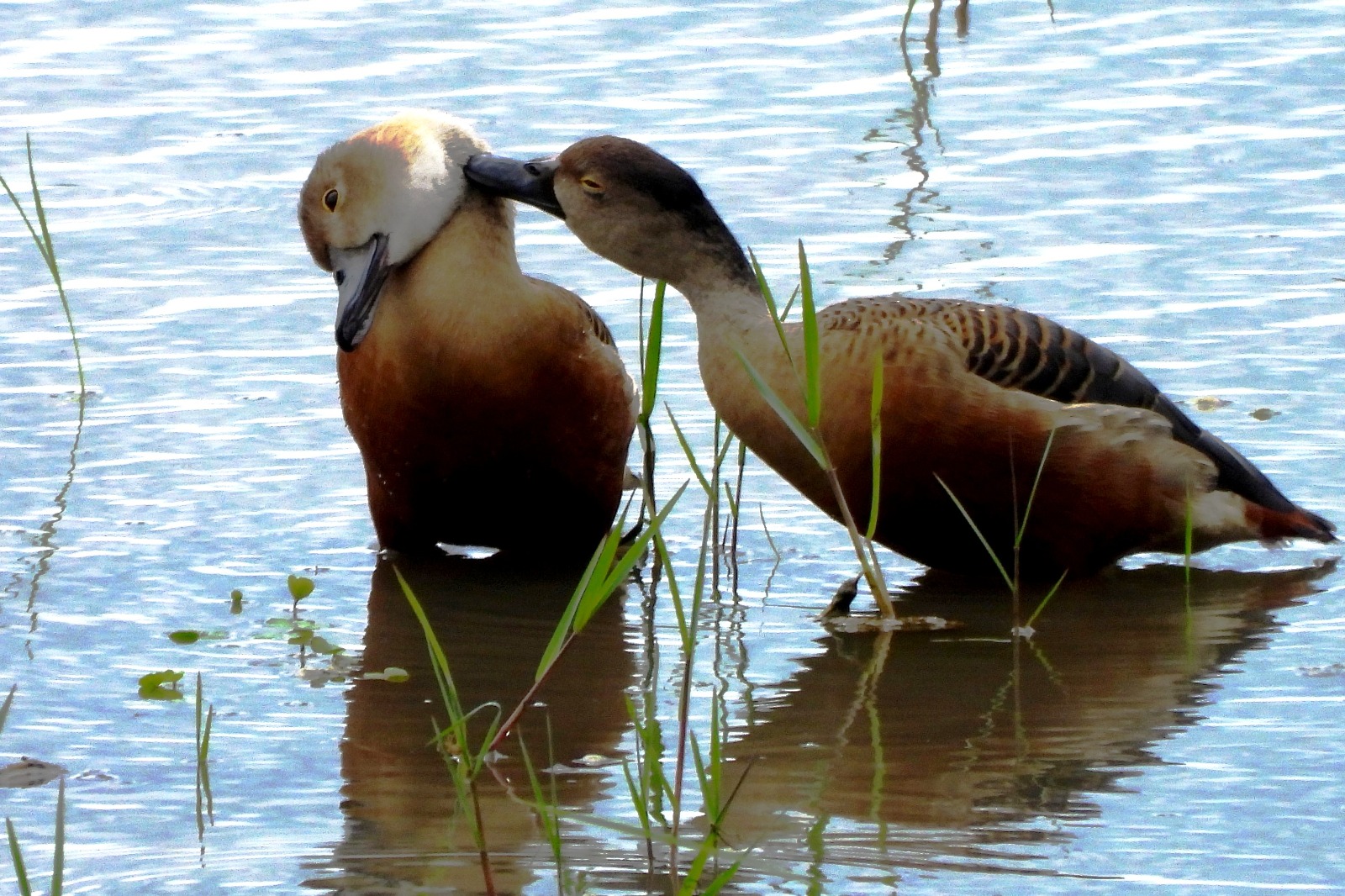
The lesser whistling duck (Dendrocygna javanica), also known as the Indian whistling duck, and lesser whistling teal, gets its name from the whistling sound made by the large feathers on its wings interacting with air while flying. They were first recorded in 1821 by the American physician and naturalist Thomas Horsfield (1773 – 1859).
These are birds that usually fly and forage in shallow water, fields, etc., in pairs and remain with the same mate for their entire lives. The male’s courtship displays include standing in front of the female, dipping his beak into the water several times, and circling the female. They sometimes carry their chicks on their back when flying to distant places.
Their world population is estimated to be between 2 million and 20 million. Hunters do not usually shoot them because their meat is not tasty. However, wildlife poachers in Assam capture or raise them and take them into the wild to use as live decoys to hunt other animals.
– Vincent Vanur