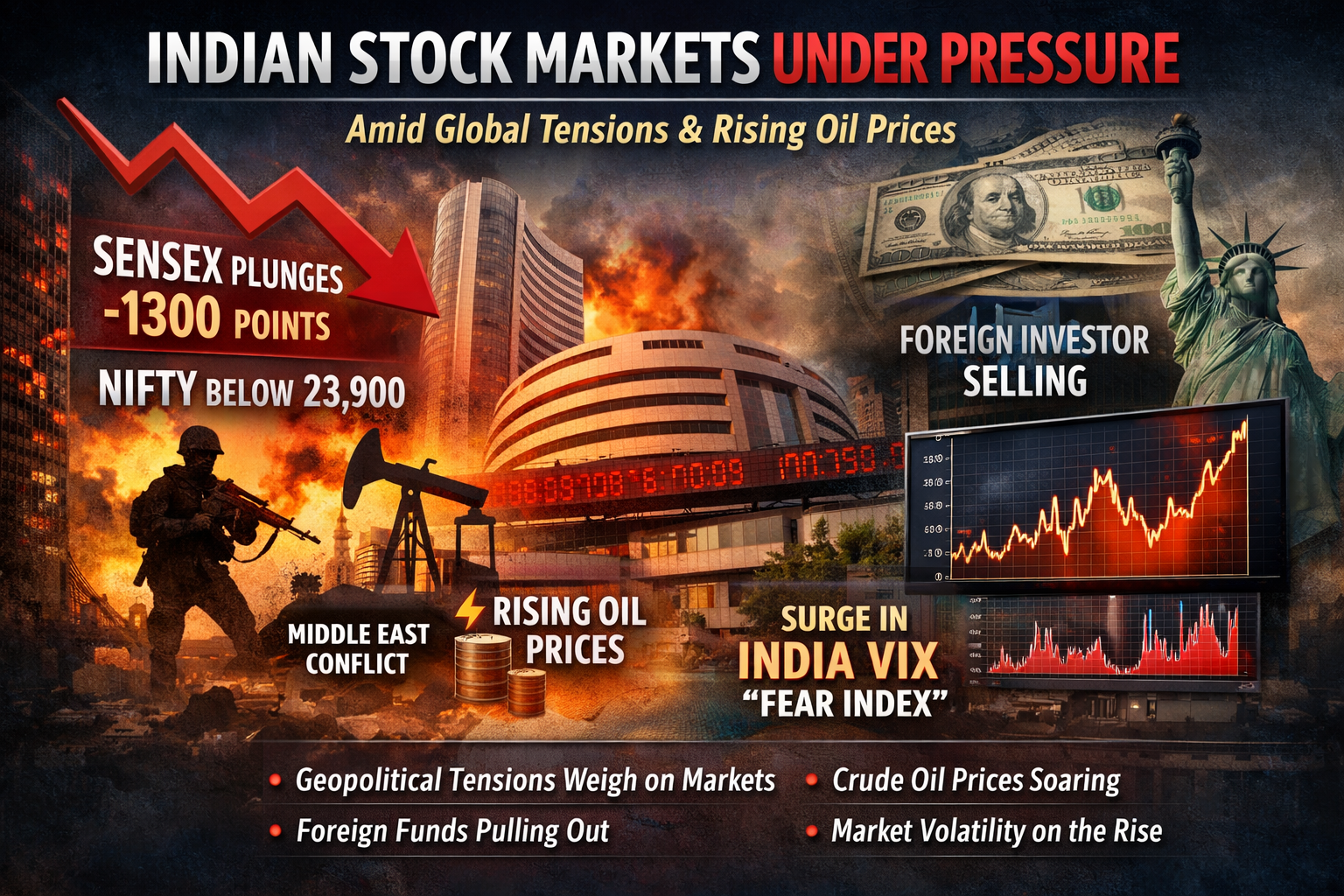
Indian stock markets remained under pressure this week as global geopolitical tensions and rising crude oil prices weakened investor confidence. Benchmark indices BSE Sensex and Nifty 50 witnessed sharp declines during several trading sessions, reflecting cautious sentiment among both domestic and foreign investors.
The downturn has largely been triggered by escalating tensions in West Asia and the Middle East, particularly concerns around conflict involving major global powers. These developments have pushed crude oil prices higher, which is a key concern for India because the country imports a large share of its energy requirements. Rising oil prices increase inflation risks and can widen India’s trade deficit, both of which negatively affect market sentiment.
During the week, the Sensex reportedly fell by more than 1,300 points in one session, while the Nifty slipped below the 23,900 level, highlighting the intensity of the sell-off in equity markets. Investors have also reduced exposure to riskier assets as uncertainty around global economic conditions continues.
Another major factor influencing the markets is the persistent selling by foreign institutional investors (FIIs). As geopolitical risks rise, many global investors prefer safer assets such as U.S. bonds and the dollar rather than emerging market equities. This shift has contributed to increased volatility in Indian markets and pressure on the rupee.
Market volatility indicators have also surged. The India VIX, often called the “fear index,” has risen sharply this month, reflecting heightened uncertainty and expectations of continued market swings.
Despite the near-term weakness, analysts note that geopolitical events historically cause temporary volatility rather than long-term damage to the Indian stock market. Strong domestic fundamentals, steady economic growth, and continued participation from domestic institutional investors could help stabilize markets once global tensions ease news as reported.