

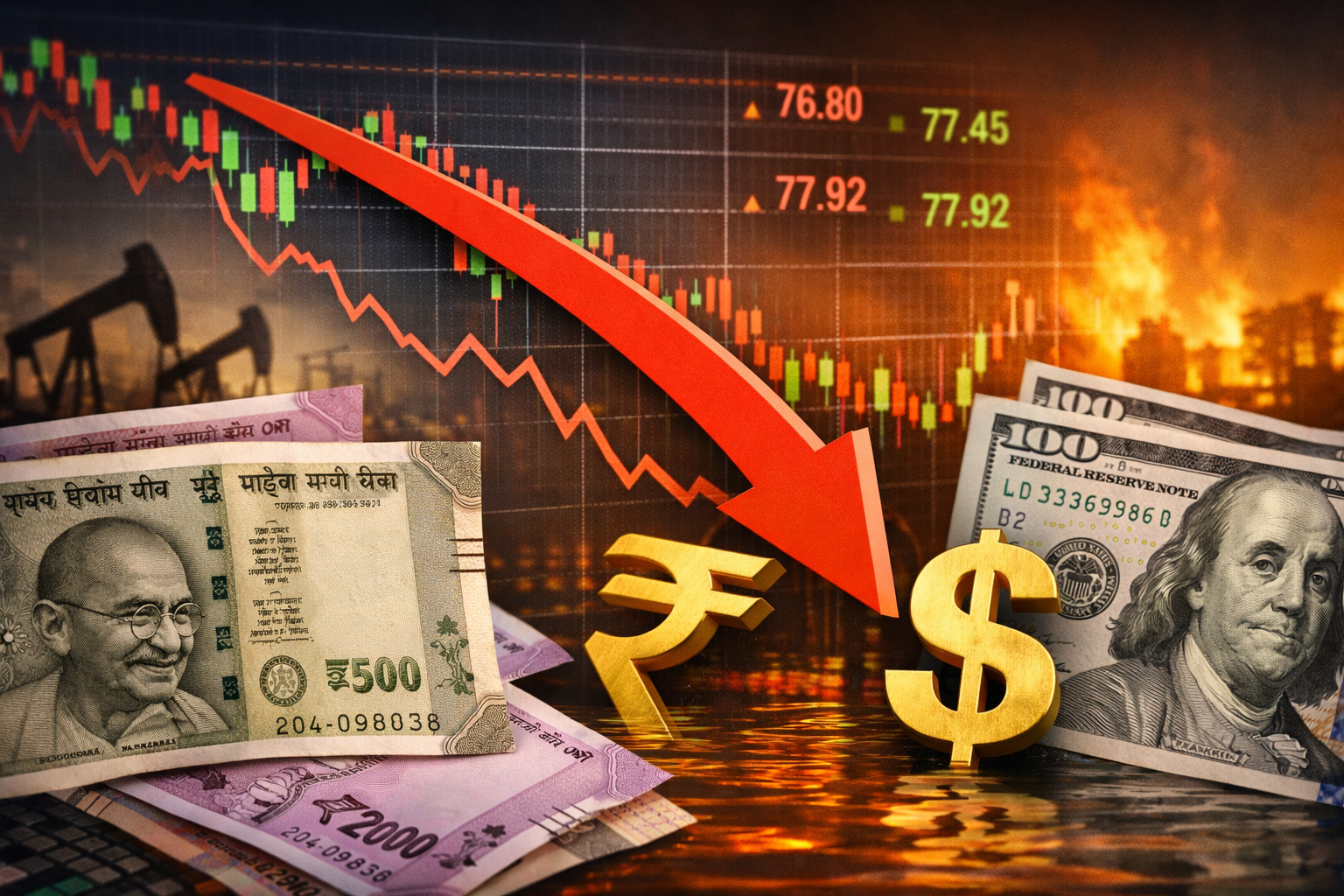
The Indian rupee has fallen to a record low against the US dollar, reflecting growing pressure on the country’s financial markets as global economic uncertainties intensify. Currency traders and market analysts attribute the decline primarily to rising crude oil prices and escalating geopolitical tensions in several parts of the world. These developments have increased demand for the US dollar, which is often seen as a safe-haven currency during periods of global instability.
India, being one of the world’s largest importers of crude oil, is particularly sensitive to fluctuations in global energy prices. As oil prices climb, the country’s import bill rises significantly, putting pressure on the rupee and widening the current account deficit. Higher energy costs also contribute to inflation, affecting domestic economic stability and investor sentiment.
Financial markets have also reacted cautiously to ongoing geopolitical developments that threaten global supply chains and energy security. Investors have moved funds toward safer assets, leading to capital outflows from emerging markets such as India. This shift has further weakened the rupee against the strengthening US dollar.
The Reserve Bank of India (RBI) is closely monitoring the situation and may intervene in currency markets if volatility increases sharply. Analysts believe that measures such as forex market intervention, monetary policy adjustments, and efforts to stabilize inflation could help limit further depreciation.
Despite the current pressures, economists note that India’s long-term economic fundamentals remain relatively strong. However, continued volatility in global markets and energy prices could keep the rupee under pressure in the near term, prompting policymakers to remain vigilant and responsive to evolving financial risks news as reported.


- upgraderz.aws@gmail.com
- upgraderz.aws@gmail.com
- upgraderz.aws@gmail.com
- upgraderz.aws@gmail.com