

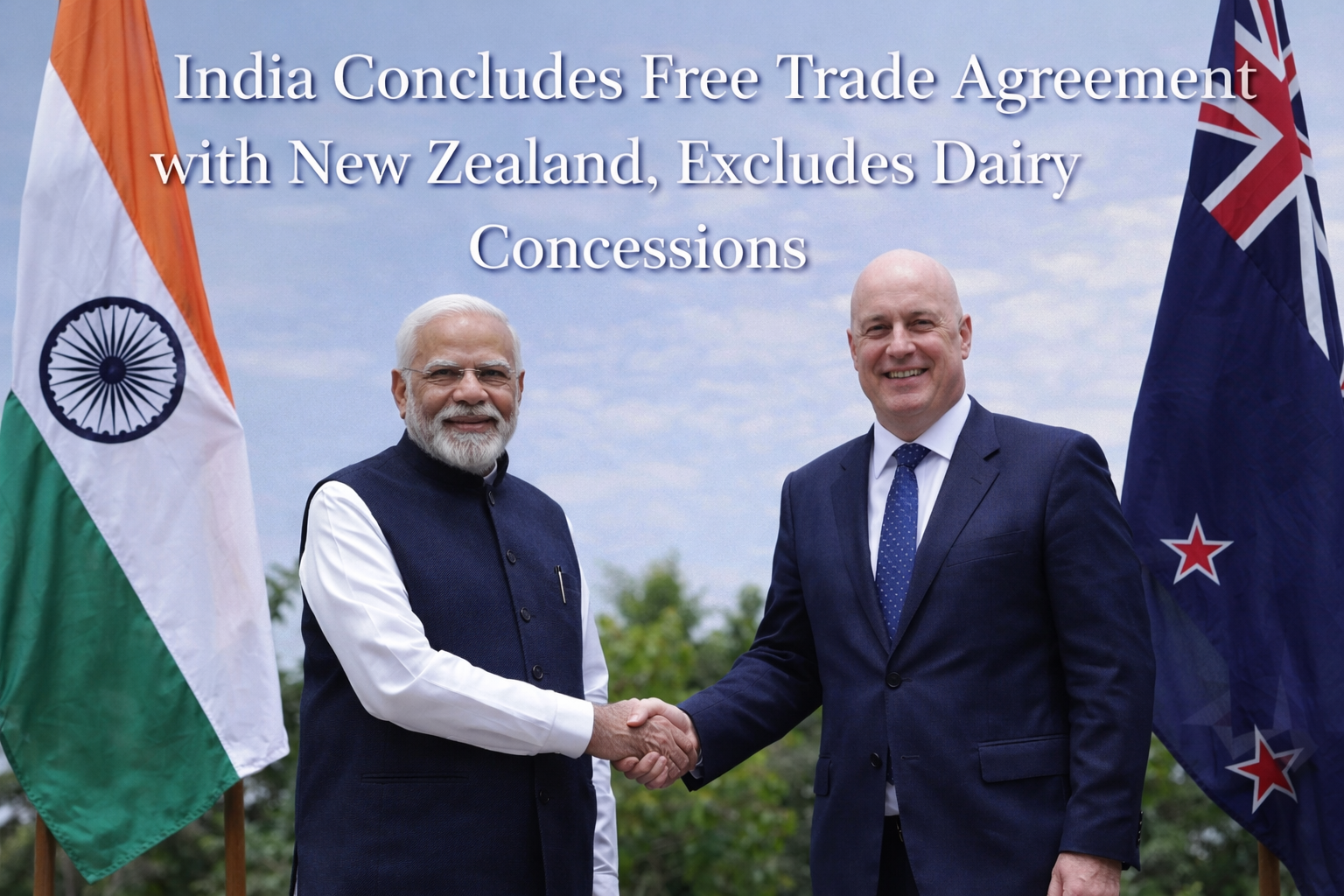
India has concluded a free trade agreement (FTA) with New Zealand after extended rounds of negotiations, marking a major step forward in strengthening bilateral economic ties. The agreement is designed to expand trade in goods and services, improve market access, and encourage investment flows between the two countries. However, one of the most sensitive sectors — dairy — has been kept outside the scope of tariff concessions, reflecting India’s long-standing concerns about protecting its domestic dairy industry.
Under the pact, both sides have agreed to reduce or eliminate tariffs across a wide range of sectors, including technology products, pharmaceuticals, textiles, processed foods, and professional services. The agreement also includes provisions on digital trade, customs cooperation, intellectual property standards, and smoother regulatory procedures aimed at reducing barriers for exporters and service providers.
Indian negotiators maintained a firm position on dairy imports, citing the livelihood concerns of millions of small-scale dairy farmers and cooperative networks. As a result, dairy products from New Zealand — a globally competitive dairy exporter — will not receive the same level of duty reduction offered to other product categories. Officials said this balanced approach allows India to open high-growth sectors while safeguarding vulnerable agricultural segments.
The FTA is expected to create new opportunities for businesses, startups, and skilled professionals, while also strengthening supply chain partnerships. Trade experts say the agreement could significantly raise bilateral trade volumes over the coming years. Both governments described the deal as pragmatic and mutually beneficial, combining liberalization with targeted protections in critical sectors news as reported.


- upgraderz.aws@gmail.com
- upgraderz.aws@gmail.com
- upgraderz.aws@gmail.com