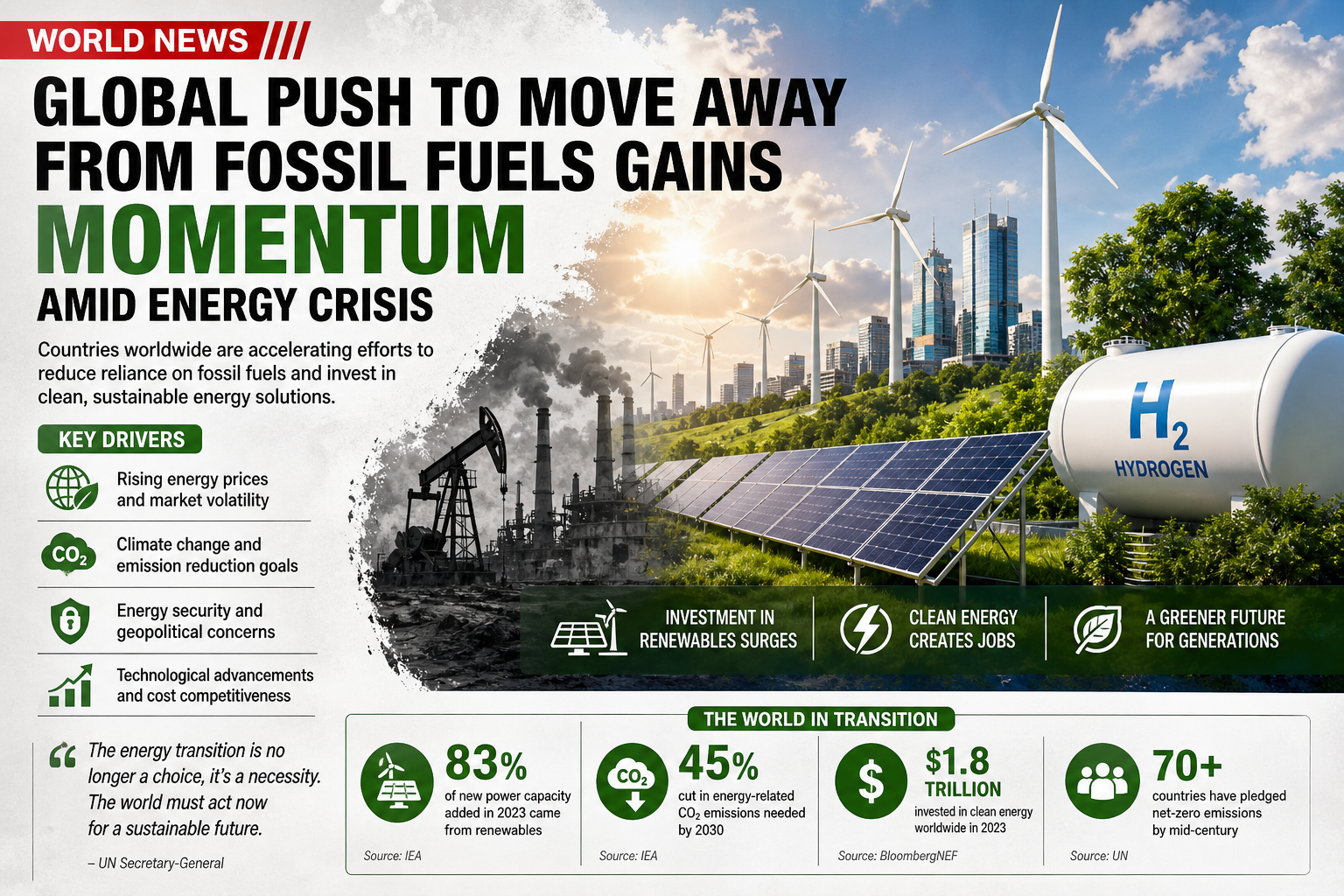
A growing global movement to transition away from fossil fuels is gaining momentum as the ongoing energy crisis exposes the vulnerabilities of oil- and gas-dependent economies.
Nearly 60 countries recently gathered at a major climate summit in Santa Marta, Colombia, to develop roadmaps aimed at reducing dependence on fossil fuels and accelerating the shift to renewable energy. The initiative reflects rising frustration with slow progress under existing global climate frameworks and signals a new push for coordinated international action.
The urgency of this transition has been intensified by the ongoing geopolitical crisis in the Middle East, particularly disruptions in the Strait of Hormuz, a key global oil corridor. Supply constraints and shipping disruptions have triggered a sharp rise in energy prices, pushing oil above $100 per barrel and placing significant strain on economies worldwide.
Countries across Asia and beyond are already feeling the impact, with reduced fuel imports, rising inflation, and increased government intervention to stabilize markets. Several nations are turning to alternative energy sources and diversifying supply chains to reduce dependence on volatile fossil fuel markets.
Experts say the crisis is accelerating investment in renewable energy, including solar, wind, and nuclear power, as countries seek long-term energy security. The shift is also being driven by concerns over climate change, economic resilience, and geopolitical risks tied to fossil fuel supply chains.
However, the transition remains complex. Industry leaders warn that fossil fuels will continue to play a role in meeting global energy demand in the near term, highlighting the need for a balanced and realistic approach to energy policy.
Meanwhile, former energy executives and policymakers in countries like Australia are urging governments to prioritize renewable investments over new fossil fuel projects, arguing that long-term sustainability and cost stability depend on clean energy adoption.
As global tensions persist and energy markets remain volatile, the push toward a cleaner, more resilient energy future appears to be accelerating—transforming the current crisis into a potential turning point in the world’s energy transition. News as Reported.