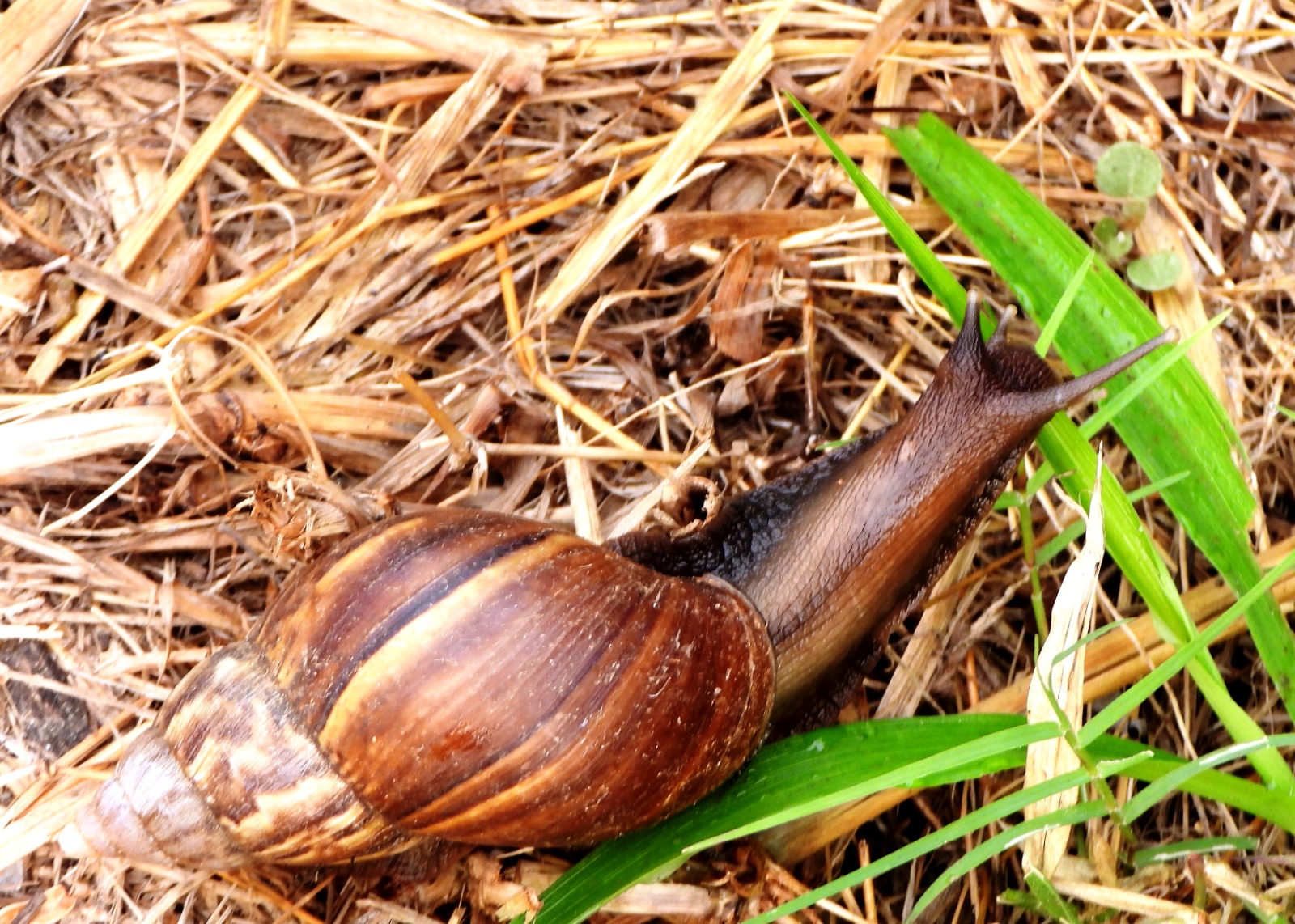
The giant African land snail, scientifically known as Lissachatina fulica, is a large terrestrial snail species first described in 1821 by the French naturalist André Étienne d’Audebert de Férussac. These snails are widely consumed in several parts of Africa and Asia, where they are regarded as a nutritious delicacy. Rich in protein, low in fat, and packed with iron and essential minerals, they are often considered nutritionally superior to many conventional meats.
When properly prepared — thoroughly washed and boiled or steamed before being removed from the shell — the meat is described as rich, nutty, and savory, with a texture similar to squid or mushrooms. They are commonly boiled, stewed, grilled, fried, or cooked with garlic, chili, onions, and spices in traditional dishes.
Historically, snails also held a unique place in Christian fasting traditions. Pope Pius V, known for his fondness for snails, famously declared them to be “fish” so they could be eaten during Lent, proclaiming “Estote pisces in aeternum!” (“You will be fish forever!”). In the stricter Orthodox Christian fasting tradition as well, snails are considered permissible during Lent because they are invertebrates, and they continue to feature in traditional fasting cuisine today.
– Vincent Vanur