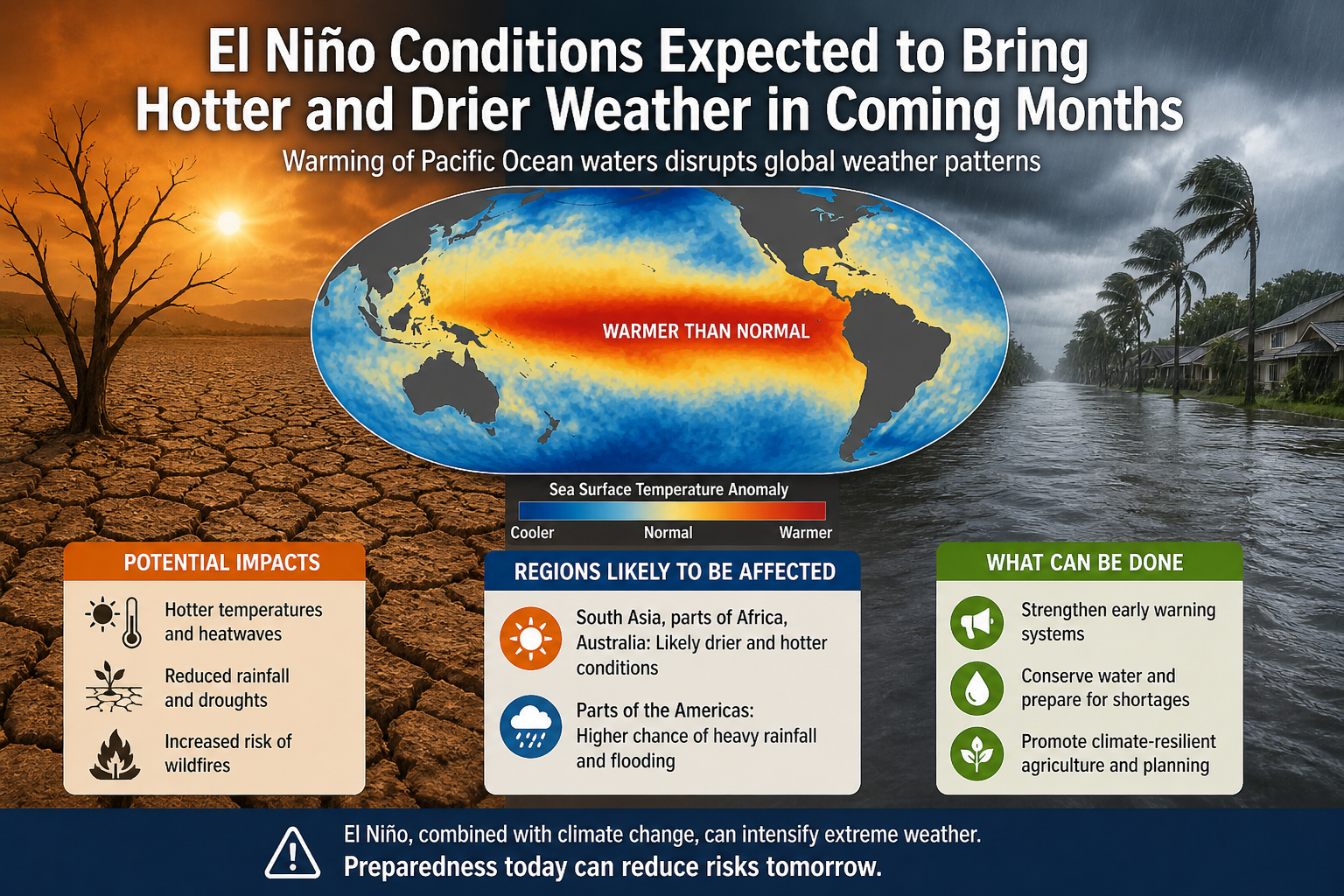
Climate experts are warning that emerging El Niño–Southern Oscillation conditions are likely to result in hotter and drier weather across many parts of the world in the coming months. According to leading meteorological agencies, the warming of surface waters in the central and eastern Pacific Ocean—a defining feature of El Niño—can significantly disrupt global weather patterns.
The World Meteorological Organization has indicated that the current El Niño phase could intensify heatwaves, reduce rainfall in some regions, and increase the risk of droughts and wildfires. Countries in South Asia, parts of Africa, and Australia are particularly vulnerable to below-average rainfall, which may affect agriculture and water resources.
In contrast, some regions, including parts of the Americas, may experience heavier rainfall and flooding due to shifting atmospheric circulation. Scientists emphasize that El Niño events, combined with ongoing global warming, can amplify extreme weather conditions.
Governments and disaster management agencies are being urged to prepare for potential impacts, including crop losses, water shortages, and public health risks. Experts stress the importance of early warning systems and climate-resilient planning to mitigate the effects of this naturally occurring but increasingly impactful climate phenomenon.