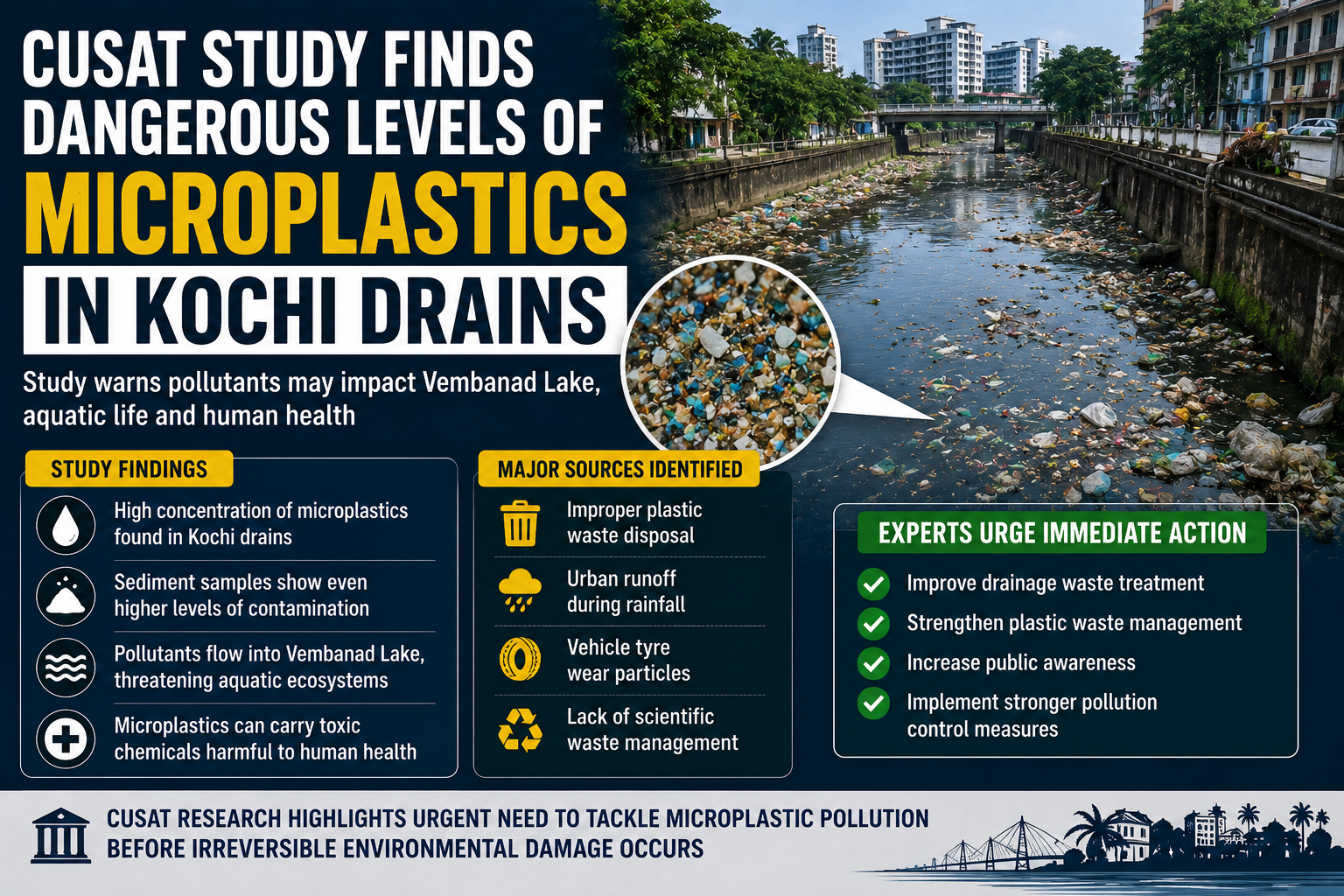
A recent study conducted by researchers at Cochin University of Science and Technology (Cusat) has revealed alarming levels of microplastic pollution in drains across Kochi, raising serious environmental and public health concerns. The findings indicate that densely populated urban areas are contributing heavily to the spread of tiny plastic particles into waterways and ecosystems.
According to the study, water samples collected from city drains showed significant concentrations of microplastics, while sediment samples recorded even higher contamination levels. Researchers observed that these pollutants eventually flow into the Vembanad Lake system, affecting aquatic ecosystems and potentially entering the human food chain.
The study identified major pollution hotspots in areas surrounding canals and densely populated zones within Kochi. Experts linked the contamination to:
- Improper plastic waste disposal
- Urban runoff during rainfall
- Vehicle tyre wear particles
- Lack of scientific waste management systems
Researchers warned that microplastics can carry toxic chemicals and secondary pollutants, making them especially dangerous for aquatic life and long-term human health. Previous studies in the region have already detected microplastics in fish species and estuary ecosystems connected to Kochi’s waterways.
Environmental scientists stressed the urgent need for:
- Improved drainage waste treatment
- Better plastic waste management
- Public awareness campaigns
- Stronger pollution control measures
The report has intensified concerns over urban pollution in Kerala’s commercial capital, especially as rapid urbanization and increasing plastic consumption continue to impact water bodies. Experts say the issue requires immediate policy intervention to prevent long-term ecological damage and contamination of food and drinking water sources.
News as reported