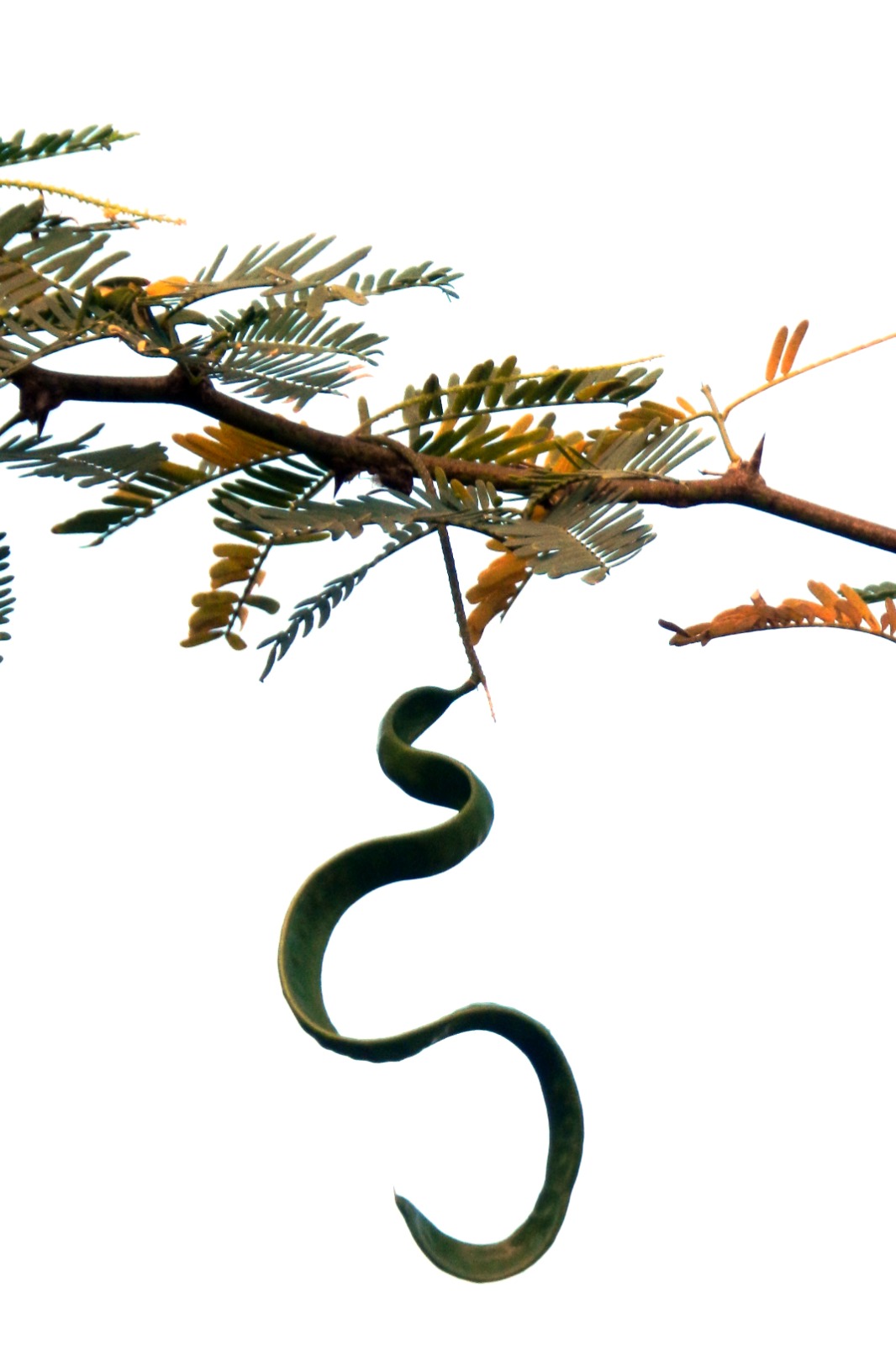
Neltuma juliflora, formerly Prosopis juliflora, is a shrub or small tree in the family Fabaceae and a kind of mesquite. It is native to Mexico, South America and the Caribbean and has become established as an invasive weed in Africa, India, Asia, Australia and elsewhere. Olof Swartz (1760–1818), a Swedish botanist described and named the plant first (the basionym). Constantine Samuel Rafinesque (1783–1840), a highly influential, eccentric polymath and botanist, reclassified and moved the plant into its current or accepted genus.
A mature plant can produce hundreds of thousands of seeds. Seeds remain viable for up to 10 years. The tree reproduces solely by way of seeds, not vegetatively. Seeds are spread by cattle and other animals, which consume the seed pods and spread the seeds in their droppings. Its roots are able to grow to a great depth in search of water. Although the tree has a relatively short lifespan of 60 years, it is a hardy plant nonetheless. It is a rich source of honey for bees.
The fruits are sweet, edible and nutritious. It is a source of food for the people of Peru, Chili, etc. The fruits were chewed raw by indigenous people to quench thirst during long journeys. They can also be powdered to make bread and fermented to make liquor. As the fruits contain neurotoxic alkaloids, they may be dangerous for cattle when eaten in large quantities.
Vincent Vanur