

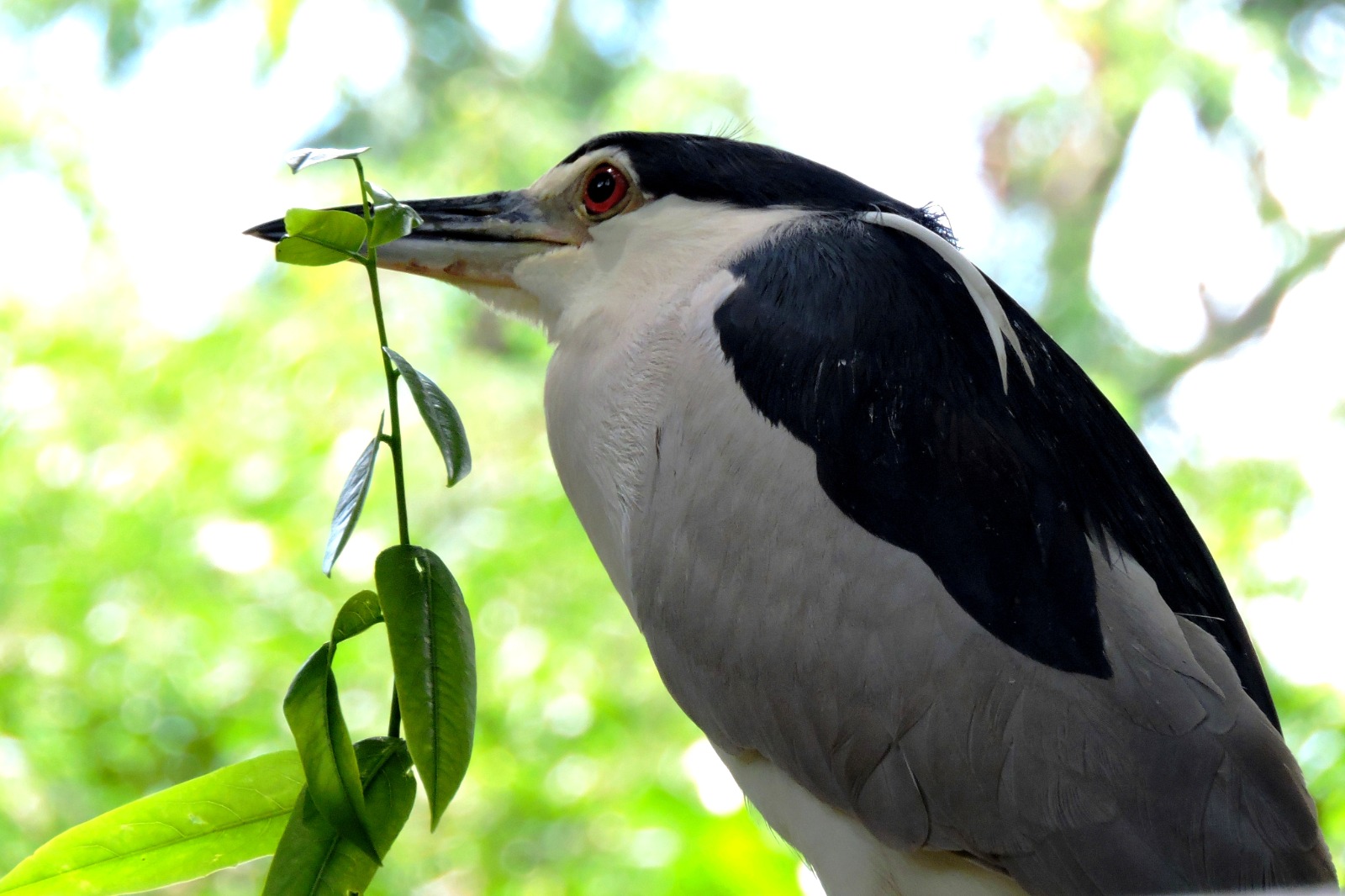
The Black-crowned Night Heron, also known as the black-capped night heron, was formally described in 1758 by the Swedish naturalist Carl Linnaeus. Linnaeus originally placed the species in the genus Ardea, alongside herons, cranes, and egrets, giving it the scientific name Ardea nycticorax. Later, in 1817, the species was reassigned to the genus Nycticorax by the English naturalist Thomas Ignatius Maria Forster. The name nycticorax comes from Ancient Greek, combining nuktos meaning “night” and korax meaning “raven,” referring to the bird’s nocturnal habits and dark plumage.
In the Falkland Islands, this bird is locally known as “quark,” an onomatopoeic name that imitates its harsh call. Similar sound-based names occur in several languages, including “qua-bird” in English, “kwak” in Dutch and West Frisian, “kvakoš noční” in Czech, “квак” in Ukrainian, and “кваква” in Russian.
One of the most remarkable behaviors of the black-crowned night heron is its use of bait fishing, a rare example of tool use among birds. The heron may drop feathers, leaves, bread pieces, insects, or other floating objects onto the water surface to attract curious fish within striking distance. Once a fish approaches the bait, the bird swiftly captures it with its sharp bill. Among herons, only a few species are known to display this sophisticated hunting strategy, highlighting the intelligence and adaptability of this nocturnal wading bird.


- upgraderz.aws@gmail.com
- upgraderz.aws@gmail.com
- upgraderz.aws@gmail.com
- upgraderz.aws@gmail.com