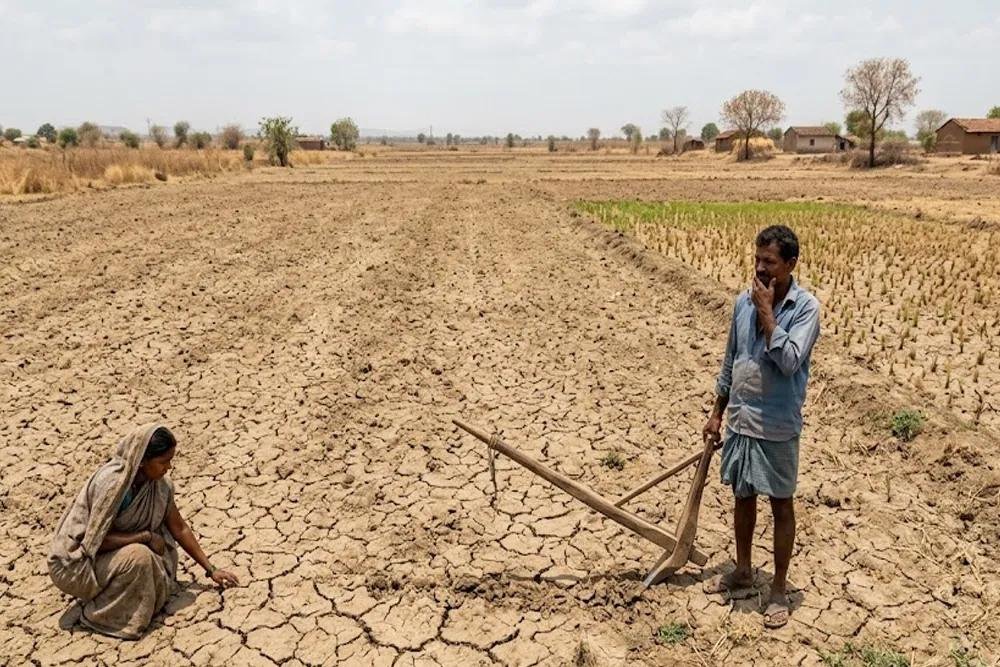
The India Meteorological Department has reported significant rainfall extremes across the country, with 218 districts experiencing drought-like conditions during the latest four-week period. The figure represents more than one-quarter of India’s districts.
The rainfall pattern has been linked to the ongoing El Niño phenomenon, which can disrupt normal monsoon behaviour and produce highly uneven rainfall. While some areas receive excessive rain, others can experience prolonged rainfall deficits.
The situation is important for India’s agricultural sector because farmers depend heavily on the monsoon for crop cultivation and water availability. Persistent rainfall shortages can affect sowing, crop growth, groundwater levels and rural incomes.
At the same time, areas receiving excessive rainfall can face flooding, waterlogging and crop damage. This combination of very wet and very dry conditions makes monsoon management increasingly challenging.
The latest assessment highlights how rainfall distribution can be as important as the country’s overall seasonal rainfall total. Even when national rainfall figures appear relatively normal, individual districts can experience serious shortages.
Authorities and farmers will continue monitoring rainfall patterns during the remaining monsoon period, particularly in districts where the rainfall deficit has already become significant.